By BK, Athletic Hitting Development
Complete Hitters Are Built… It’s Earned!
Key takeaways
- There is no secret sauce in hitting. There are maps.
- Hitting comes down to how you move, how you think, how you see, how those sync, and how much “want to” the hitter brings.
- There is no one right way. Too many variables for that.
- Be wary of fads. A bat is still an expensive stick and a baseball is still a nice rock.
- If a coach can’t explain it so a kid and a parent understand it, the knowledge or the delivery is off.
- A coach doesn’t need to have played pro ball. When you find a good one, don’t let them go.
Everybody wants the secret. There is no secret sauce in hitting.
There’s no secret sauce: hitting comes down to how you move, think and see, how those sync, and how much “want to” the hitter brings. To vet a coach, ask what he sees, why it matters and what you’d work on first, and look for plain-language answers with one clear priority.
Train it: Hitting Coach Certification →Everybody wants the secret drill, the secret swing thought, the machine, or the coach with the one answer nobody else knows. In 52 years of playing, coaching and scouting, I’ve watched families chase all of it.
There is science. There is experience. There is history. There are tools, technology, video, data, strength training, pitch tracking and better ways to learn. All of it matters.
But in the end, hitting comes down to how you move, how you think and how you see, and how well those sync together when the ball is coming at you fast. Then comes the biggest variable of all: how much “want to” does the hitter have? At what level are you willing to prepare yourself to become the best hitter you can be?
1. There is no one right way
There are too many variables in baseball and softball for anyone to pretend there is one perfect swing, one perfect stance or one perfect system.
Hitters are different. Their bodies, strength, mobility, vision, experience, confidence, timing and pitch recognition are different. A movement that helps one hitter may not help another. A cue that clicks for one athlete may mean nothing to the next.
That doesn’t mean anything goes. It means we need a better map. A great coach helps a hitter understand the big areas of development:
- How they move, including the Mechanically Advantaged Angles (MAA) that let the body and barrel work together
- How they create force and bat speed
- How they control their body and stay athletic
- How they see, recognize, time, decide and attack pitches
- How they adjust to speed, location and spin
- How they think, compete and respond when things get hard
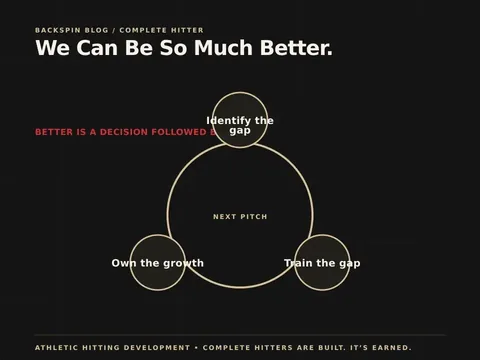
The goal is not to copy somebody else’s swing. The goal is to build the most efficient version of your swing, and the most complete version of you as a hitter. That is the treasure map: learn and acknowledge all the areas of hitting development, then go to work.

THERE IS NO SECRET SAUCE
MOVE. THINK.SEE. SYNC.
- How you move.
- How you think.
- How you see.
- How much you want it.
NO SECRET. JUST THE MAP AND THE WORK.
2. The body has been doing this a long time
Be careful with fads.
The human body hasn’t changed because somebody posted a flashy clip. A bat is still an expensive stick. A baseball is still a nice rock coming at you very fast. People have been swinging sticks at things for thousands of years.
Of course we should use new technology. Video, force plates, motion capture, high-speed cameras and pitch-tracking tools are great when they help us understand performance. But technology should help us see the truth, not invent nonsense.
We are coaches. We are not geneticists, and we shouldn’t pretend every hitter needs a complicated scientific explanation before they can improve. Good coaching uses science, experience and common sense together.
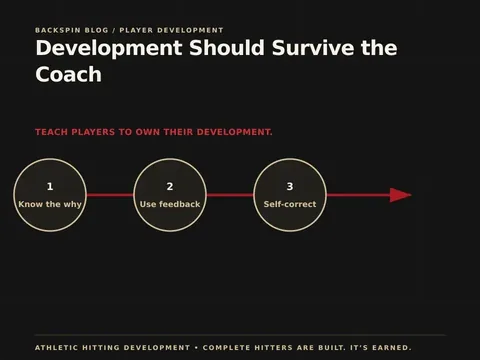
If they can’t explain it so everyone understands it, the knowledge or the delivery is off.
You aren’t the coach, and you don’t have to be. Great coaching can be detailed without being confusing. If a concept can’t be explained clearly enough for a young player and a parent to understand, something is wrong with the knowledge or the way it’s being delivered.

3. Bad information is common, and it can be expensive
Bad coaching doesn’t always sound bad. Sometimes it’s delivered with confidence. Sometimes it comes with a slow-motion video, a fancy machine, a famous player’s name or a dramatic promise. Sometimes it tells families exactly what they want to hear: “Do this one thing and everything will change.”
Be wary. A hitter can waste months, or years, chasing a drill, a fad or a cue that doesn’t fit them. Worse, they can lose confidence because they believe something is wrong with them when the information was what was wrong.
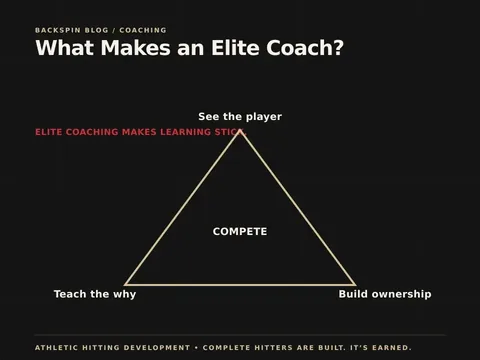
A good coach doesn’t sell magic. A good coach observes, asks questions, explains the why, gives the player one clear priority, and helps them test whether the work is actually making them better.
4. How to vet a hitting coach
You don’t have to be the coach to recognize good coaching. Use your instincts and ask smart questions. A good coach should be able to:
- Explain what they see in simple language.
- Tell you why it matters for this hitter.
- Give one clear first priority instead of twenty things.
- Adjust their teaching to the athlete in front of them.
- Connect the swing to vision, timing, decisions, strength and confidence.
- Show a process, not just promise a result.
- Admit every hitter is different.
- Keep learning without chasing every new fad.
Then try three questions. Ask: “What do you see?” Then: “Why does that matter?” Then: “What would we work on first?”
If the answers are clear, specific and make sense, you may have found somebody good. If they’re vague, overly complicated, full of buzzwords, or sound exactly the same for every hitter, be careful.
HOW TO VET A HITTING COACH
ASK THREEQUESTIONS.
- What do you see?
- Why does that matter?
- What do we work on first?
CLEAR ANSWERS. ONE PRIORITY. A PLAN.
5. Playing pro ball is not the only qualification
Just because a coach didn’t play professional baseball or softball doesn’t mean they can’t be outstanding. Some of the best coaches I know didn’t play pro ball.
They study. They observe. They care. They communicate. They’ve coached enough players to understand that development is not cookie-cutter. They know how to teach a young hitter, a high school hitter, a college player, and a frustrated athlete who has lost confidence.
Playing experience matters and can offer real perspective. But a great player is not automatically a great teacher. A great teacher helps another person understand, improve and believe in the work.
So be smart. Use your instincts. And if and when you find a good coach, don’t let them go.

Coaches: hold yourself to the same test. Explain it plainly, give one priority, and show the process. If you want help building that standard across your roster, AHD offers team pricing on every course and brings hands-on team hitting camps and clinics to teams and organizations.
6. Learn the map, then go to work
There is no secret sauce. There is no miracle drill. There is no one perfect swing. There is no shortcut around preparation, awareness and honest work.
But there are maps. There are guides. There are great coaches. There are better tools and proven principles. There is a way to learn every area that matters, find what’s holding you back, and go to work with purpose.
How you move. How you think. How you see. How you prepare. How much you want it.
Then build from there. Start with a free SwingChecker™ to find your first priority, read what makes an elite coach, or see online remote baseball and softball training with BK.

THELESSON.
- No secret sauce.
- No one right way.
- Learn every area.
- Skip the fads.
- Keep the good coach.
Complete Hitters Are Built…Earned.
Quick answers
Is there a secret to hitting a baseball or softball?
No. There is no secret drill or swing thought. Hitting comes down to how you move, how you think and how you see, how those sync together, and how much work the hitter is willing to put in. What helps is a clear map of every area of hitting development.
How do I know if a hitting coach is any good?
Ask three questions: What do you see? Why does that matter? What would we work on first? A good coach answers in plain language, gives one clear priority, adjusts to the hitter and shows a process. Vague, complicated or one-size-fits-all answers are warning signs.
Should I trust new hitting trends and gadgets?
Use technology when it helps you see the truth about a swing, but be wary of fads. The human body hasn’t changed, and no single tool or drill fixes everything. Ask whether the idea fits your hitter, has a clear why, and can be tested.
Does a hitting coach need to have played pro ball?
No. Playing experience can help, but it doesn’t make someone a great teacher. Many of the best coaches never played professionally. They study, observe, communicate well and care about the player.
Is there one right way to swing a bat?
No. Hitters’ bodies, strength, mobility, vision and timing are different, so there’s no one perfect swing, stance or system. The goal is the most efficient version of your swing, not a copy of somebody else’s.
Don’t collect drills. Build a complete hitter.
Complete Hitters Are Built… It’s Earned!
From the 2015 archive: The Hidden Skill of Great Hitting Coaches.