By
Athletic Hitting Development
Complete Hitters Are Built… Not Given. Earned!
Pete Crow-Armstrong had already hit his 43rd and 44th home runs. He added a triple. He walked. The Cubs were up six runs in the eighth inning at Wrigley Field, and the crowd was chanting, “M-V-P!”
Pete Crow-Armstrong’s lesson for hitters: care hard about a bad at-bat, then recover fast and use it as feedback. His leap came from a setup that let him stay athletic, chase less and save his aggression for pitches he could damage.
Train it: Complete Hitter Masterclass →Then he struck out with the bases loaded.
Crow-Armstrong tossed his bat up, caught it, and walked back toward the dugout visibly irritated.
That moment tells you something about the level he is chasing.
It was not about pouting. It was not about feeling sorry for himself. It was not about pretending 44 homers did not matter. It was about a hitter who still wanted to execute in the next big situation.
There is a massive difference between a competitor who holds himself to a standard and a player who lets one failure wreck him. Pete Crow-Armstrong’s season gives young hitters a template for the right kind of edge.
The rare season is impressive. The response is more important.
Crow-Armstrong was chasing a 40-home run, 40-stolen-base season—one of the rarest combinations in Major League history. It is the type of production that puts a player in the MVP conversation before you even add his elite center-field defense.
But the player was still bothered by one at-bat.
That is the part young hitters need to understand.
Great hitters care about the details because the details decide games. They do not let a big day give them permission to get passive, sloppy, or satisfied. They want the bases-loaded swing. They want the next chance. They want to be better than their last at-bat.
The right response is not: “I’m terrible. I struck out.”
The right response is: “That at-bat mattered. What beat me? What do I need to own before I get the next one?”
That is a completely different mindset.

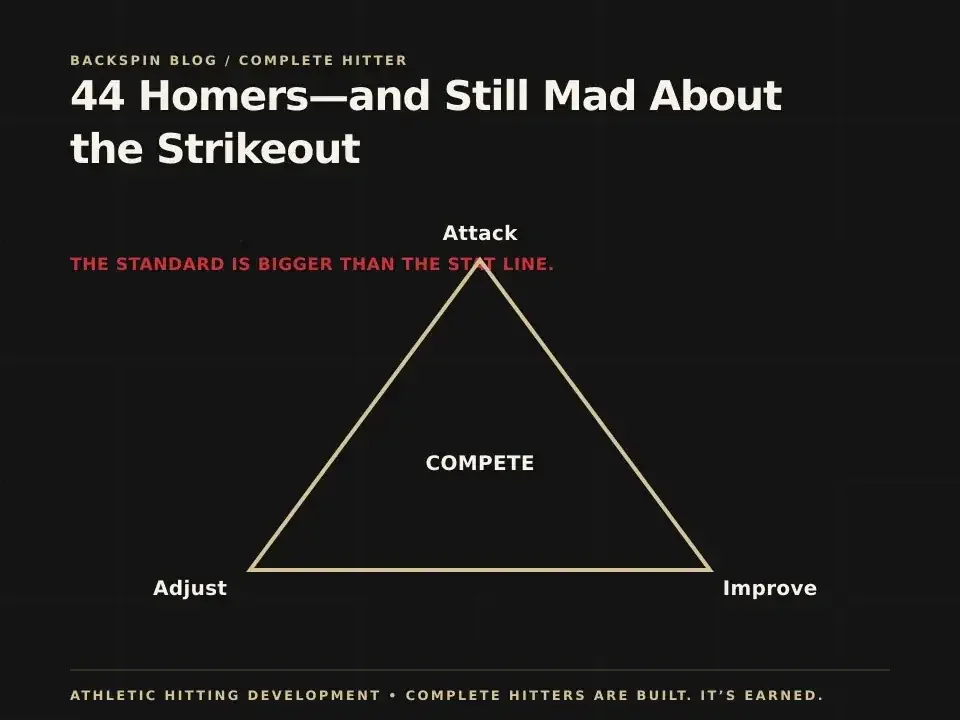
44 HOMERS. STILL NOT SATISFIED.
THAT IS THESTANDARD.
- What beat me?
- What do I need to own?
- Be ready for the next one.
CARE HARD. RECOVER FAST.
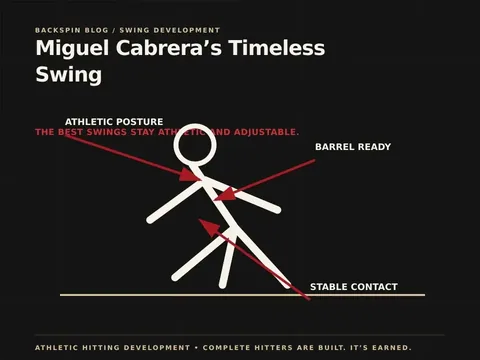
He did not just get hot. He built a more usable setup.
Crow-Armstrong’s 2026 leap came after a real adjustment period. Early in the season, he was struggling. His base had become very wide. His bat was flatter. His coach, Dustin Kelly, described the old position as being almost “on defense.”
That matters.
A hitter can be strong, talented, and fast—but if the setup robs the hitter of athletic movement, timing, posture, or adjustability, the game will eventually expose it.
Crow-Armstrong and the Cubs did not just chase a random cue. They worked toward a setup that let his athleticism show up:
- His feet narrowed dramatically, from roughly 31.5 inches apart in April and May to about 19 inches.
- He moved closer to the plate and deeper in the box.
- His hands settled lower, closer to his chest.
- His bat became more upright instead of staying flat.
The result was not a cookie-cutter “PCA swing” that every young player should imitate. The lesson is bigger than that:
Your setup has to let you be athletic enough to see the ball, get on time, make a decision, and still adjust.
For Crow-Armstrong, the wide setup had begun to trap him. The new one gave him room to move.
That is what a good adjustment is supposed to do. It does not make the hitter look trendy. It makes the hitter more functional against a hard game.
PETE CROW-ARMSTRONG'S ADJUSTMENT
A USABLESETUP.
- Feet: 31.5 in. to about 19 in.
- Closer to the plate.
- Hands lower, closer to chest.
- Bat more upright.
DOES YOUR SETUP HELP YOU OR TRAP YOU?
The numbers followed the better process
After the adjustments began to stick around late May, Crow-Armstrong took off. Public reporting described a .312 average, a 1.095 OPS, and 32 homers over that stretch. His out-of-zone chase rate also improved sharply from the previous season.
Those numbers are not just “he found power.” They point to a hitter who became harder to beat:
- Better athletic position gave him a better chance to move on time.
- Better movement made the barrel more usable through the zone.
- Better visual comfort and decision-making helped him chase less.
- Less chase meant more chances to attack pitches he could actually handle.
That is the complete-hitter chain.
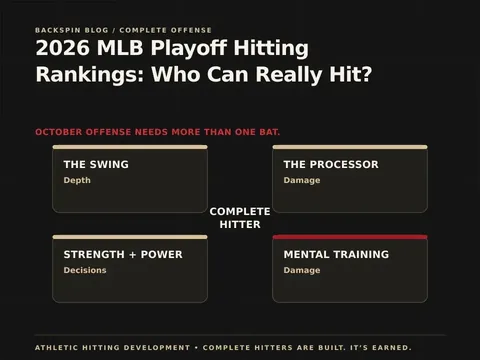
The AHD lesson: one hitter, four systems working together
Pete Crow-Armstrong is not having an MVP-level season because of one trick. His season is a reminder that the hitter is always a system.
1. The Swing: movement and adjustability
His adjustment began with movement. The new setup did not magically swing the bat for him. It put him in a better position to move, sequence, and let the barrel work.
Young hitters need the same question asked of them: Does your setup help you stay athletic, or does it trap you?
2. Strength & Explosiveness: athleticism has to be usable
Crow-Armstrong is one of the best athletes in the game. But even elite athleticism can get hidden when a hitter is stuck, stretched, or trying to create force from a poor position.
Strength is not just lifting weight. It is being able to control your body, keep posture, transfer force, and still adjust when the pitch is not perfect.
3. The Hitting Processor: see it, recognize it, time it, decide, attack it
The most important number in his leap may not be a home-run total. It may be the improved chase rate.
The hitter who chases less is often seeing more, recognizing more, or giving himself more time to decide. That does not mean he became passive. It means he became better at saving his aggression for pitches he could damage.
See It → Recognize It → Time It → Decide → Attack It.
That is what lets a hitter turn athletic ability into real offense.
4. Mental Training: compete without falling apart
The bases-loaded strikeout bothered him because he cares. Good.
But the correct lesson is not to throw a tantrum after every out. The lesson is to have a standard, use the at-bat as feedback, and keep your confidence intact.
The player who says, “I don’t care,” is usually protecting himself from disappointment. The player who says, “I care, and I am going to get better,” is building something.
THE MOST IMPORTANT NUMBER
CHASELESS.
- See it ↓ Recognize it ↓ Time it
- Decide ↓ Attack it
THE HITTER IS ALWAYS A SYSTEM.
Aggressive is not reckless. Competitive is not negative.
I have never seen a good young passive hitter.
The best young hitters are prepared to attack. They do not stand in the box waiting to be saved by a walk, a coaching cue, or a pitcher’s mistake. They have a plan, they know their zone, and they compete.
But aggression without a decision is just chasing.
Crow-Armstrong’s leap is a good example of controlled aggression. Better setup. Better vision. Better decisions. Then let the athlete go play.
That is the AHD Heater/Hanger approach:
Be ready to destroy the heater in your zone. Stay athletic enough to recognize and adjust to the hanger.
It is not passive. It is not reckless. It is prepared.
What young hitters should take to the field tomorrow
Do not copy Pete Crow-Armstrong’s exact stance. Copy his approach to development.
- Be honest about the problem. If your setup, timing, chase decisions, or balance are costing you, stop pretending it will fix itself.
- Work on one priority at a time. The first correct adjustment beats ten random drills.
- Make practice competitive. Train velocity, spin, changing speeds, and uncertainty—not only perfect front toss.
- Use video and ball flight as evidence. The ball does not lie. Let it guide you.
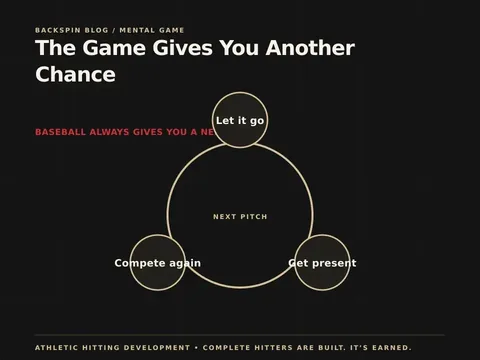
- Care hard—but recover fast. A bad at-bat should create a better question, not a pity party.
Crow-Armstrong had a 44-homer night and still wanted the bases-loaded at-bat back. That is the standard.
Not perfection. Not anger at yourself. Not pretending the game is easy.
Just the willingness to take the feedback, build a better hitter, and be ready when the next big pitch comes.
Complete Hitters Are Built… Not Given. Earned!
Find the first thing to build
Start with SwingChecker™ to identify the movement, athletic position, balance, path, timing, and process issue that deserves your attention first.
Stop guessing. Build the complete hitter.
Reporting referenced
- Patrick Mooney, The Athletic, “Pete Crow-Armstrong is on the verge of a rare MLB feat. His hitting coach explains the leap,” September 18, 2026.
- Jared Diamond, The Wall Street Journal, “The Risky Mechanical Overhaul That Built a Baseball MVP,” September 2, 2026.
- MLB.com reporting on Crow-Armstrong’s 2026 surge and historic June.
This article uses Crow-Armstrong’s public season and reporting as a development case study. Individual hitters need an assessment and plan built for their own movement, physical tools, vision, and goals.
THELESSON.
- Be honest about the problem.
- One priority at a time.
- Make practice competitive.
- Use video and ball flight.
- Care hard. Recover fast.
- Don't copy the stance.
Complete Hitters Are Built…Earned.
Quick answers
What did Pete Crow-Armstrong change in his batting stance?
His feet narrowed from roughly 31.5 inches apart to about 19 inches. He moved closer to the plate and deeper in the box, his hands settled lower and closer to his chest, and his bat became more upright instead of flat. The new setup gave him room to move.
Should young hitters copy a big leaguer’s stance?
No. Do not copy Pete Crow-Armstrong’s exact stance. Copy his approach to development. Your setup has to let you be athletic enough to see the ball, get on time, make a decision and still adjust. Ask whether your setup helps you stay athletic or traps you.
How should a hitter respond after a bad at-bat?
Care hard, but recover fast. The wrong response is telling yourself you are terrible. The right response is asking what beat you and what you need to own before the next one. Use the at-bat as feedback, keep your confidence intact and be ready for the next big pitch.
How do I know if my batting stance is hurting me?
Ask whether your setup helps you stay athletic or traps you. Your setup has to let you see the ball, get on time, make a decision and still adjust.
No subscription. No login. Keep learning, then take one priority into training.