By BK, Athletic Hitting Development
Complete Hitters Are Built… It’s Earned!
Key takeaways
- Being ready for the fastball doesn’t mean selling out for the fastball.
- Off-speed exposes all 4 pillars at once: swing, strength, processor and mental approach.
- “Stay back” isn’t always the fix. The real issue may be late pitch information, poor intent or a barrel already committed below the ball.
- Train it with real decisions, not by watching pitches on a screen.
Some hitters can punish a fastball and still struggle to become complete hitters.
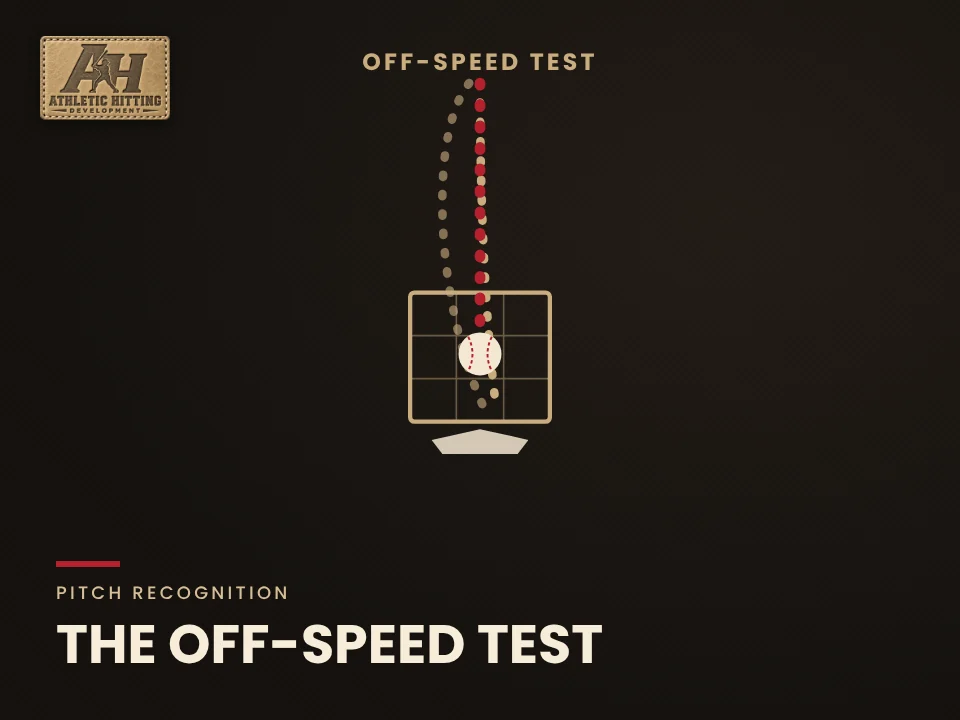
Off-speed tests whether a hitter can stay athletic long enough to recognize the pitch and adjust, not just whether he can punish a heater, as Munetaka Murakami’s 2026 splits show. Be ready for the fastball without selling out for it, keep the barrel above the ball and train it with real take-or-attack decisions.
Train it: Off-Speed / Spin Masterclass →That isn’t an insult. It’s a diagnosis.
1. What Murakami’s numbers show
FanGraphs’ Corbin Young looked at five 2026 breakout hitters, and Munetaka Murakami made the point clear. Against fastballs, his quality of contact was excellent: a .390 xwOBA and a 96.3 mph average exit velocity. Against breaking balls his expected average dropped to .193, and against off-speed it fell to .159, with a swinging-strike rate over 20%.
The lesson is bigger than one player. A hitter’s ceiling is often limited not by whether he can hit a heater, but by whether he can stay athletic long enough to recognize and adjust to the pitch that doesn’t arrive like one.
That’s exactly why AHD teaches the Hitting Processor and swing adjustability together.
2. The fastball is the starting point
The fastball usually demands the earliest commitment. If you’re not ready for it, you’re late. That’s why every hitter needs a heater plan.
But being ready for the fastball does not mean selling out for the fastball. The complete hitter gets started early enough to be on time for velocity, then holds enough balance, posture and connection to adjust when he sees spin, depth or a different speed.
That’s the difference between guessing right and competing.
HEATER READY. HANGER ADJUST.
ON TIMEFOR VELO.
- Start early for the fastball.
- Hold balance and posture.
- Keep the barrel above the ball.
- Adjust when you see spin.
READY FOR IT. NOT SOLD OUT FOR IT.
3. Why off-speed exposes everything
Off-speed pitches test all 4 pillars at once.
- The Swing. Can the hitter keep the barrel working from a good launch position with Mechanically Advantaged Angles (MAA), instead of dumping it early?
- Strength & Explosiveness. Can he control force and decelerate without falling apart?
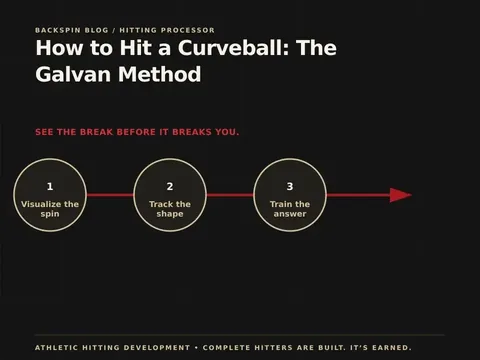
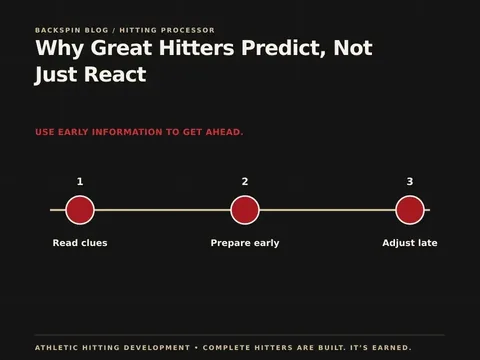
- The Hitting Processor. Can he see it, recognize it, time it, decide and attack it before the decision window closes?
- The Mental Approach. Can he avoid panic after being fooled once? Can he keep a simple plan instead of getting tentative?
When a hitter loses balance on a changeup or chases a slider, the fix isn’t always “stay back.” Sometimes that cue helps. Other times it’s too late. The real issue may be late pitch information, poor intent or a barrel that was already committed below the baseball.
4. The AHD off-speed check
Don’t just ask, “Did he hit it?” Ask these:
- Athletic positionWas he in an athletic position when he recognized the pitch?
- Fastball timingDid his first move let him be on time for the fastball?
- Barrel heightDid he keep the hands and barrel above the ball until he knew he could attack?
- The takeDid he make a good take when the pitch started outside his attack plan?
- Next pitchAfter a miss, did he keep his next-pitch plan clear?
Those answers tell you whether the problem is movement, timing, recognition, decision-making or confidence.
5. A drill progression that transfers
Don’t train off-speed recognition with a hitter standing flat-footed watching pitches on a screen. Start there if you need to, but move quickly to a real decision.
- Step 1: Call the pitch. From a short distance or a machine, the hitter calls fastball or spin as early as possible. No swing yet.
- Step 2: Take or attack. Give him one heater zone and one hanger zone. Everything else is a take. Score decision quality first.
- Step 3: Compete with constraints. In mixed-speed rounds, award points for hard contact on good pitches, disciplined takes and good off-speed adjustments. Subtract points for chases and panic mechanics.
- Step 4: Review the important clips. Compare one heater swing with one off-speed swing. Look at balance, head position, barrel height and decision first, not whether it happened to be a hit.
The goal isn’t to turn a hitter into a defensive, late swinger. The goal is a hitter who is dangerous on the heater and hard to fool on the hanger.
THETEST.
- A heater stroke…
- …that leaves room to adjust.
- Don’t dump the barrel.
- Don’t abandon your position.
- Stay in the fight.
Complete Hitters Are Built…Earned.
Quick answers
Why can some hitters crush fastballs but not off-speed pitches?
Off-speed tests whether a hitter can stay athletic long enough to recognize the pitch and adjust. A hitter who sells out for velocity, reads spin late or dumps the barrel early gets exposed.
Is “stay back” the right cue for hitting off-speed?
Sometimes, but not always. The real problem may be late pitch recognition, poor intent or a barrel already committed below the ball. Diagnose first.
How do you practice hitting off-speed pitches?
Have hitters call fastball or spin early, then add take-or-attack zones, then compete in mixed-speed rounds scored on decisions and adjustments, not just hits.
Should hitters look for off-speed pitches?
Most hitters should be ready for the fastball in their heater zone and adjust to the hanger. Being ready for velocity without selling out for it is the goal.
How do I figure out why my hitter keeps getting fooled by changeups?
Run the AHD off-speed check: Was he athletic when he recognized it? On time for the fastball? Barrel above the ball? Did he make a good take, and was his next-pitch plan clear? The answers show whether it’s movement, timing, recognition, decision-making or confidence.
Inspired by: Corbin Young, FanGraphs, “Can We Trust These Five Breakout Hitters From 2026?” (Oct. 8, 2026). The pitch-type data is used as an example of diagnosis by pitch type; it doesn’t establish a mechanical cause for any individual hitter.
Don’t collect drills. Build a complete hitter.
Complete Hitters Are Built… It’s Earned!
This article is part of the AHD guide Pitch Recognition & Timing. Start there for the full picture and every related article.