By BK, Athletic Hitting Development
Complete Hitters Aren’t Born. They’re Built… and Earned.
Key takeaways
- JUCO baseball is two-year junior college baseball, mostly governed by the NJCAA, with three divisions and different scholarship rules in each.
- Many hitters use JUCO to get stronger, get at-bats and get seen before moving up to a four-year program.
- Under the new 2026 five-year eligibility rules, full-time junior college enrollment starts the clock, so JUCO years have to be development years.
- The hitters who move up are the ones with a plan for all 4 pillars, not just more swings.
JUCO baseball is junior college baseball: two-year colleges, most of them in the NJCAA, where players develop, play and try to move up to a four-year program or pro ball. For a hitter, it can be the best two years of development you’ll ever get, if you treat it like a development plan and not a waiting room.
JUCO baseball is junior college baseball, played at two-year colleges mostly in the NJCAA, where players develop and try to move up. Under the 2026 five-year eligibility rules, junior college enrollment starts the clock, so JUCO years must be real development years.
Train it: Complete Hitter Masterclass → Free tool: Free Hitter Combine →I’ve coached and scouted a lot of junior college hitters. Some of the best development I’ve ever seen happened in those two years. I’ve also seen talented kids waste them.
Here’s what JUCO is, how it works in 2026, and how a hitter uses it to get where he wants to go.
1. How does JUCO baseball work?
Most junior college baseball is played in the NJCAA, which has hundreds of member colleges across 24 regions. Each college chooses to compete at the Division I, II or III level, and the scholarship rules are different in each.
| NJCAA division | Athletic aid allowed |
|---|---|
| Division I | Can offer full athletic scholarships, including room and board |
| Division II | Limited to tuition, fees, course books and some supplies |
| Division III | No athletically related financial aid |
Every program decides how to use what it’s allowed, so ask each coach directly what he can offer. Don’t assume a Division I junior college has a full ride waiting for you.
JUCO IN 2026
TWO YEARS.NO WASTE.
- 3 NJCAA divisions
- Aid rules differ by division
- Enrollment starts the clock
- Play, develop, get seen
A WORKSHOP, NOT A WAITING ROOM
2. Is JUCO baseball worth it for a hitter?
For the right hitter, yes. Here’s who it tends to fit:
- Late bloomers. You’re still growing into your body and your bat speed isn’t where it will be.
- Hitters who need at-bats. Playing every day against good arms beats sitting on a four-year bench.
- Grades or money. You need time to fix your academics or you need a cheaper path.
- Hitters who want to be seen again. A good JUCO season puts new numbers and new video in front of four-year coaches.
Where it goes wrong: a hitter treats it like a stop on the way somewhere else. He plays the games, lifts when he has to, and shows up two years later the same hitter.
The biggest advantage I’ve seen at junior college is volume. A hitter can see a lot of live pitching against older arms in two years. Volume only helps if every at-bat teaches him something, so chart them: the pitch, the count, the decision, the result. Patterns show up fast.
JUCO isn’t a waiting room. It’s a workshop.
3. Do JUCO years count against NCAA eligibility now?
This changed in 2026, and every JUCO family needs to know it. In June 2026, NCAA Division I adopted a five-year eligibility model based on age and enrollment instead of seasons played. Division II adopted the same kind of model in August 2026.
Under these rules the five-year clock starts at full-time college enrollment or the academic year after you turn 19, whichever comes first, and full-time enrollment at a junior college counts as college enrollment. Redshirt years and most waivers are gone.
What that means for a hitter: your JUCO years are spent from the five you get. You can’t treat them as free development time anymore. The rules are new, there’s already a legal challenge, and the transition depends on when you enrolled, so confirm your own situation with the NCAA Eligibility Center and your coach.
Plan backward from it. If the goal is a four-year program by year three, the first fall at junior college is when the strength, the bat speed and the swing decisions have to start moving. Waiting for the spring season to figure it out costs you a year.
4. How does a JUCO hitter get recruited to a four-year school?
The same things four-year coaches look for in high school hitters, just at a higher bar. Read what college coaches look for in a hitter for the full list. The short version: bat speed and exit velocity, quality at-bats, adjustability, athleticism and makeup.
- Get a baseline right awayTest your bat speed, exit velocity and swing decisions in your first month on campus.
- Build all 4 pillars on purposeThe swing, strength and explosiveness, the Hitting Processor and your mental approach, every week.
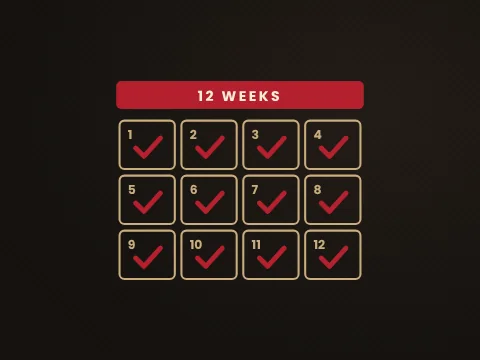
- Retest and keep the proofMeasure again every 8 to 12 weeks and keep clean video of your best swings and at-bats.
- Win the at-bats that get seenFour-year coaches watch how you handle good arms and off-speed, not your batting practice.
Hitters with Mechanically Advantaged Angles (MAA) keep their power when the pitching gets better, and that’s exactly what a four-year coach is trying to project. Start with the free SwingChecker to see your top priorities.
The question I give every JUCO hitter: "Two choices: A. Do everything in your control. B. Anything but A." Your lifting, your sleep, your grades, your cage work, your attitude after an 0-for-4. You control all of it, and two years goes fast.
5. Should I go JUCO or take a smaller four-year offer?
There’s no one answer, and anyone who tells you there is hasn’t met your kid. Ask three questions about every option:
- Will I play? At-bats develop hitters. A roster spot without at-bats usually doesn’t.
- Will I develop? Ask what the hitting plan, weight room and video work actually look like week to week.
- Does it fit the clock? With five years from enrollment, think about where you want to be in year three, not just year one.
If your hitter needs a plan built around his swing, his body and his decisions, that’s what our 90-day private hitter development is for. It works around a college schedule because it’s built on video and daily lessons. For the self-guided path, the Complete Hitter Masterclass trains all 4 pillars, and Lessons 1–3 are free.
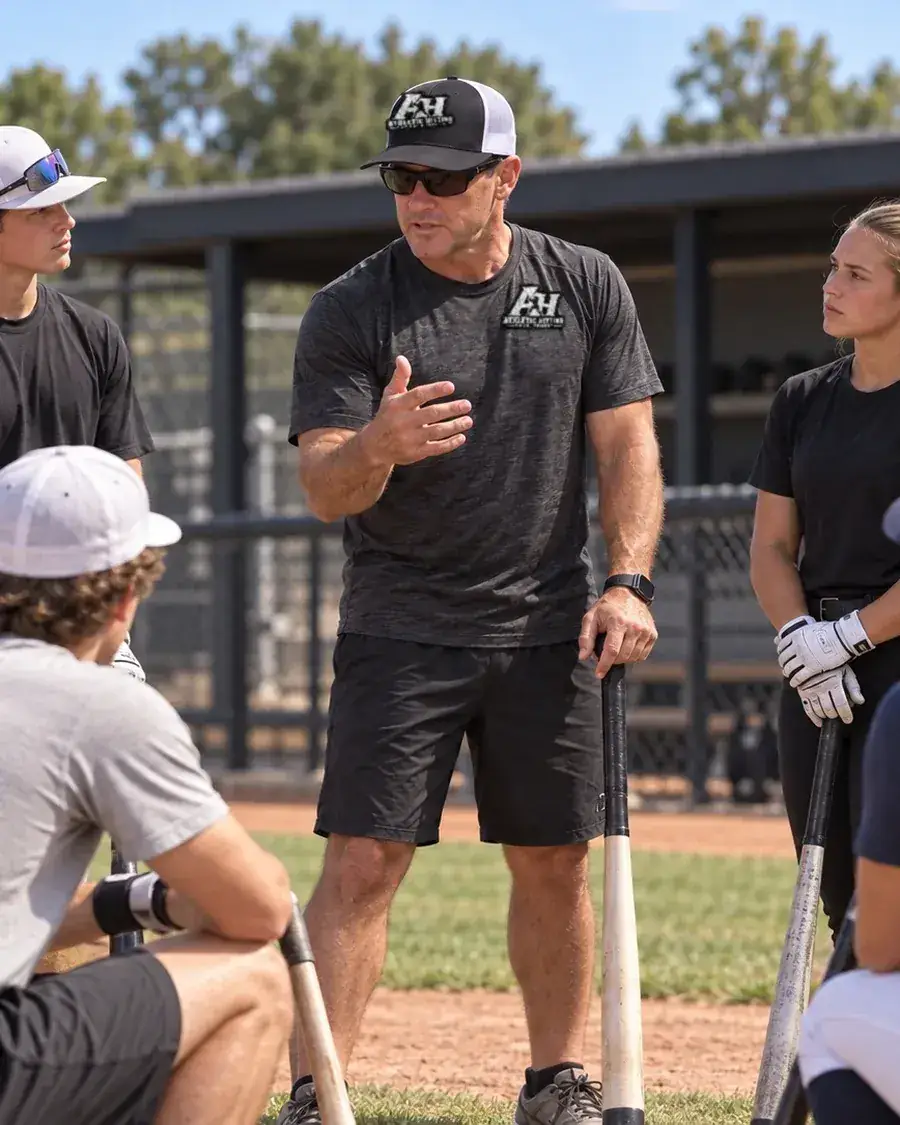
THELESSON.
- Baseline your first month
- Train all 4 pillars weekly
- Retest every 8–12 weeks
- Keep clean video and numbers
Complete Hitters Are Built…Earned.
Want to go deeper? Read What College Coaches Look For in a Hitter and How to Increase Exit Velocity: The 4-Pillar Plan.
Quick answers
What does JUCO stand for in baseball?
JUCO stands for junior college. JUCO baseball is played at two-year colleges, most of them members of the NJCAA.
Do JUCO baseball players get scholarships?
It depends on the division. NJCAA Division I colleges can offer full athletic scholarships, Division II is limited to tuition, fees and books, and Division III offers no athletic aid.
Does JUCO count against NCAA eligibility in 2026?
Under the new Division I and Division II five-year rules, full-time junior college enrollment starts the eligibility clock. Confirm your own situation with the NCAA Eligibility Center.
Is JUCO baseball better than D3?
Neither is better for everyone. Compare playing time, the development plan and how each fits your eligibility clock and academic goals.
Sources: NJCAA divisions and athletic aid rules (Wikipedia, National Junior College Athletic Association) · NCAA Division I age-based five-year eligibility rule, June 23, 2026 (Jackson Lewis) · NCAA Division II adopts five-year eligibility model, junior college enrollment starts the clock (Colorado School of Mines Athletics, Aug 2026) · D-I age-based eligibility model and junior college enrollment (College Baseball Insights)
Don’t collect drills. Build a complete hitter.
Complete Hitters Aren’t Born. They’re Built… and Earned.