How Parents Can Help a Hitter Get Better Without Guessing
Find the priority, use one cue, film instead of fix — and keep practice from turning into arguments.
READ ARTICLE →
Originally published October 9, 2015 under Krush Athletics.
Backspin Blog — Free Instruction / The Early Days of AHD
This is historical coaching writing originally published under Krush Athletics. The wording reflects its original period. For current guidance, use AHD lessons and SwingChecker.
A Proven Teaching Method
As you read this, think about what we want in the end – a road map per say.
1. You will know the commonalities of exceptional hitters.(Swing mechanics of the best players on earth) 2. You should know what the hitters do from head to toe and from the start of the swing to the end of the swing. This will be the model we use.
Use the photos throughout as references for all the topics and concepts.
The program is taught step by step. It is also the way it is best learned.
*** One major problem I have witnessed over and over is “over-coaching”. It is very difficult to work on more than one thing at a time. Work on one thing, one technique, one commonality, one drill at a time. Then after a few workouts working on one technique, review the material, work on it a little and go to the next. Less is more sometimes. Less information at one time equals more focus on mastering that individual technique.
As we get into the information-commonalities, mechanics, techniques, drills, swing-thoughts think of it as a step by step process… learning and teaching. Exactness is one of my favorite words… if it is a word. But it is a term I want you to use extensively. If we are talking about where the hitter’s hands are at launch point, I want you to think, “What exactly does hands back mean? Behind my head? Behind my shoulder?” Precise instruction and advice will be demonstrated throughout.
What, Why, How
Step 1 – Learn exactly what the fault, technique to correct a fault, commonality or concept is that is being taught Step 2 – Learn why hitters make that movement, whether it is a swing fault or a well executed swing, or use a specific technique (Understanding WHY usually helps the hitter grab the concept better and the teacher, teach more effectively) with greater grasp of the concept.
Step 3 – Learn how the hitter can integrate these techniques, commonalities, concepts into their routine and ultimately have them become productive habits. How does the coach or parent teach these? What drills, swing thoughts or techniques are used to master each skill?
Giving a hitter too many things to work on at once. Hitters learn best working on one technique, one drill or one idea at a time until it sticks.
First teach exactly what the skill or fault is, then why hitters do it, then how to build it into a habit with drills and swing thoughts.
No subscription. No login. Keep learning, then take one priority into training.
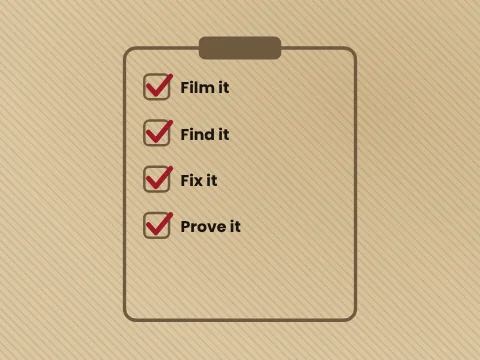
Find the priority, use one cue, film instead of fix — and keep practice from turning into arguments.
READ ARTICLE →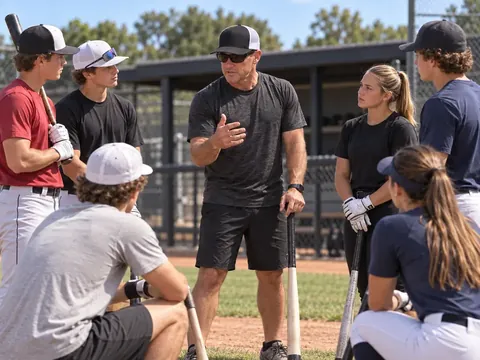
Six stations, four groups, zero kids standing in line. A minute-by-minute team hitting plan that trains all 4 pillars and carries into games.
READ ARTICLE →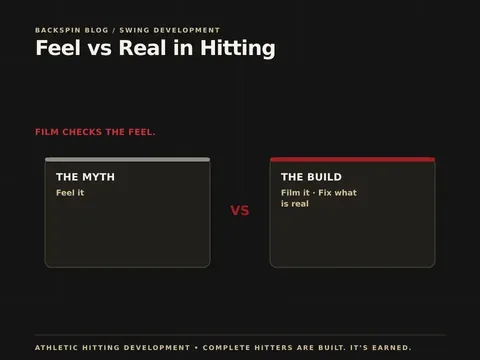
You feel on time but you’re late. You feel on the ball but you’re under it. The AHD fix: go the opposite. Under? Swing over.
READ ARTICLE →Guarantee & Refunds · Privacy · Terms · Safety · Delete My Data