By Athletic Hitting Development
Complete Hitters Are Built… Not Given. Earned!
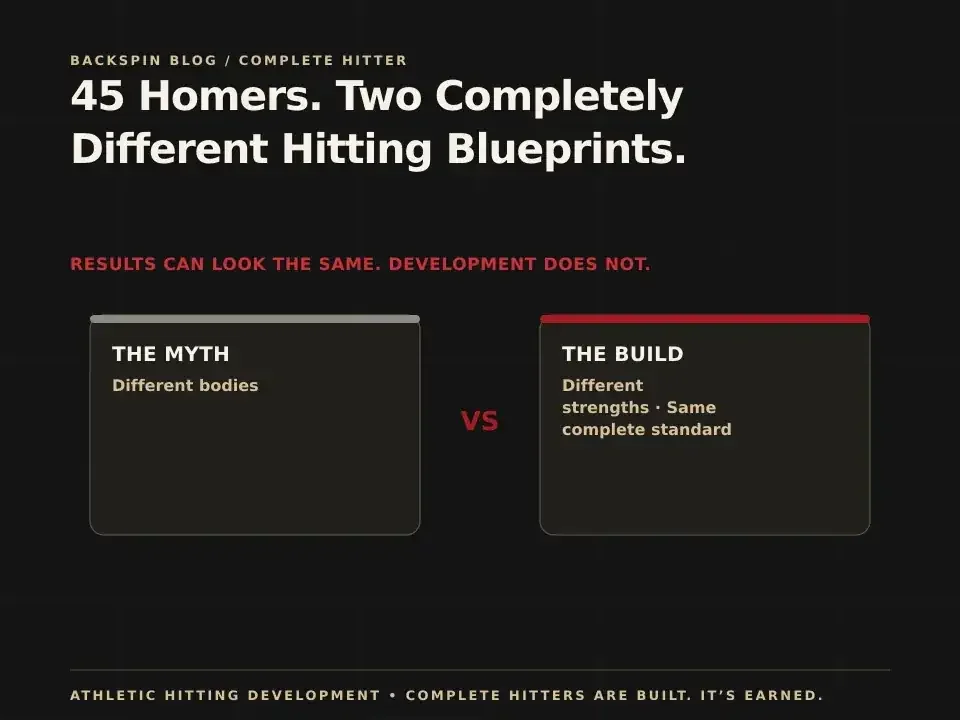
Pete Crow-Armstrong and Kyle Schwarber finished the 2026 regular season tied for the MLB lead with 45 home runs. That is a big headline. But for a coach, parent, or young hitter, the more valuable point is what comes after it:
Pete Crow-Armstrong and Kyle Schwarber each hit 45 homers in 2026 through very different strengths, one with athletic pressure and one with a clear damage hunt. The lesson for hitters: don’t copy a stat line, build your own power profile on the same foundation of seeing it early, staying athletic and owning a damage zone.
Train it: Complete Hitter Masterclass →The same power total can be built through very different strengths. Do not copy a stat line. Build the hitter you are capable of becoming.
Both players did massive damage. Neither got there by trying to become a generic “power hitter.” Each has a different athletic profile, a different way of creating pressure, and a different way of winning at-bats. That is the lesson.
Same homers. Not the same hitter.
Pete Crow-Armstrong: athletic pressure plus damage
Crow-Armstrong brings power inside a complete athletic package. His 45 home runs came alongside a .282 average, 39 stolen bases, center-field defense, and the ability to affect a game even when the ball does not leave the yard.
Coaching translation: Build an athletic position, stay organized long enough to see and adjust, then let force show up through a usable barrel. Power becomes more dangerous when it is attached to movement, speed, body control, and a hitter who can create problems in multiple ways.
Kyle Schwarber: controlled damage and a clear hunt
Schwarber is one of the game’s premier damage hitters. His profile is built around intent, a defined strike-zone plan, and the ability to get to a mistake without turning every pitch into a wild guess.
Coaching translation: You do not need to steal bases or look like another player to hit with authority. But you do need a plan. Know the pitch you want, make a disciplined take when it is not there, and attack with conviction when the ball enters your zone.

45 HOME RUNS. TWO ROUTES.
DON'T COPY ASTAT LINE.
- Crow-Armstrong: athletic pressure.
- Schwarber: a clear hunt.
- Same homers. Not the same hitter.
BUILD THE HITTER YOU CAN BECOME.
What young hitters should not copy
The wrong takeaway is, “I need a bigger uppercut,” “I need to sell out for pull power,” or “I need to swing as hard as possible every pitch.” Forty-five home runs are not the product of one bat-path picture or one famous cue.
They are the product of a hitter repeatedly getting to a pitch he can damage—with a body that is athletic enough to deliver the barrel on time.
Young hitters get in trouble when they borrow the surface look of a major leaguer without building the foundation underneath it. They start the barrel early, dump it toward the ground, lose balance, or pull off their plan before they have actually recognized the pitch.
The shared foundation underneath both profiles
Crow-Armstrong and Schwarber have different strengths. Still, every real power hitter has to solve the same jobs:
- See It → Recognize It → Time It → Decide → Attack It. The hitter cannot do damage consistently if he cannot get early, usable information.
- Hold an athletic position. Balance and body control buy the time needed to adjust instead of committing the body too early.
- Own a damage zone. Power does not mean swinging at everything. It means being ready to do real damage to the pitch you came to hit.
- Keep the barrel in the contact window. A good path gives the hitter a larger margin for error for solid contact and the chance to do more than clip the ball.
- Compete after a miss. A bad swing, a strikeout, or a take does not end the at-bat or the game. Great hitters reset and go back to work.
EVERY REAL POWER HITTER
SAMEJOBS.
- See it. Recognize it.
- Hold an athletic position.
- Own a damage zone.
- Compete after a miss.
POWER ISN'T SWINGING AT EVERYTHING.
Find your power profile
Some hitters will look more like Crow-Armstrong: athletic, fast, capable of creating pressure in every phase of the game. Others will be more of a damage-first profile: strong, selective, and built to make one mistake hurt.
Both can become dangerous. The question is not, “Which big leaguer should I copy?” It is:
What is my best route to becoming an athletic, on-time, dangerous version of me?
That is why AHD starts with assessment, not a one-size-fits-all drill list. SwingChecker™ helps identify the first priority in your swing. Then the work is to build the movement, strength, processor, and confidence that let your particular hitter profile show up in games.
Source note: Crow-Armstrong and Schwarber’s 45-homer tie was reported at the end of the 2026 regular season by Bleacher Report; regular-season leader data is available through MLB Stats. This article is AHD’s coaching interpretation of that result.

THELESSON.
- Don't copy a stat line.
- Find your power profile.
- Start with assessment.
- Stay athletic and on time.
- Keep the barrel in the window.
Complete Hitters Are Built…Earned.
Quick answers
How did Pete Crow-Armstrong and Kyle Schwarber hit 45 home runs differently?
Crow-Armstrong brings power inside a complete athletic package with speed, defense and average. Schwarber is a damage hitter built on intent and a clear strike zone plan. Same home run total, different strengths. Neither got there by trying to be a generic power hitter.
Should young hitters copy a big leaguer’s swing for power?
No. Do not copy a stat line or one famous cue. Kids who borrow the surface look start the barrel early, dump it, lose balance or pull off before they recognize the pitch. Build the foundation first, then let your own power show up.
What do all power hitters have in common?
Every real power hitter has to see and recognize the pitch, hold an athletic position, own a damage zone, keep the barrel in the contact window and compete after a miss. Power does not mean swinging at everything. It means doing damage to the pitch you came to hit.
How can a young hitter hit for more power?
Don’t chase a bigger uppercut or swing as hard as possible every pitch. Power comes from repeatedly getting to a pitch you can damage with a body athletic enough to deliver the barrel on time. Start with assessment and build your own route.
No subscription. No login. Keep learning, then take one priority into training.
This article is part of the AHD guide Bat Speed & Power Training. Start there for the full picture and every related article.