By BK, Athletic Hitting Development
Complete Hitters Are Built… It’s Earned!
Key takeaways
- Bat speed is how fast the barrel moves. Timing is whether it gets to the hitting window when the ball does.
- In his 2026 postseason slump, Shohei Ohtani’s bat speed stayed high, but his late-swing rate against four-seamers and sinkers hit 37%.
- Late contact can make a swing look flatter, more opposite-field and weaker, even when raw barrel speed hasn’t gone anywhere.
- Before coaching a “path problem,” compare an on-time swing and a late swing from the same camera angle.
Don’t tell every late hitter to swing harder. A late hitter may already be swinging plenty hard. The better question is: when did the barrel arrive, and where did it meet the ball?
A hitter can have elite bat speed and still be late. When the barrel starts late, contact moves deeper, the ball drifts to the opposite field and the swing looks flatter. Check the timing and the contact point first, then decide whether the path really needs to change.
Train it: Hitting Processor →1. What Ohtani’s numbers show
MLB.com’s October look at Shohei Ohtani’s 2026 postseason slump found something coaches see all the time: his bat speed stayed high, but the barrel was arriving late against hard fastballs and sinkers. That isn’t a small distinction. It changes the picture a coach sees on video.
37%
Late-swing rate vs. four-seamers and sinkers, the highest of the tracked stretch.
22 in.
Reported intercept point in front, down from about 27 inches.
8°
Reported attack angle, down from a more typical 13°.
And through all of it, the bat speed was still there. These are numbers from one elite player in one stretch. They don’t prove one cause for every late hitter. They do give us a clean teaching example: a fast bat can still be too late to show its best self.
A fast barrel that starts late can make a good swing look slow.
2. Why late changes the swing you see
When the hitter is late, the pitch keeps traveling. Contact moves deeper. That one timing miss can change the path picture without the hitter ever trying to change his path.
- The ball gets deeperThe hitter meets it farther back than the intended contact point, after the best damage window has started to close.
- Direction drifts the other wayA ball met deeper tends to go to the opposite field. That’s where the barrel met the ball, not proof he was trying to go oppo.
- The attack angle looks lowerCatch the ball later and the measured angle and contact quality change. Don’t assume he “lost the upswing” until you check timing.
- He tries to save itLate hitters pull harder with the hands, dump the barrel, spin out or rush the next pitch. That usually makes the timing problem worse.
That’s why a good hitting coach doesn’t stop at the last thing that moved. The barrel is easy to see. The answer usually lives earlier: the decision, the forward move, launch timing and the contact point.
BAT SPEED VS TIMING
LATEISN’T SLOW.
- Start the move on time.
- Mark the contact point.
- Compare on-time vs. late.
- Fix the first problem.
BAT SPEED HELPS. TIMING LETS IT SHOW UP.
3. What to check before you change the path
Use SwingChecker™ to compare an on-time swing and a late swing from the same view. You’re not looking for one perfect body position. You’re looking for the first meaningful difference.
- Side view: did the move start on time?Compare the gather, forward move and launch. Did he land ready to turn in time for the heater, or did the whole sequence begin late?
- Contact point: where did ball meet barrel?Don’t call a swing “flat” until you check whether the ball was simply met too deep. Mark the intended window and compare.
- Rear view: did posture and barrel options hold?Look for balance, body control and a barrel that can still work through the ball. AHD hitters build Mechanically Advantaged Angles (MAA) so the barrel stays usable even when they’re a tick late.
- Pitch context: was he ready for the right problem?Grade pitch type, velocity and location. The goal is to be ready for the heater in the damage zone while still processing the pitch well enough to decide.
Important: video does not diagnose injury or physical health. If pain, a sudden unusual change or a health concern could be involved, see a qualified medical professional, not a video breakdown.
4. The AHD timing ladder
Train the first problem, not the last symptom. This isn’t a “swing harder” plan. It’s a simple progression to help a hitter arrive on time, keep an athletic position and see whether the barrel still has options against real information. Aggressive and athletic, with controlled violence, on time.
- Round 1: Find the rhythm6–8 controlled toss or machine reps in the damage zone. The only job is to organize the gather and forward move early enough to be ready for the heater. Film a side view.
- Round 2: Add a faster ball8 reps with a faster fastball look. Don’t chase max exit velo. After each rep, call it early, on time or late and note the contact point. The hitter learns to own the information.
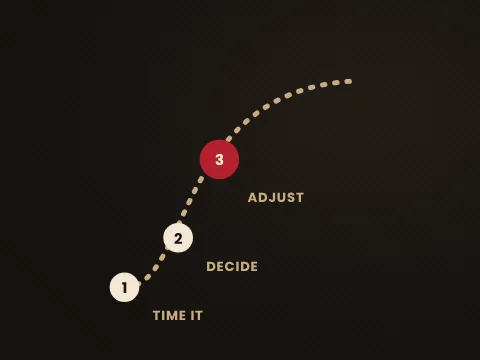
- Round 3: Add decisions10 mixed-speed or mixed-location reps at an age-appropriate level, running the AHD Hitting Processor: See It → Recognize It → Time It → Decide → Attack It. Keep the competitive intent.
- Review: compare two real repsOpen the on-time and late swings in SwingChecker™. What changed first? Did he start late? Did the ball get deeper? Did the path change because he was late, or before the timing miss?
5. Don’t confuse late with slow
A late hitter needs a clear answer, not a louder cue. He may need a better pre-pitch rhythm, a simpler forward move, earlier launch readiness, better fastball readiness, stronger posture, or a different adjustment entirely. The right answer comes from the evidence in front of you.
Ohtani’s numbers give every young hitter and coach a useful reminder: raw speed matters, but it isn’t enough. Complete hitters build an athletic swing that arrives on time, sees the ball clearly and keeps the barrel usable long enough to make the right decision.
Bat speed helps. Timing lets it show up.
Quick answers
Can a hitter have good bat speed and still be late?
Yes. Bat speed is how fast the barrel moves. Timing decides whether that barrel reaches the intended contact point when the pitch arrives. They’re connected, but they are not the same skill.
Does a lower attack angle mean a hitter flattened the swing?
Not automatically. Meeting the ball deeper can change the measured angle. Check pitch context, contact point and timing before you tell a hitter to change the path.
What is the first video check for a hitter who looks late?
Compare two similar pitches from the same camera angle. Check when the hitter is ready to launch, where contact happens and whether posture stays athletic. Find the first difference, not the most obvious symptom.
Should I tell a late hitter to swing harder?
No. A late hitter may already be swinging plenty hard. Get the move started on time first: rhythm, forward move, launch readiness and being ready for the heater.
Source: MLB.com, analysis of Shohei Ohtani’s 2026 postseason slump (October 13, 2026). This article is AHD coaching interpretation, not a claim that one player’s data diagnoses another hitter or proves a single mechanical cause. More breakdowns in MLB Breakdowns and Swing Development.
Don’t collect drills. Build a complete hitter.
Complete Hitters Are Built… It’s Earned!
This article is part of the AHD guide Pitch Recognition & Timing. Start there for the full picture and every related article.