By BK, Athletic Hitting Development
Complete Hitters Are Built… It’s Earned!
Key takeaways
- Choose a Scottsdale hitting coach by their plan, not their cage: ask how they assess, what they will work on first and how they measure progress.
- Be careful with any coach who teaches one swing for everyone or cannot explain why a change is being made.
- A good first lesson includes an assessment, one clear priority and homework your hitter can do between sessions.
- Ask how the coach communicates between lessons; video review and a written plan keep progress from fading.
Choose a hitting coach in Scottsdale by asking five questions: what is your plan, how do you assess, how do you measure progress, do you teach one swing for everyone, and how do you communicate between lessons. The coach with clear answers to all five is usually the right one.
The Scottsdale and Phoenix area has no shortage of cages, academies and private instructors. That is good news for families. It also makes it hard to tell who will actually develop your hitter.
I have coached in Scottsdale for a long time. I will not tell you who to avoid. I will tell you what to ask, so you can judge any coach, including me.
1. What questions should I ask a hitting coach?
- What is your plan for my hitter?A good coach can describe the next 4 to 12 weeks, not just the next 60 minutes.
- How do you assess a new hitter?Look for video from more than one angle, movement checks and how the hitter handles speed and decisions, not just a few tee swings.
- How do you measure progress?Expect re-tests, the same video angles over time and game results, not just “he looks better.”
- Do you teach one swing for everyone?The right answer is principles that fit each body, not a copied model swing.
- How do you stay in touch between lessons?Video review, a written plan or homework keeps the work going the other six days.
Two more worth asking: Can I watch the lesson? And who have you worked with at my hitter's age and level? A coach who is great with college hitters may not be the right fit for a 10-year-old, and the reverse is true too.
Write the answers down. Compare two or three coaches side by side. The differences show up fast. For a deeper version of this list, read There’s No Secret Sauce: How to Vet a Hitting Coach.
2. What are the red flags?
- No assessment. The first lesson starts with drills before anyone has looked at the hitter.
- A new fix every week. If every lesson brings a different change, there is no plan.
- One swing for every kid. A 9-year-old and a 17-year-old do not move the same way.
- Swing only. Mechanics matter, but a complete hitter also needs strength, decisions and an approach.
- Big promises. Guarantees of scholarships, roster spots or exact bat-speed gains.
- No “why.” If the coach cannot explain a change in plain words, your hitter will not own it.
Don't collect drills. Build a complete hitter.
A coach should be building toward the 4 Pillars of a Complete Hitter: The Swing, Strength & Explosiveness, the Hitting Processor and the Mental Approach. Ask how their lessons touch each one.
ASK EVERY COACH
FIVEQUESTIONS.
- What is your plan?
- How do you assess?
- How do you measure progress?
- One swing for everyone?
- How do we talk between lessons?
CLEAR ANSWERS = A REAL PLAN
3. What should happen in a first hitting lesson?
A first lesson is mostly an evaluation. Expect the coach to watch, film and ask questions before changing much.
- Conversation. Age, position, level, goals, what the hitter thinks is going wrong.
- Movement and swing video. Tee, front toss and, ideally, faster pitches from at least two angles.
- One priority. Not five. The one thing that unlocks the most.
- Homework. A short daily routine and a time to check back.
Your hitter should leave knowing what they are working on and why. You should leave knowing what to watch for at home. Want to show up prepared? Take the free SwingChecker first and bring the result.
Give a new coach four to six weeks before you judge. Real changes take time to hold up at game speed. But by then you should see a clear plan, a hitter who can explain what they are working on, and video that shows something moving in the right direction.
4. What should Scottsdale families know about logistics?
The Phoenix metro is spread out. A great coach 45 minutes away in traffic may get fewer sessions than a good one nearby. Factor the drive into the real cost.
Then there is the heat. From late spring into early fall, outdoor sessions belong early in the morning or in a shaded or indoor cage. Bring more water than you think. Ask the coach how they adjust in summer. Online work between sessions helps here too, since your hitter can train indoors at home.
Fastpitch families: ask whether the coach actually works with softball hitters. The pitch comes from a shorter distance and a different release, and the timing is not the same. We also offer online softball hitting coaching.
5. Where does AHD fit?
I am BK. I have spent 52 years playing, coaching and scouting, and 25+ years developing hitters, from youth players to 200+ professionals. AHD, formerly Krush Athletics, is based right here in Scottsdale.
Every hitter starts with an assessment across all 4 pillars. We teach principles that fit each body, including the strong positions I call Mechanically Advantaged Angles (MAA), which every AHD hitter learns to own. Then we build a plan and measure it.
- In-person. Private and semi-private Scottsdale hitting lessons for families in Scottsdale, North Scottsdale, Phoenix, Paradise Valley, Tempe, Mesa, Chandler and Gilbert. Contact Coach at athletichitting.com/contact for current rates.
- Between lessons. The Complete Hitter Masterclass keeps the plan going at home, 10 to 20 minutes a day.
- Fully remote. 90-Day Private Hitter Development if the drive does not work.
Ask me the same five questions. You should get clear answers, and so should your hitter. That is the standard for any coach you hire.

THELESSON.
- Pick the plan, not the cage
- Assessment comes first
- One priority at a time
- Progress gets measured
Complete Hitters Are Built…Earned.
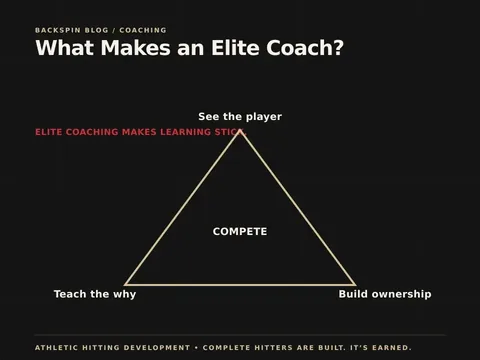
Want to go deeper? Read There’s No Secret Sauce: How to Vet a Hitting Coach and What Makes an Elite Coach?.
Quick answers
How much does a hitting coach cost in Scottsdale?
It varies by coach and facility. One public Scottsdale facility lists $60 to $75 for 30 minutes and $100 to $150 for an hour as of October 2026.
How do I know if a hitting coach is good?
A good coach assesses before changing anything, gives one clear priority, explains why, and measures progress over time with video and results.
How often should my kid take hitting lessons?
Many hitters do well with one lesson a week or every other week, as long as they do a short daily routine at home between sessions.
Are there hitting lessons for softball players in Scottsdale?
Yes. Many Scottsdale coaches, including AHD, work with fastpitch hitters, and AHD also offers online softball hitting lessons.
Sources: Scottsdale Batting Cages, instructor lesson pricing (Oct 2026)
Don’t collect drills. Build a complete hitter.
Complete Hitters Are Built… It’s Earned!