By BK, Athletic Hitting Development
Complete Hitters Are Built… It’s Earned!
Key takeaways
- To hit an inside pitch, keep the hands inside the ball and let the body turn the barrel to it.
- The inside pitch is hit farther out in front than a middle or away pitch, so you have to be on time.
- Getting jammed is usually late or long, not a lack of strength.
- Bailing out or opening early to clear room only creates a new hole. Turn, don't pull off.
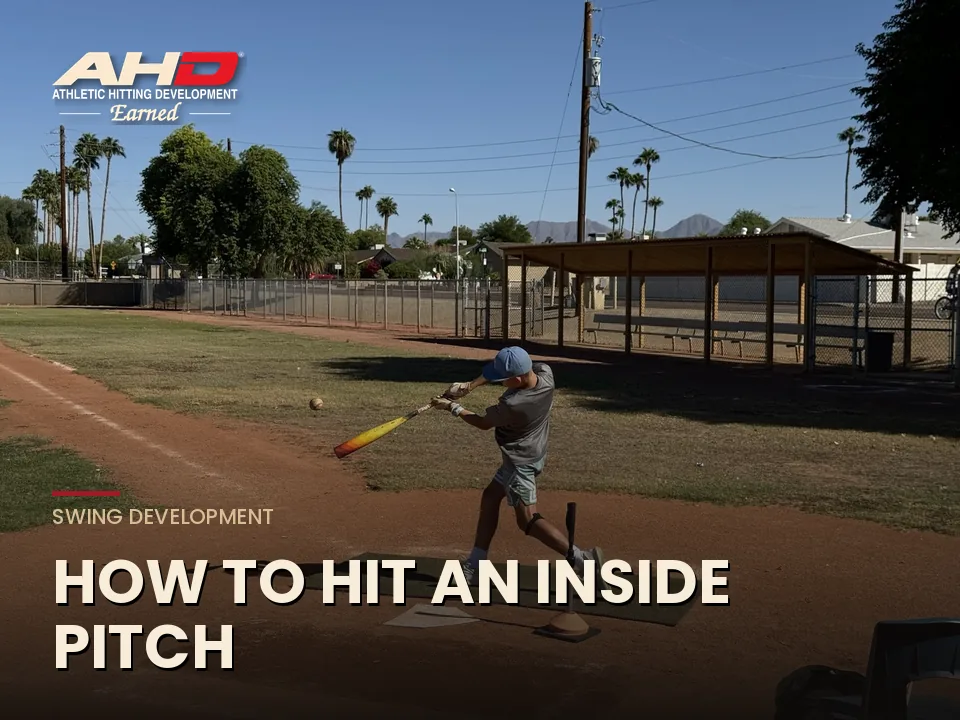
To hit an inside pitch, keep your hands inside the ball, turn your body hard and catch it out in front. Do that, and the pitch meant to jam you becomes the one you drive the hardest.
Keep your hands inside the ball, turn your body hard and hit the inside pitch farther out in front than a middle or away pitch. Getting jammed is usually being late or letting the hands drift away from the body, not a lack of strength.
Train it: Swing Structure & Mechanics →Pitchers pound hitters inside for one reason: most hitters can't handle it. They get jammed, they roll it over, or they start bailing on everything. That's a weakness the other dugout will find in one at-bat.
The good news? The inside pitch is the shortest path to the pull side and the pitch you can hit hardest. Once a hitter learns to turn on it, pitchers lose their favorite weapon. Here's how we teach it at AHD.
1. Why do hitters get jammed on inside pitches?
Getting jammed means the ball hit the bat between the hands and the sweet spot. The barrel never got to the ball. In my experience it comes down to a few things.
- Late. The inside pitch has to be hit out front. Be a tick late and it eats you up.
- Long. The hands drift away from the body and the barrel casts out wide. That swing is built for the outside corner, not the inside one.
- Arms only. The hitter tries to get the barrel there with the arms instead of turning the body.
- Wrong decision. Swinging at the inside pitch that is OFF the plate. Some of those you just take.
Notice what isn't on the list: strength. I've seen plenty of strong hitters get jammed all day. It's a movement and timing problem.
2. What does "keep your hands inside the ball" mean?
It means the knob leads toward the ball with the hands staying close to the body, and the barrel stays behind the hands until the body turns it through. The hands work on the inside part of the ball instead of looping around the outside of it.
Short to it. Turn through it.
When the hands stay inside, the body can rotate the barrel into the zone fast. That's what gets the sweet spot to a pitch on the hands. Good hitters stay connected here. AHD hitters own their Mechanically Advantaged Angles (MAA), the body and bat angles that let them deliver force on a short, direct path.
INSIDE PITCH
HANDS IN.BODY TURNS.
- Knob leads, hands stay close
- Barrel behind the hands
- Hips and torso turn hard
- Catch it out in front
SHORT TO IT. TURN THROUGH IT.
3. Where should you hit an inside pitch?
Out in front. The contact point moves with the pitch location:
| Pitch location | Contact point | Where it goes |
|---|---|---|
| Inside | Farthest out in front | Pull side |
| Middle | Out front, a little deeper | Middle of the field |
| Away | Deepest, closer to the plate | Opposite field |
That's why the inside pitch rewards hitters who are on time. You can't wait on it the way you can wait on the outside pitch. If you want the other side of this picture, read how to hit the ball the other way.
4. Should you open up or step out to make room?
No. Bailing out, stepping in the bucket or pulling the front shoulder early feels like it makes room. What it really does is take you off every pitch away. Now the pitcher just moves to the outside corner.
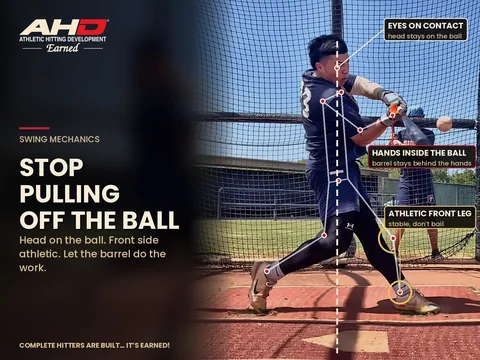
Stay in there, land closed enough to cover the whole plate, and let the hips and torso turn hard. The room comes from the turn, not from running away. If your hitter is already opening early, start with how to stop pulling off the ball and stepping in the bucket.
5. Drills to own the inside pitch
- Inside tee, out frontSet the tee on the inside corner and well out in front. Turn and drive it to the pull-side gap, not foul.
- Tee depth ladderHit inside, middle and away off the tee with the contact point moving with each one. The barrel learns where each pitch lives.
- Inside front tossFront toss to the inside third only. Hands stay inside, the body turns, the ball goes hard to the pull side.
- Mixed locations, called lateThe feeder mixes inside and away. The hitter adjusts to location without changing the swing.
- Take the ones off the plateFeed some balls just inside off the plate. The hitter takes them. A great inside hitter knows which ones to leave alone.
Ten quality swings beat fifty sloppy ones. Film from the side once a week and compare. Our 15-minute home plan fits these in easily.
6. Train the eyes and the mindset, too
Handling the inside pitch is one piece of a complete hitter. Your Hitting Processor has to see it early, time it and decide fast. That gets trained DAILY. Your Mental Approach has to stay aggressive when a pitcher is challenging you. And Strength & Explosiveness makes the turn faster. That's the 4 Pillars working together.
When a hitter starts hitting the inside pitch hard, pitchers notice. They stop coming in. Now they have to pitch to the part of the plate you want. That's controlled violence, earned one swing at a time.

THELESSON.
- Getting jammed is late or long
- Inside = farthest out front
- Don't bail. Turn.
- Take the ones off the plate
Complete Hitters Are Built…Earned.
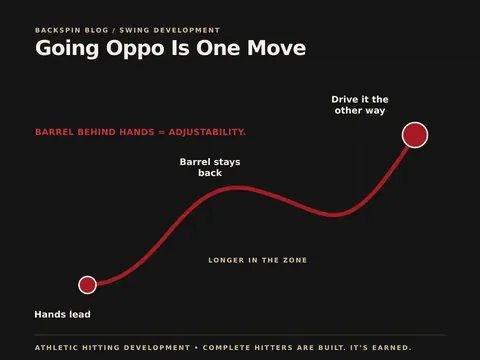
Want to go deeper? Read Going Oppo Is One Move and How to Stop Pulling Off the Ball: Causes, Video Checks and Fixes.
Quick answers
Why do I keep getting jammed?
Usually you're a tick late or your hands are drifting away from your body. Get on time, keep the hands inside the ball and let the body turn the barrel to it.
Should I choke up to hit inside pitches?
Choking up an inch can shorten the swing and help some hitters. It's a fine adjustment, but it won't fix being late or casting the hands.
Is hitting an inside pitch different in softball?
The principle is the same: hands inside, body turns, contact out front. The pitch gets on you faster at 43 feet, so timing and an early decision matter even more.
Where should an inside pitch go?
Hit right, an inside pitch goes hard to the pull side. If you're hitting it foul or rolling it over, look at your timing and contact point first.
Don’t collect drills. Build a complete hitter.
Complete Hitters Are Built… It’s Earned!