By BK, Athletic Hitting Development
Complete Hitters Aren’t Born. They’re Built… and Earned.
Key takeaways
- The load starts when the pitcher starts his motion. That’s when you start your trigger, your first timing mechanism.
- Load back and/or rotationally in, or use a toe tap. The style can vary. Getting back, gathered and loaded can’t.
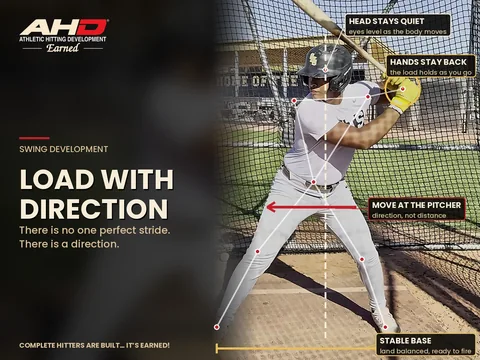
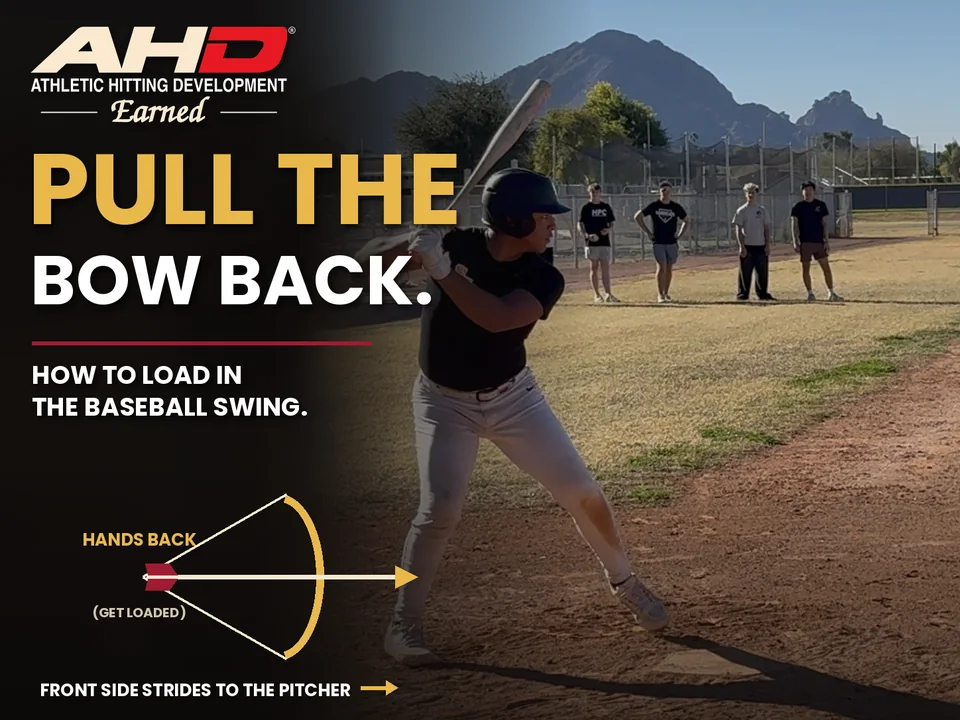
- The stride is direction toward the pitcher, while the hands, elbow, upper torso and arms stay back. That’s pulling the bow back.
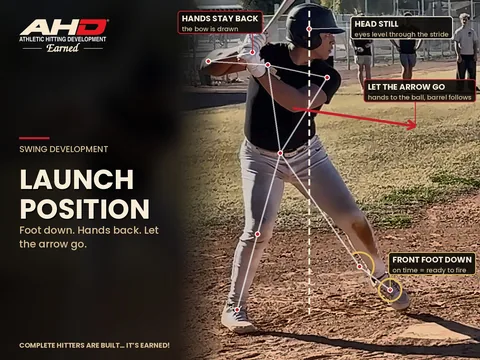
- After the stride: feet wide, knees bent, hands back, elbow up, knob to the catcher, chin on shoulder. A bow and arrow, ready to launch.
As I tell every hitter: the load starts where you’re in a good position in the batter’s box, the pitcher starts his motion, and then you start your trigger, your first timing mechanism. You get back, you get gathered, you get loaded, then you stride toward the pitcher while the hands stay back. That’s pulling a bow and arrow back.
Start the trigger when the pitcher starts his motion, get back, gathered and loaded, then stride toward the pitcher while the hands, elbow and upper body stay back like pulling a bow. Land with feet wide, knees bent, hands back, elbow up, knob to the catcher and chin on shoulder.
Train it: Swing Structure & Mechanics → Free tool: Load & Launch Timing →The load is where a swing gets its energy and its timing. Get it right, and the swing almost takes care of itself. Get it late or get it wrong, and the hitter spends the rest of the pitch trying to catch up.
This is the first part of my 8 athletic hitting checkpoints: Trigger → Gather energy → Energy direction, ending in an athletic base, ready to launch.
1. When does the load start?
It starts BEFORE the swing, and it starts with the pitcher. First, you’re in a good position in the batter’s box: athletic, balanced, eyes on the pitcher.
Then the pitcher starts his motion. That’s your cue. You start your trigger, which is your first timing mechanism.
The pitcher starts his motion. You start your trigger.
Most hitters who are late aren’t slow. They started late. If you wait for the ball to start your load, you’re already behind. The trigger syncs your rhythm to his.
2. How to load: back, in, or a toe tap
There’s more than one way to load. You can load back, load rotationally in, do both, or use a toe tap, whatever the case may be. I don’t need every hitter to look the same.
What I DO need every hitter to do is this:
- Get back. Shift into the back side so there’s energy to deliver.
- Get gathered. Body under control, balanced, not swaying or drifting.
- Get loaded. Hands, back elbow and upper body set to fire.
The style is the hitter’s. Getting back, gathered and loaded isn’t optional.
THE LOAD
GET BACK.GET GATHERED.
- Trigger when the pitcher starts
- Load back, in, or toe tap
- Get gathered, not drifting
- Then stride toward him
PULL THE BOW BACK.
3. The stride: direction toward the pitcher
Then you stride. The stride is direction toward the pitcher. It points all that gathered energy where it needs to go: at him, not around the corner, not up, not down.
Here’s the key. While the lower half strides forward, you’re leaving your hands and your elbow and all of your upper torso and arms back. That separation is what creates the launch mechanism.
It’s like pulling a bow and arrow back.
The front side goes toward the pitcher. The hands and upper body stay back. The farther apart they work, the more tension the bow has, the more the arrow can fly. If the hands drift forward with the stride, the bow never gets pulled, and there’s nothing left to launch. There’s no one perfect stride, but every good one points the energy at the pitcher.
4. The loaded position: the bow and arrow
After the stride, we are in the loaded position. Here’s the checklist I use:
- Feet wideAn athletic base you can turn on, not narrow and tippy.
- Knees bentAthletic, with an athletic front leg, not locked or stiff.
- Hands backBehind the back shoulder, still pulling the bow.
- Elbow upThe back elbow set to support the bat path.
- Knob to the catcherThe bat loaded and ready, not wrapped or flat.
- Chin on shoulderHead still, eyes level, locked on the pitcher.
That’s a bow and arrow position, with a great athletic position and the head in a good position to launch. From here, it’s time to let the arrow go.

THELESSON.
- Feet wide, knees bent
- Hands back, elbow up
- Knob to the catcher
- Chin on shoulder
Complete Hitters Are Built…Earned.
5. Common load mistakes (and the fix)
- Loading late. Waiting on the ball. Fix: start the trigger when the pitcher starts his motion.
- No gather. Swaying or drifting back without control. Fix: get back AND get gathered.
- Hands go with the stride. The bow never gets pulled. Fix: stride toward the pitcher, leave the hands, elbow and upper torso back.
- Narrow, stiff landing. Nothing to turn on. Fix: feet wide, knees bent, athletic front leg.
- Head moving. Fix: chin on shoulder, eyes level, head in a good position to launch.
6. How to train the load
- Trigger on the pitcherHave a partner or video pitcher go through a motion. Start your trigger as they start. 10 reps, no swing, just rhythm.
- Load and holdTrigger, get back, gather, stride and HOLD the loaded position. Check the 6 points. 10 reps.
- Bow and arrow tee workFrom the loaded position, let it go. 10 swings off the tee, then 10 from the full load and stride.
- Film itSide and behind, same angles every time. Freeze the frame when the front foot lands and check the checklist.
Not sure the load is your hitter’s #1 priority? Run the free SwingChecker™ first. Don’t collect drills. Build a complete hitter. When the load is the fix, the Swing Structure & Mechanics course trains it step by step, and Lesson 1 is free.
Get back. Get gathered. Get loaded. Pull the bow back. It’s a great day to hit!!
Want to go deeper? Read Let the Arrow Go: Launch Position Timing and ATHLETIC Hitting: How to Use Your Body to Smash.
Quick answers
When should a hitter start the load?
When the pitcher starts his motion. That is when the hitter starts the trigger, the first timing mechanism. Waiting for the ball to start the load makes hitters late.
Should my hitter use a toe tap or a leg kick?
Either can work. The load can go back, rotationally in, or use a toe tap. What matters is that the hitter gets back, gathered and loaded on time.
What should the hands do during the stride?
Stay back. The stride is direction toward the pitcher while the hands, elbow and upper torso stay back, like pulling a bow and arrow back.
What does a good loaded position look like?
Feet wide, knees bent, hands back, elbow up, knob to the catcher and chin on the shoulder, with the head still and in a good position to launch.
Don’t collect drills. Build a complete hitter.
Complete Hitters Aren’t Born. They’re Built… and Earned.