By BK, Athletic Hitting Development
Complete Hitters Are Built… Not Given. Earned!
Hitting is fun.
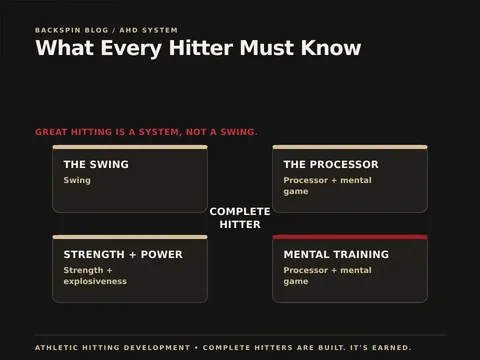
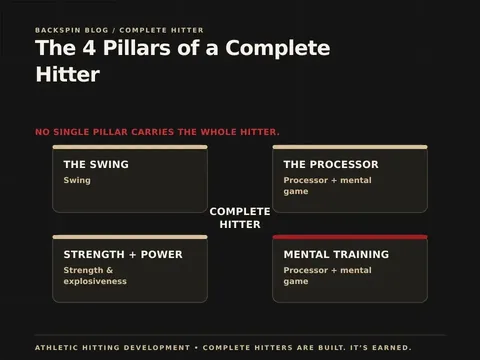
Hitting is hard because the pitch, speed, location, count and situation keep changing, and a pretty swing doesn’t matter if the hitter can’t use it in a game. You’re not just building a swing; you’re building a hitter across the swing, strength, the Hitting Processor and the mental side.
Train it: Complete Hitter Masterclass →Hitting is scary.
Hitting is brutal.
It’s the best thing ever.
It’s the worst thing ever.
It might be the hardest thing to do in team sports.
And somehow, at the exact same time, it is the funnest puzzle in the world to try to put together.
Some days you feel like you have the answer.
Some days you wonder if there even is an answer.
And some days hitting is about as miserable as mud on a stick.
So why in the world did I spend most of my life researching it, teaching it, talking about it, thinking about it and coaching it after I could no longer do it myself?
That’s a fair question.
The answer is probably that hitting and I have had a lifelong love/hate relationship.
But it has been a beautiful one.
There Is Nothing Quite Like Hitting a Baseball
If you have ever really squared one up, you know.
That feeling is difficult to explain to somebody who hasn’t experienced it.
The sound.
The feeling through the hands.
The ball jumping off the bat.
For a fraction of a second, everything happened exactly the way it was supposed to.
You saw it.
You recognized it.
You timed it.
You made the decision.
And then you attacked it.
There are very few feelings in sports quite like it.
Maybe that is part of the addiction.
Because once you’ve felt it, you want to feel it again.
And then the game makes sure it isn’t easy.

FOR ONE BEAUTIFUL INSTANT…
SQUAREDUP.
- The sound.
- The feeling through the hands.
- The ball jumping off the bat.
THE WHOLE PUZZLE COMES TOGETHER.
Baseball Has a Sense of Humor
You can do everything right and make an out.
You can get fooled, take a terrible swing, hit the ball off the end of the bat and somehow get a hit.
You can feel great during batting practice and go 0-for-4.
You can feel terrible walking to the plate and hit a ball 420 feet.
You can work for three months on something and suddenly lose it in three swings.
That is hitting.
It is constantly giving you just enough success to believe you’ve figured it out—and then reminding you that you haven’t.
I think that is one of the reasons I never stopped studying it.
I wanted to understand why.
- Why did one hitter consistently make better decisions?
- Why did another hitter have more time?
- Why did one swing hold up against velocity while another one didn’t?
- Why could one hitter adjust to a breaking ball while another hitter couldn’t?
- Why did some incredibly gifted athletes never become great hitters?
- Why did some kids without breathtaking physical ability somehow become really good?
- Why did some hitters look incredible in the cage and disappear when the game started?
- Why could two hitters with swings that looked completely different both be successful?
Those questions became much more interesting to me than trying to create one perfect-looking swing.

BASEBALL HAS A SENSE OF HUMOR
THAT ISHITTING.
- Do it all right. Make an out.
- Great BP. Go 0-for-4.
- Feel terrible. Hit it 420 feet.
SO I KEPT ASKING WHY.
Somewhere Along the Way, I Stopped Chasing the Perfect Swing
For years, hitting instruction has loved positions.
Put your hands here. Put your elbow there. Get your foot down here. Turn this. Don’t move that.
There is value in understanding movement.
A hitter absolutely needs an efficient swing.
But eventually you realize something:
The prettiest swing in the world doesn’t matter if the hitter cannot use it in a game.
That’s where my thinking changed.
I stopped looking at hitting as simply a swing problem.
I started looking at the hitter as an entire system.
Movement · Sequence · Bat Path · Adjustability
Build a swing with a large margin for error for solid contact while still allowing the athlete to produce force.

THELESSON.
- Hitting is a puzzle.
- Pretty isn't the point.
- Use it in a game.
- See the hitter as a system.
- Keep asking why.
Complete Hitters Are Built…Earned.
Quick answers
Why is hitting a baseball so hard?
It might be the hardest thing in team sports. The pitch, velocity, location, count and situation keep changing. You can do everything right and make an out, or feel great in batting practice and go 0-for-4. The hitter has to see, recognize, time, decide and attack, every pitch.
Is a good-looking swing enough to be a good hitter?
No. The prettiest swing in the world does not matter if the hitter cannot use it in a game. You are not just building a swing. You are building a hitter. That hitter has to see it, recognize it, time it, decide and attack it.
How can young hitters build real confidence?
Confidence is earned. Hitters who understand what they are doing are not dependent on someone beside the cage telling them what to do. Understanding creates ownership, and ownership creates belief. Belief built on real work is much more powerful than somebody telling you to be confident. Then respond to failure by learning and adjusting.
Should young hitters try to copy a perfect swing model?
No. The goal isn’t a hitter who can reproduce a perfect screenshot. It’s a hitter with movement, athleticism and adjustability who can solve the constantly changing problem in front of him.
Force · Speed · Power · Athleticism
The body has to create and control force without sacrificing the hitter’s ability to adjust.
See It → Recognize It → Time It → Decide → Attack It
The swing only matters if the hitter gets the right information in time to use it.
Confidence · Approach · Focus · Resilience
The hitter has to keep competing through failure, uncertainty and a game designed to humble them.
And the ability to put all of those things together while a baseball is flying toward you at ridiculous speed matters most of all.
That became the foundation of what would eventually become Athletic Hitting Development.
The Swing Is Only One Piece of the Puzzle
If there is one thing I wish every young hitter and parent understood, it is this:
You are not just building a swing. You are building a hitter.
Those are two very different things.
A hitter needs an efficient swing that creates a large margin for error for solid contact while still allowing the athlete to produce force.
But the hitter also has to be able to see the baseball.
Recognize what it is.
Track where it is going.
Time it.
Make a decision.
And attack it.
You can have a beautiful swing and fail miserably at that process.
And if you do, you’re going to struggle.
That realization changed the way I coached. It changed the questions I asked. It changed what I watched during games. And it changed what I believed hitter development should look like.
Great Hitters Aren’t Robots
One of the biggest mistakes we can make with young hitters is trying to turn them into robots.
Baseball isn’t played in a laboratory.
The pitch changes. The velocity changes. The location changes. The count changes. The pitcher changes. The situation changes.
Sometimes the hitter gets fooled. Sometimes the hitter is early. Sometimes late. Sometimes the ball is up. Sometimes it’s down. Sometimes it is 96 mph. Sometimes it is an 81 mph breaking ball that appears to fall off the table.
The hitter has to solve a constantly changing problem.
That requires movement. Athleticism. Adjustability. And freedom.
The objective isn’t to create a hitter who can reproduce a perfect screenshot. The objective is to create a hitter who can solve the problem in front of them.
Then There Is the Mental Side
This is where hitting can become cruel.
Failure is built into it.
A hitter can work harder than everyone else and still struggle.
They can lose confidence. Start pressing. Start changing things. Then change something else. Then watch another video. Then try another drill. Then get another opinion.
Eventually they don’t know what they believe anymore.
I’ve watched this happen over and over.
And that may be one of the biggest reasons Athletic Hitting Development exists.
I want hitters to understand what they are doing.
I don’t want them completely dependent on somebody standing beside the batting cage telling them what to do.
I want them to learn. I want them to ask questions. I want them to understand what actually matters.
Understanding creates ownership.
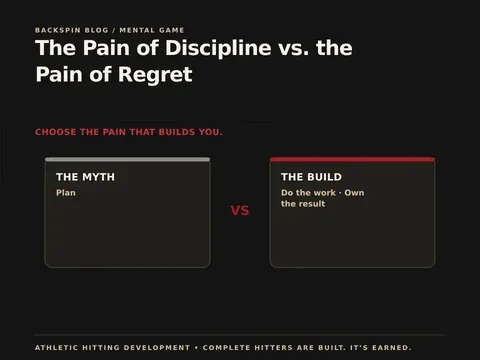
Ownership creates belief. And belief built on real work becomes something much more powerful than somebody simply telling you, “Be confident.”
True confidence is earned.
Hitting Will Humble You
Guaranteed.
I don’t care how talented you are.
At some point, this game is coming for you.
You are going to slump. You are going to get embarrassed. You’re going to swing at something that makes everyone in the dugout wonder what you were looking at. You’re going to smoke a ball directly at somebody. You’re going to take strike three and walk back to the dugout replaying the pitch in your head.
And that’s okay.
Because hidden inside all that frustration is one of the greatest things sports can teach us:
What are you going to do next?
That’s the game.
Not just baseball.
Life.
Failure isn’t particularly interesting.
Your response to it is.
Can you learn? Can you adjust? Can you keep working? Can you stay aggressive? Can you believe in your preparation when the results haven’t shown up yet?
That’s where the real development happens.
Why I Kept Coaching
Eventually my playing days ended.
The obsession didn’t.
In some ways, it probably got worse.
Because once I couldn’t stand in the box anymore, I became fascinated with helping somebody else solve it.
I have watched thousands of hitters.
Young kids trying to hit their first line drive.
High school players trying to make varsity.
College players trying to stay in the lineup.
Professional hitters trying to survive against the best pitching on Earth.
Different ability levels. Different bodies. Different swings. Different problems.
But underneath all of it, the game keeps asking the hitter the same question:
Can you solve this pitch?
That’s what has kept me interested all these years.
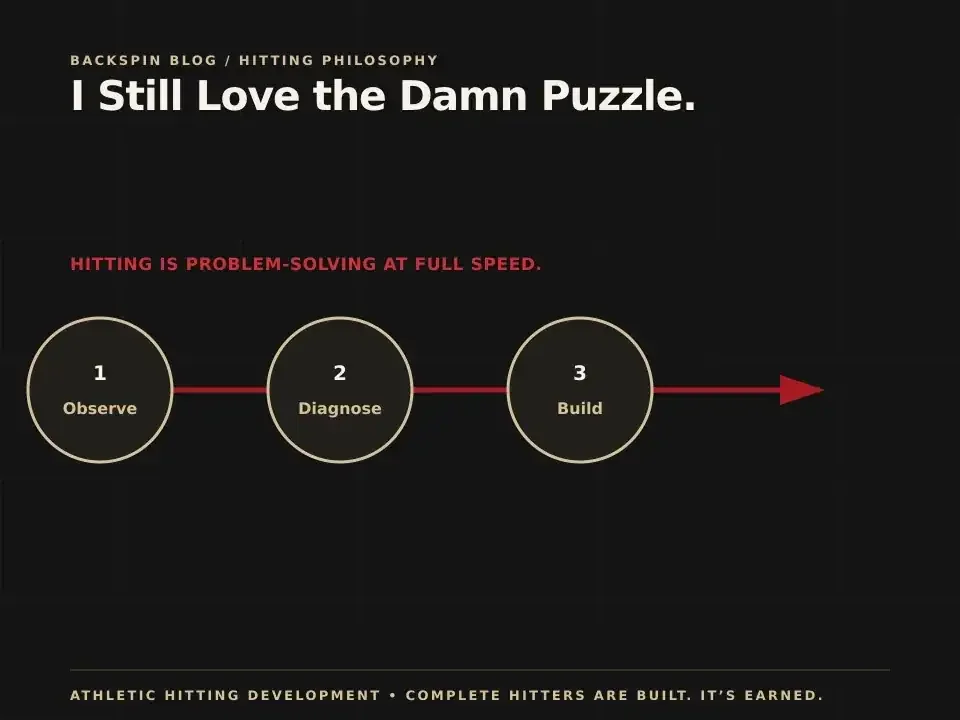
The puzzle never ends.
And Maybe That’s Why I Still Love It
For all the frustration hitting creates, I wouldn’t want it any other way.
If it were easy, it wouldn’t mean nearly as much.
When a hitter who has been struggling finally figures something out…
When a kid squares up a pitch they couldn’t touch a month ago…
When an athlete realizes why something is happening instead of blindly guessing…
When confidence begins replacing fear…
Those are great moments.
Not because somebody discovered a magic drill.
Not because somebody found the secret.
But because the hitter earned it.
They learned. They practiced. They struggled. They adjusted.
And eventually something clicked.
That’s beautiful.
That Is Athletic Hitting Development
AHD isn’t built around pretending hitting is simple.
It’s built around respecting how complicated it really is.
We develop the swing.
We develop strength and explosiveness.
We develop the hitting processor.
We develop the mental approach.
And then we teach hitters how those pieces work together.
Because ultimately the goal isn’t to build a prettier batting-practice swing.
The goal is to build a complete hitter.
One who can walk into the batter’s box with a plan.
One who understands what they’re trying to do.
One who can adjust.
One who competes.
One who has earned confidence through preparation.
And one who, when this miserable, beautiful, ridiculous game knocks them down, knows how to start solving the puzzle again.
I’ve spent most of my life trying to understand hitting.
And I still don’t think anyone will ever completely solve it.
That’s probably the best part.
There will always be another pitch. Another problem. Another adjustment. Another hitter. Another question. And another chance to figure something out.
So yes.
Hitting is fun.
Hitting is scary.
Hitting is brutal.
It is the best thing ever.
It is the worst thing ever.
From the 2015 archive: Testing a Fact-Based Hitting Program in Colorado.
No subscription. No login. Learn one thing, train it, and own it.