Let the Arrow Go: Launch Position Timing
When the eyes say yes, is your hitter ready to fire? The hidden delay most hitters have, and how to train it out.
READ ARTICLE →
Originally published October 9, 2015 under Krush Athletics.
Backspin Blog — Free Instruction / The Early Days of AHD
This is historical coaching writing originally published under Krush Athletics. The wording reflects its original period. For current guidance, use AHD lessons and SwingChecker.

The LAUNCH, or what I call POWER-LOAD position, is the point in the swing in which the hitter’s hand and body movements switch from going away from the pitch to towards the pitch.
COMMON FAULT: If you do not get in proper “launch position”, your chance of maximizing each swing is very poor. Most young hitters land with too much weight on back leg, and hands aren't in proper launch position.
WHY get into proper launch position?
· Getting the hitter to the most powerful and efficient striking position possible.
· Getting the hitter’s head and eyes in the best tracking position possible. · Loading is created by moving away from the pitcher (linearly) and turning the body slightly inward toward the plate (rotationally) . LAUNCH SEPARATION is making sure the hands stay back and the torso stays square to plate as the hitter strides to athletic position.(This creates a "slingshot" effect")
HOW TO FIX/KEY POINTS
1. Athletic base and hitting posture
2. Hands behind back shoulder and height about even with shoulder 3. Back elbow up and/or back (elbow-torso separation) 4. Hand/wrist load – knob pointed towards catcher 5. “Choke effect” – chin set on top of front shoulder, head level and eyes square to the pitcher
DRILLS: · Mirror drill · Pre-stride drill – when doing any drill or batting practice, pre- stride or get into the powerload or launch position early to make
sure you are in the correct position. It may mess up your timing some, but the rewards for getting in this powerful position are worth it.
The point in the swing where the hands and body switch from moving away from the pitch to moving toward it, also called the power-load position.
An athletic base and posture, hands behind the back shoulder at about shoulder height, back elbow up or back, knob pointed toward the catcher and the head level with eyes square to the pitcher.
No subscription. No login. Keep learning, then take one priority into training.
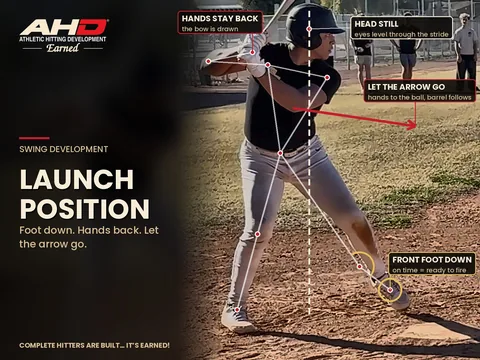
When the eyes say yes, is your hitter ready to fire? The hidden delay most hitters have, and how to train it out.
READ ARTICLE →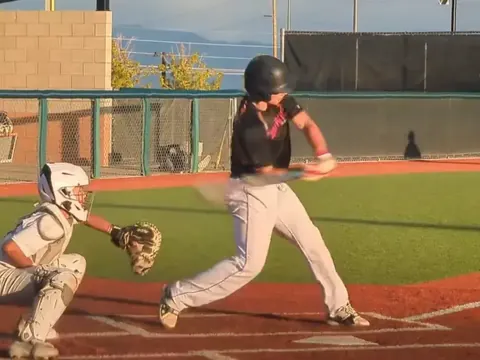
Every swing is different, but the best ones share angles that give hitters an edge. It’s an advantage, not a rule.
READ ARTICLE →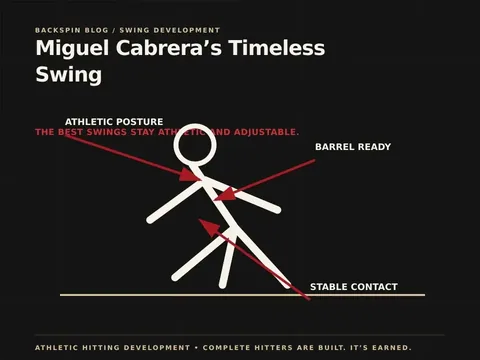
What Cabrera’s 500th home run teaches hitters about adjustability, consistency and building a swing that survives change.
READ ARTICLE →Guarantee & Refunds · Privacy · Terms · Safety · Delete My Data