By BK, Athletic Hitting Development
Complete Hitters Are Built… It’s Earned!
Key takeaways
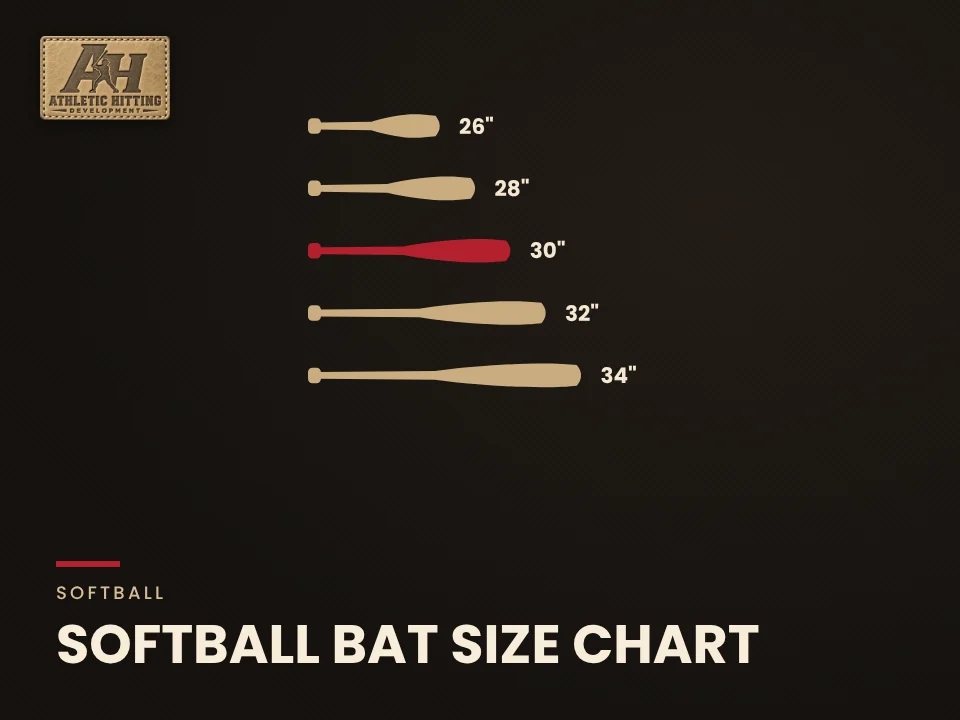
- A softball bat size chart is a starting point: most young fastpitch hitters land between 26 and 30 inches, and most high school and college hitters between 32 and 34 inches.
- Drop is length minus weight in ounces. Younger hitters use bigger drops (lighter bats); drops shrink as she gets older and stronger.
- Confirm the fit with three tests: the arm-extension test, the hold-it-out test and a simple bat speed check.
- A bat that’s too heavy slows the barrel, makes her late and teaches bad habits. When in doubt, go lighter and check your league’s required certification stamp.
A softball bat size chart matches a fastpitch hitter’s age, height and weight to a bat length and drop: roughly 24–26 inches for the youngest players, 28–32 inches around ages 10–11, and 32–34 inches in high school and college. Use the chart to get close, then confirm the fit with an arm-extension test, a hold-it-out test and a bat speed check.
Most fastpitch hitters use about 24–26 inches at ages 5–6, 28–32 inches at 10–11 and 32–34 inches in high school and college, with drops from about -13 down to -8 as they grow. Confirm with the arm-extension, hold-it-out and bat speed tests.
Train it: Complete Hitter Masterclass →🛠️ Skip the chart math: use the free AHD Bat Size Calculator. Enter age, height and weight and get length, weight, drop and the stamp your league needs.
I coached high school and college softball for 30 years. I’ve seen more swings hurt by the wrong bat than by almost any mechanical flaw a parent worries about.
Here’s a published fastpitch sizing chart, how to read it, the tests I use to confirm the fit, and what the stamp on the bat means. No brand pitch, just how to get it right.
1. What size softball bat does she need by age?
This chart is condensed from a major baseball and softball retailer’s published fastpitch bat guide (linked in the sources below). Their age groups are general league bands. Treat every row as a starting point, not a rule.
| Age (approx.) | Bat length | Bat weight | Typical drop |
|---|---|---|---|
| 5–6 | 24–26 in. | 11–15 oz. | -11 to -13 |
| 7–9 | 26–29 in. | 13–19 oz. | -10 to -13 |
| 10–11 | 28–32 in. | 16–22 oz. | -10 to -12 |
| 12–14 | 29–33 in. | 18–24 oz. | -9 to -11 |
| 15 and up (high school, college) | 32–34 in. | 22–26 oz. | -8 to -10 |
Height and weight sharpen the guess. The same guide’s height-and-weight grid lists, for example, a 27-inch bat for a player 3'5"–3'8" and under 60 pounds, and a 32-inch bat for a player 5'1"–5'4" and 131–140 pounds. Two 11-year-olds can be a foot apart in height, so height usually beats age when they disagree.
BAT SIZING
CHART FIRST.TEST SECOND.
- Height beats age
- Grab the barrel end
- Hold it out 30–45 seconds
- Fastest swing wins
WHEN IN DOUBT, GO LIGHTER
2. What does drop mean on a fastpitch bat?
Drop is the bat’s length in inches minus its weight in ounces. A 32-inch, -10 bat weighs 22 ounces. A 32-inch, -8 bat weighs 24 ounces. Same length, two ounces heavier.
Bigger drop numbers mean lighter bats. Most young hitters start with a bigger drop and move to smaller drops as they get stronger. Two ounces doesn’t sound like much on a kitchen scale. On the end of a stick swung in a fraction of a second, she feels it.
Length and weight work together. A longer bat at the same drop is also heavier, and the extra length puts more of that weight out toward the end of the barrel, where she feels it most.
My rule for parents: change one thing at a time. If she’s moving up an inch in length, keep the same drop for that season. If she’s moving to a smaller drop, keep the same length. That way you can tell what helped and what hurt.
3. How do you know if a softball bat is the right size?
Do these with the actual bat in her hands, or one the same length and drop. They take five minutes.
- Arm-extension test (length).Put the knob at the center of her chest and point the bat straight out in front of her; if she can reach out and grab the end of the barrel, the length is in range.
- Standing test (length, for growing players).With the bat standing beside her leg and the knob in her palm, arm straight down, the end of the bat should reach the floor without her bending.
- Hold-it-out test (weight).She holds the bat by the bottom of the handle with her arm straight out to the side at shoulder height; if she can hold it steady for 30 to 45 seconds, the weight is manageable.
- Bat speed check (the real test).Have her take 5 hard swings with each bat she’s choosing between and film from the side; the right bat is the one she swings fastest and most on time, not the one that feels most powerful.
The first three tests come from the same retailer guide. The fourth is mine, and it matters most. If you have a bat speed sensor, use it. If not, slow-motion video side by side tells you plenty. Our softball bat speed test shows how to set it up.
When should she move up a size? Not on a birthday. Move up when she passes the tests with the next size AND her swing on video doesn’t get slower or longer. During growth years that may happen every season. Some kids stay in the same bat longer, and that’s fine. The bat should match the hitter she is today.
4. Is it bad to use a softball bat that’s too heavy?
Yes. This is the most common mistake I see, and it usually starts with good intentions: “She’ll grow into it.” Meanwhile she’s swinging it right now, against live pitching.
If she can’t control it, she can’t square it up.
- She gets late. A heavy barrel takes longer to get going, so she starts early, guesses, and gets beat by the fastball anyway.
- The barrel drops. The heavy end sags below her hands and she uppercuts or chops to compensate.
- She muscles it. The arms take over from the legs and hips, and the swing gets long and slow.
- Bad habits stick. Months of compensating become her swing, and they don’t leave when the right bat shows up.
Signs in games that the bat is too much: she’s late on average speed, fouls a lot of pitches to the opposite side, her hands drop as she starts the swing, or she looks tired late in a tournament day. Any of those is worth a five-minute test with a lighter bat.
A bat that’s a little short or light is easier to live with. She can still swing fast and get on plane. If she has a strong, fast swing with a lighter bat, she’ll hit it farther than with a heavy one she drags. See how to hit a softball farther for why bat speed and contact beat bat weight, and softball strength training for hitters for how to earn a heavier bat the right way.
5. Which certification stamp does a fastpitch bat need?
Before you buy, check the stamp your league requires. A great-fitting bat that isn’t legal in her league is a very expensive tee bat.
- USA Softball: certified fastpitch bats meet USA Softball’s 98 mph performance standard. High school (NFHS) softball requires a USA Softball-certified bat.
- USSSA: common in travel fastpitch; bats are tested to a 1.20 BPF (bat performance factor) standard.
- NCAA: college softball uses its own approved-bat list, so college players should check that list.
- Other associations (such as NSA and ISA) have their own rules. Read your league’s current rule book every season.
Many fastpitch bats carry more than one stamp. Ask the coach or league which stamp they enforce before you order.
Once the bat fits, the bat isn’t the hard part anymore. Run the free SwingChecker to see her top priority across the 4 pillars. The Complete Hitter Masterclass builds The Swing, Strength & Explosiveness, the Hitting Processor and the Mental Approach in 24 lessons, and our online softball hitting lessons add fastpitch-specific coaching. New to the game? Start with how to hit a softball and our softball batting stance guide. Good hitters build Mechanically Advantaged Angles (MAA); the right bat lets her actually get there.
THELESSON.
- Don’t buy to grow into
- Change one thing at a time
- Check the league stamp
- Then build the hitter
Complete Hitters Are Built…Earned.
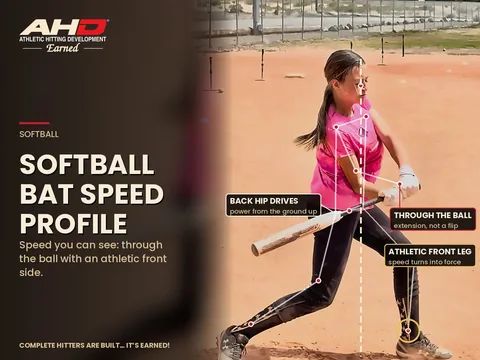
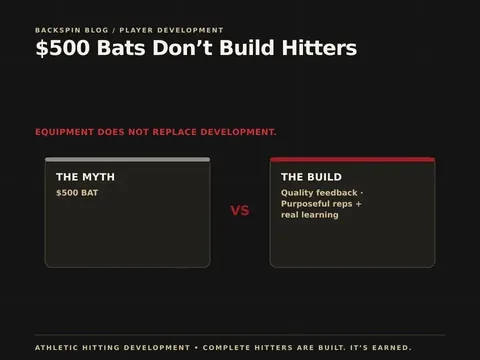
Want to go deeper? Read The Softball Bat Speed Profile and $500 Bats Don’t Build Hitters.
Quick answers
What size softball bat for a 10 year old?
A published fastpitch chart puts most 10- and 11-year-olds between 28 and 32 inches with a -10 to -12 drop. Her height, weight and the arm-extension and hold-it-out tests narrow it down.
Does bat size really matter in fastpitch softball?
Yes. The right length and weight let her swing fast, stay on time and square the ball up. A bat that is too long or heavy makes her late and costs contact.
Should a softball player buy a bat to grow into?
I don’t recommend it. A bat that’s too long or heavy slows her swing and builds bad habits now. Buy for the hitter she is this season.
What drop should a 14U fastpitch bat be?
The retailer chart lists roughly -9 to -11 for ages 12–14. Stronger players may move toward -9, but only if her bat speed and timing hold up.
Sources: Baseball Monkey: How to Choose the Right Fastpitch Softball Bat (sizing chart, drop by age, sizing tests, certifications) · CheapBats: Fastpitch Bat Certifications Explained (NFHS and NCAA requirements)
Don’t collect drills. Build a complete hitter.
Complete Hitters Are Built… It’s Earned!
This article is part of the AHD guide Fastpitch Softball Hitting. Start there for the full picture and every related article.