By BK, Athletic Hitting Development
Complete Hitters Are Built… It’s Earned!
Key takeaways
- The softball vs baseball swing is the same in its principles: sequence from the ground up, a direct barrel path, contact out front and timing that starts with the pitcher.
- What changes is the problem: fastpitch girls pitch from 43 feet from 14U up, versus 60 feet, 6 inches in baseball, and the ball is released low instead of from a mound.
- A low release means the pitch plane is flatter or even rising, so a softball swing has to match a different angle than a baseball swing does.
- Softball adds a short game baseball doesn’t really have: the slap, which is its own skill with its own footwork and rules.
The softball vs baseball swing shares the same principles: sequence from the ground up, a direct path to the ball, contact out front and timing that starts with the pitcher. What changes is the pitch she has to solve: a shorter distance, a ball released below the zone, a flatter or rising plane and less time to decide.
The softball vs baseball swing shares the same principles: ground-up sequence, a direct barrel path and contact out front. What changes is the pitch: a 43-foot distance, a low release, a flatter or rising plane and less time to react.
Train it: Swing Structure & Mechanics →I coached high school and college baseball AND softball in Arizona and Texas for 30 years. I’ve watched plenty of kids switch, and plenty of coaches try to run the same practice for both.
Here’s my honest take: the body doesn’t care which ball it is. The problem it is solving does. Teach the principles, then adjust for the pitch.
1. Is a softball swing the same as a baseball swing?
In the ways that matter most, yes. A good hitter in either sport moves her body in a similar order and gets the barrel to the ball on a similar kind of path. The principles carry over completely.
- Sequence from the ground up. Legs and hips start the turn, then the torso, then the arms and barrel.
- A direct barrel path. The hands stay inside the ball and the barrel gets into the zone early.
- Contact out in front. Deeper on the outside pitch, farther out on the inside pitch.
- Timing starts with the pitcher. The load is set by the delivery, not by the ball.
- A clear plan. See it, time it, decide, attack it.
Good hitters in both games also share positions, not identical swings. AHD hitters build Mechanically Advantaged Angles (MAA), the body and bat angles that deliver the barrel with speed and control. Those angles work whatever color the stitches are.
The 4 Pillars of a Complete Hitter don’t change either: The Swing; Strength & Explosiveness; The Hitting Processor; and the Mental Approach. A girl who is strong, sees the ball well and competes in the box will carry all of that into either sport. What she has to re-learn is mostly in the Processor: where to look, when to start and what the pitch is going to do.
2. What is the difference between a softball and baseball swing?
The differences come from the pitch, not from some special “softball swing.” Here’s what changes at the plate.
| What changes | Fastpitch softball | Baseball |
|---|---|---|
| Pitching distance | 35 ft (10U), 40 ft (12U), 43 ft (14U up and college) | 60 ft, 6 in (MLB) |
| Release | Underhand, low, near the hip, from flat ground | Overhand from a mound, above the hitter’s shoulders |
| Pitch plane | Flatter; a rise ball can travel upward | Downhill toward the plate |
| Reaction time | Very short; the pitcher strides toward the plate | Short, but a longer flight |
| Short game | Bunts plus the slap from the left side | Bunts; no real slap game |
Distances are from USA Softball’s 2026 rule comparison and MLB’s official field basics. Younger baseball levels pitch from shorter distances, but the pitch still comes from above and travels downhill.
3. Why is the pitch plane different in softball?
A baseball pitcher throws from a raised mound with a high release, so the ball comes down toward the zone. A softball pitcher releases the ball low, near her hip, so the pitch starts below the zone. That flips the picture for the hitter.
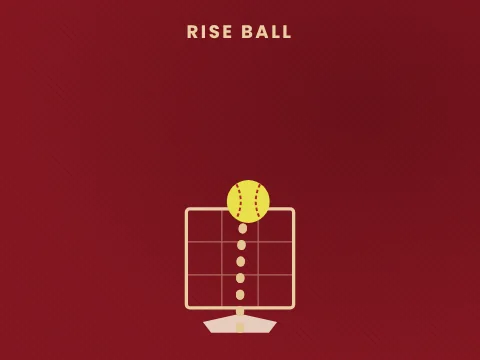
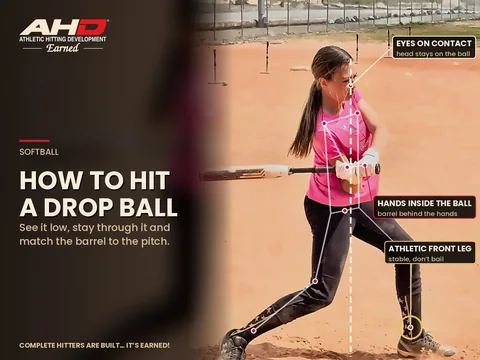
A rise ball carries more backspin and drops less than the hitter expects, and it can genuinely travel upward through the zone. A drop ball has forward spin and is thrown down through the zone; hitters who chase it beat it into the ground.
Match the plane of the pitch. Not the plane of the other sport.
What that means for the swing: a baseball hitter who switches often swings under softball pitches, especially the rise. A softball hitter who switches to baseball can find herself chopping at pitches that sink more than she expects. Same principle, different angle.
The fix is reps from the right release height. A coach throwing overhand front toss to a softball hitter trains the wrong plane. Sit low, toss from below the zone, and use live pitching as often as you can get it. A baseball hitter coming over needs the same: real windmill looks, not batting practice from a standing coach. For each pitch, read How to Hit a Rise Ball and How to Hit a Drop Ball.
4. Is softball harder to hit than baseball?
It is a different kind of hard. Softball pitches are slower on the radar gun, but the distance is much shorter. MLB.com reports that a 70 mph softball pitch gives a hitter roughly the same reaction time as an MLB hitter facing a 100 mph fastball. It also notes that because the pitcher strides forward, the actual release is closer than the 43-foot rubber.
Treat that comparison as roughly, not exactly. The point holds: a fastpitch hitter has very little time once the ball leaves the hand. She has to start her load earlier relative to the release than most baseball hitters do. See How to Time a Fastpitch Pitcher for the details, and How to Hit Fast Pitching in Softball when the velocity climbs.
Less time also means less time to decide. Fastpitch hitters have to recognize spin and location early, from the release and the first few feet of flight. That is a trainable skill. We train it daily, the same way we train the swing, because a perfect swing on the wrong pitch is still an out.
SOFTBALL VS BASEBALL
SAME PRINCIPLES.DIFFERENT PITCH.
- 43 ft vs 60 ft, 6 in
- Low release vs mound
- Flat or rising plane
- Less time to decide
LOAD EARLIER IN FASTPITCH
5. What should a hitter change when switching from baseball to softball?
Keep the swing principles. Change the inputs. Here’s the order I work through with a hitter who is switching, or who plays both.
- Move the eyes to the new release.In softball the ball comes out by the pitcher’s hip, so her eyes go there; in baseball they go up to the release window above the shoulder.
- Start the load earlier.At 43 feet the load starts with the arm circle; she should be ready as the ball leaves the hand.
- Re-tune the swing plane.Use front toss and live pitching from the correct release height so the barrel learns the new angle.
- Learn the new pitches.Rise, drop and change in softball; downhill fastballs and breaking balls in baseball.
- Decide on the short game.Softball hitters with speed may add the slap, but only after the swing is solid.
Going the other way, from softball to baseball, the list flips. Her eyes move up to a higher release, the load can start a touch later relative to the release because the ball has farther to travel, and she has to learn pitches that come downhill and break down and away. The swing principles stay exactly where they were.
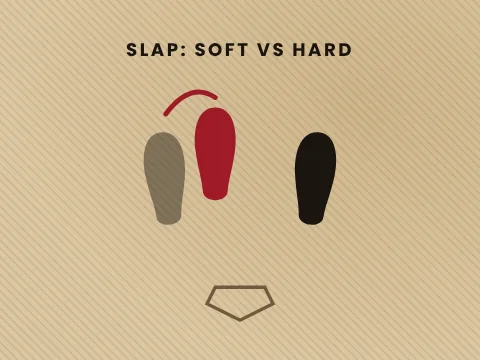
On the slap: it is a real fastpitch skill with its own footwork and box rules, covered in Softball Slapping Basics. Whether she should slap or swing away is a separate decision; read Slap or Hit Away? first. For the full softball fundamentals, start with How to Hit a Softball.
Coaches who run both: use the same language for the principles and different reps for the pitch. A shared vocabulary makes the switch easier for everyone. Run the free SwingChecker to find a hitter’s top priority across the 4 pillars. For fastpitch-specific coaching, see our Online Fastpitch Softball Lessons. The Swing Structure & Mechanics course builds the principles that carry across both games.
THELESSON.
- Keep the principles
- Move the eyes
- Start the load earlier
- Match the new pitch plane
Complete Hitters Are Built…Earned.
Want to go deeper? Read Softball Slapping Basics: How to Slap (Soft Slap vs Hard Slap) and How to Hit a Rise Ball in Fastpitch Softball.
Quick answers
Can a baseball player switch to softball hitting?
Yes. The swing principles transfer. The main adjustments are seeing a low release, loading earlier for the shorter distance and learning to match a flatter or rising pitch plane.
Is the fastpitch softball swing more level than a baseball swing?
The swing should match the plane of the pitch. Because softball pitches are released low and travel flatter or rise, the barrel’s path in softball often looks flatter than it does against downhill baseball pitches.
How far is the pitcher from home plate in softball vs baseball?
In USA Softball girls’ fastpitch it is 35 feet at 10U, 40 feet at 12U and 43 feet from 14U up; NCAA is also 43 feet. In MLB it is 60 feet, 6 inches.
Should a girl who plays both baseball and softball use the same swing?
She should use the same principles and sequence. The timing, where she looks for the release and the plane she matches will be different, so she needs reps against each sport’s pitching.
Sources: USA Softball: 2026 Rule Differences (USA Softball, NCAA, NFHS) — pitching distances · MLB: Baseball Basics — On the Field (60 feet, 6 inches) · MLB.com: 6 fascinating ways softball pitching is different from baseball
Don’t collect drills. Build a complete hitter.
Complete Hitters Are Built… It’s Earned!
This article is part of the AHD guide Fastpitch Softball Hitting. Start there for the full picture and every related article.