By BK, Athletic Hitting Development
Complete Hitters Are Built… It’s Earned!
Key takeaways
- In an Arizona summer, move outdoor hitting to early morning or evening and keep it in a shaded or indoor cage when you can.
- Shorter, higher-quality sessions beat long, sloppy ones — fatigue in the heat builds bad habits fast.
- The hottest days are perfect for Hitting Processor work, film review and mobility inside the house.
- Know the warning signs of heat illness, stop immediately when you see them, and follow the guidance of your doctor or athletic trainer.
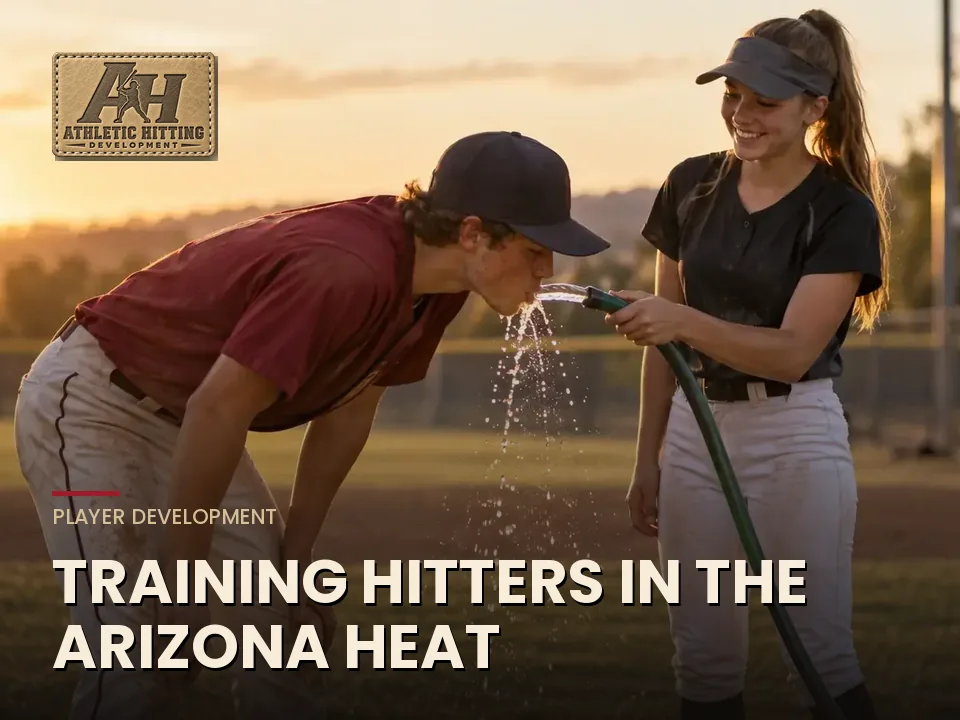
Train hitters in the Arizona heat by moving outdoor swings to early morning or evening, keeping sessions short and sharp, and doing the rest indoors. Summer is not a dead season — it’s a different schedule.
I’ve lived and coached in Scottsdale a long time. Every June, parents ask me the same thing: “How do we keep him improving when it’s 112 at 4 p.m.?”
Here’s the honest answer. The heat changes WHEN and WHERE you train. It doesn’t change whether your hitter can get better. Some of the best gains I see come in July, because the work gets smarter.
1. What time of day should my kid hit in the summer?
Early morning is king. Get to the cage soon after sunrise, before the surface and the air heat up. Evening, after the sun drops behind the mountains, is your second window.
Midday is for indoor work only. If your hitter has a shaded or indoor cage, that’s gold. If not, don’t force it. A miserable session in the heat teaches nothing but how to survive.
| Time window | Best use |
|---|---|
| Early morning | Outdoor cage: tee, front toss, live or machine |
| Late morning to evening | Indoors: Processor work, film, mobility, strength |
| After sunset | Second outdoor window if the morning didn’t happen |
| Hottest weeks | Online lessons at home; in-person when conditions allow |
SUMMER SCHEDULE
HIT EARLY.HIT SMART.
- Outdoor swings at sunrise or sunset
- 30–40 focused minutes
- One priority per session
- Shade breaks between rounds
- Midday work moves indoors
CHANGE THE CLOCK, NOT THE STANDARD
2. How long should a hitting session be in the heat?
Shorter than you think. In the summer I’d rather see 30–40 focused minutes than 90 sloppy ones. Fatigue is when swings get long, the lower half quits, and bad habits sneak in.
Quality reps build hitters. Tired reps build habits you’ll pay to fix.
Structure each outdoor session around one priority. Not five. One.
- Warm up and moveA few minutes of dynamic movement so the body is ready to rotate.
- Tee with a checkpointShort rounds aimed at the single priority you’re working on.
- Front toss or machineCarry the same feel to a moving ball.
- Compete to finishA short scored round, then shut it down while the swing still looks good.
Build in shade breaks between rounds. A break isn’t lost time. It’s how the next round stays sharp.
3. What can a hitter do indoors on the hottest days?
This is where summer pays off. Most hitters only train the swing. On a 115-degree day, you get to train the pillars they skip.
- Hitting Processor work. See it, time it, decide, attack it. Recognition and timing work can be done in the living room, and it should be trained DAILY. Start with the 5-Minute Daily Hitting Processor Plan.
- Film review. Watch last week’s swings and game at-bats. One thing to keep, one thing to work on.
- Mobility. Hips, thoracic spine, ankles. A body that moves well swings faster.
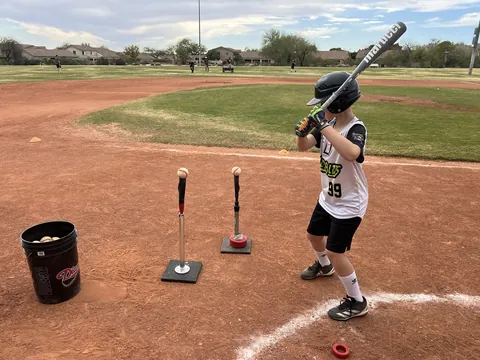
- Dry swings and tee work in the garage if it’s cool enough — with a fan, short rounds, and a clear goal.
- Mental Approach work. Build a pre-pitch routine and a reset for after a bad at-bat.
This is exactly what our online courses are built for. Most lessons run 10–20 minutes and need a bat, a tee, some balls and a phone to film. The Hitting Processor course is a perfect hot-weather course, and the Complete Hitter Masterclass covers all 4 pillars.
4. How should we handle hydration and breaks?
Keep it simple and keep it consistent. Your hitter should show up already hydrated, bring plenty of water, and drink during every break — not just when he feels thirsty.
Schedule breaks in the shade between rounds. Wear light-colored, breathable clothing and a hat between turns. If your family’s doctor or your team’s athletic trainer has specific guidance on fluids or electrolytes, follow theirs. I’m a hitting coach, not a medical professional.
And the most important rule: the coach or parent ends the session, not the thermometer. If it feels like too much, it is.
5. What are the warning signs that mean stop right now?
Kids will push through things they shouldn’t. That’s on us, the adults, to watch for. If you see any of these, stop the session, get the player to shade or air conditioning, cool them down, and get help.
- Dizziness, light-headedness or fainting.
- Headache, nausea or vomiting.
- Unusual fatigue, weakness or cramping.
- Confusion, slurred speech or acting “off.”
- Skin that is very hot, or a player who stops sweating.
Confusion, fainting or a player who isn’t improving quickly is an emergency — call 911. For everything else, follow the guidance of your doctor or athletic trainer before training again. No rep is worth it.
6. How does AHD handle the hottest weeks in Scottsdale?
We adjust the schedule, not the standard. In-person lessons in Scottsdale move to the cooler parts of the day. When it’s brutal, hitters keep working through our online lessons at home and send video for feedback.
For families who want a full summer plan, 90-Day Private Hitter Development covers all 4 pillars with a personal plan and ongoing video analysis — no driving across the Valley in July.
Not sure where to start? Take the free SwingChecker. It takes about 3 minutes and tells you the one priority to build first. Then text me at 480-881-5447 for current in-person rates.

THELESSON.
- Heat changes when and where
- Fewer reps, better reps
- Train the Processor inside
- Stop at the first warning sign
Complete Hitters Are Built…Earned.
Want to go deeper? Read Baseball Hitting Drills at Home: A 15-Minute Daily Plan and The 5-Minute Daily Hitting Processor Plan.
Quick answers
Is it safe for kids to do baseball training in the Arizona heat?
It can be when you train early or late, keep sessions short, take regular shade and water breaks, and stop at any warning sign. Follow your doctor’s or athletic trainer’s guidance for your child.
What time should my kid hit in Phoenix or Scottsdale in the summer?
Early morning is best, with evening after sunset as a second window. Save midday for indoor work like pitch recognition, film review and mobility.
How long should a summer hitting practice be?
In the heat, 30 to 40 focused minutes is usually better than a long session. End it while the swing still looks good.
Can a hitter still improve over the summer without a cage?
Yes. Indoor Hitting Processor work, film review, mobility and short tee rounds at home all build a hitter, and online lessons are designed for exactly that setup.
Don’t collect drills. Build a complete hitter.
Complete Hitters Are Built… It’s Earned!
This article is part of the AHD guide Bat Speed & Power Training. Start there for the full picture and every related article.