By BK, Athletic Hitting Development
Complete Hitters Aren’t Born. They’re Built… and Earned.
Key takeaways
- College pitching is not just faster. It’s better command, real off-speed in any count and a plan to attack your weakness.
- Most good high school hitters struggle at first because they never had to make fast decisions. Their swing was fine. Their processor wasn’t ready.
- The fix is earlier timing, an approach for every count and daily pitch-recognition work, not a brand-new swing.
- Start before you get to campus. The summer before your freshman fall is the best time to build it.
To adjust to college pitching, start your timing earlier, hunt one pitch in one zone until two strikes, and train pitch recognition every day. College pitchers throw harder, but the real jump is command and off-speed, so the hitters who adjust fastest are the ones who decide fastest.
Start your timing earlier, hunt one pitch in one zone until two strikes, and train pitch recognition every day. College pitchers throw harder, but command and off-speed are the real jump, so the hitters who decide fastest adjust fastest.
Train it: Hitting Processor → Free tool: Early Recognition →I coached high school and college baseball for 30 years. Every fall I watched the same thing. A kid who hit .450 in high school shows up, takes his first live at-bats against college arms, and looks lost for three weeks.
His swing didn’t get worse over the summer. The game got faster, and nobody ever trained the part of him that has to keep up. That part has a name at AHD: the Hitting Processor.
1. What actually changes from high school to college pitching?
Velocity goes up, and it goes up for the whole staff, not just the ace. In high school you might see one or two guys a week who can really throw. In college, the fourth guy out of the bullpen can run it up there.
But velocity is the part everybody prepares for. Here’s what catches hitters off guard:
- Command. College pitchers can locate. They live on the edges and expand the zone when you’re ahead in the count.
- Off-speed in any count. First-pitch breaking balls. Changeups behind in the count. You can’t sit fastball and survive.
- A plan for you. Staffs scout. If you can’t lay off the slider away, you’ll see a lot of sliders away.
- Tunneling. The fastball and the off-speed look the same longer out of the hand, so you have less time to tell them apart.
THE COLLEGE JUMP
IT'S NOTJUST VELO.
- Command on the edges
- Off-speed in any count
- Scouting reports on you
- Pitches that tunnel
SMALLER WINDOW. BIGGER COST.
Put all of that together and the jump is mostly a decision problem. The window to see it, time it and decide gets smaller, and the cost of a bad decision gets bigger.
2. Why do good high school hitters struggle as college freshmen?
Because a lot of high school success is built on bat speed and talent beating mistakes. The pitcher misses over the middle, you’re strong enough to punish it, and you never had to be very good at deciding.
College doesn’t test your swing first. It tests your decisions.
The common mistakes I see the first fall: starting the load too late, guessing on every pitch, chasing the breaking ball that starts in the zone and finishes in the dirt, and then trying to fix it by tinkering with the swing. Now the swing is a mess too.
So don’t panic the first two weeks of fall ball. Expect it to be fast. Keep the swing you trust, start your gather earlier, simplify what you’re looking for, and let your eyes catch up. Hitters who chase a new swing every day usually take longer to adjust, not shorter.
Here’s a line I give every hitter moving up a level: "The ball ain't changing shape, I promise ya that." Same ball, same swing, same plan. What changes is how early you have to be ready and how good your choices have to be.
3. How do I get on time against college velocity?
Start earlier and stay loose. Most freshmen try to be quicker. You don’t need to be quicker. You need to be ready sooner.
- Start the gather earlierBegin your move off the pitcher’s first move, not his release, so you’re loaded and balanced when the ball comes out.
- Get to launch position on timeBe in your launch position when the pitch is about a third of the way to you, ready to let the arrow go or hold it.
- Keep the barrel path short to the ballBarrel approach above and inside the ball, so the swing is quick to contact without being rushed.
- Practice against speed you can’t see in high schoolShort-distance front toss, machine work and live arms. Your eyes have to get used to it, not just your hands.
My other line for this: "Pitchers are basically pizza delivery guys." He’s just delivering it. Your job is to be loaded and on time when the doorbell rings. If you’re still getting off the couch, it doesn’t matter how good your swing is.
For more on this, read how big leaguers get ready for 100 and launch position timing.
4. What approach works against college pitchers?
Hunt one pitch in one zone until you have two strikes. Usually that’s the fastball in the part of the plate where you do damage. Everything else, you let go early in the count.
That doesn’t mean passive. I want hitters aggressive and athletic, with controlled violence, on the pitch they came to hit. It means you stop swinging at the pitcher’s pitch because you’re afraid of falling behind.
- Ahead in the count. Narrow the zone even more. Heater or hanger, or you take it.
- Even count. Your pitch in your zone. Lay off the edges.
- Two strikes. Widen it, choke the barrel path down, and battle. See our two-strike approach.
Hitters with Mechanically Advantaged Angles (MAA), staying inside and above the ball, can wait longer and still get the barrel there. That extra few feet of reading time is exactly what college pitching takes away from everyone else.
5. How should I train the summer before my freshman fall?
Train all 4 pillars, but give the Hitting Processor its own daily slot. Ten to fifteen minutes a day of pitch recognition beats a once-a-week session, the same way a few reps of anything every day beats cramming.
| Daily piece | Time | What it builds |
|---|---|---|
| Pitch recognition reps | 10–15 min | Earlier reads on spin and location |
| Tee and front toss with intent | 20–30 min | A swing that holds up under speed |
| Velocity or live at-bats | 2–3 days a week | Timing against real arms |
| Strength and speed work | 3–4 days a week | Bat speed and body to carry it |
Start with the free SwingChecker to find your top priorities, then take the free first lesson of the Hitting Processor course. It gives you a decision baseline so you know where you stand before fall ball starts. For a daily routine, use the 5-minute daily processor plan.
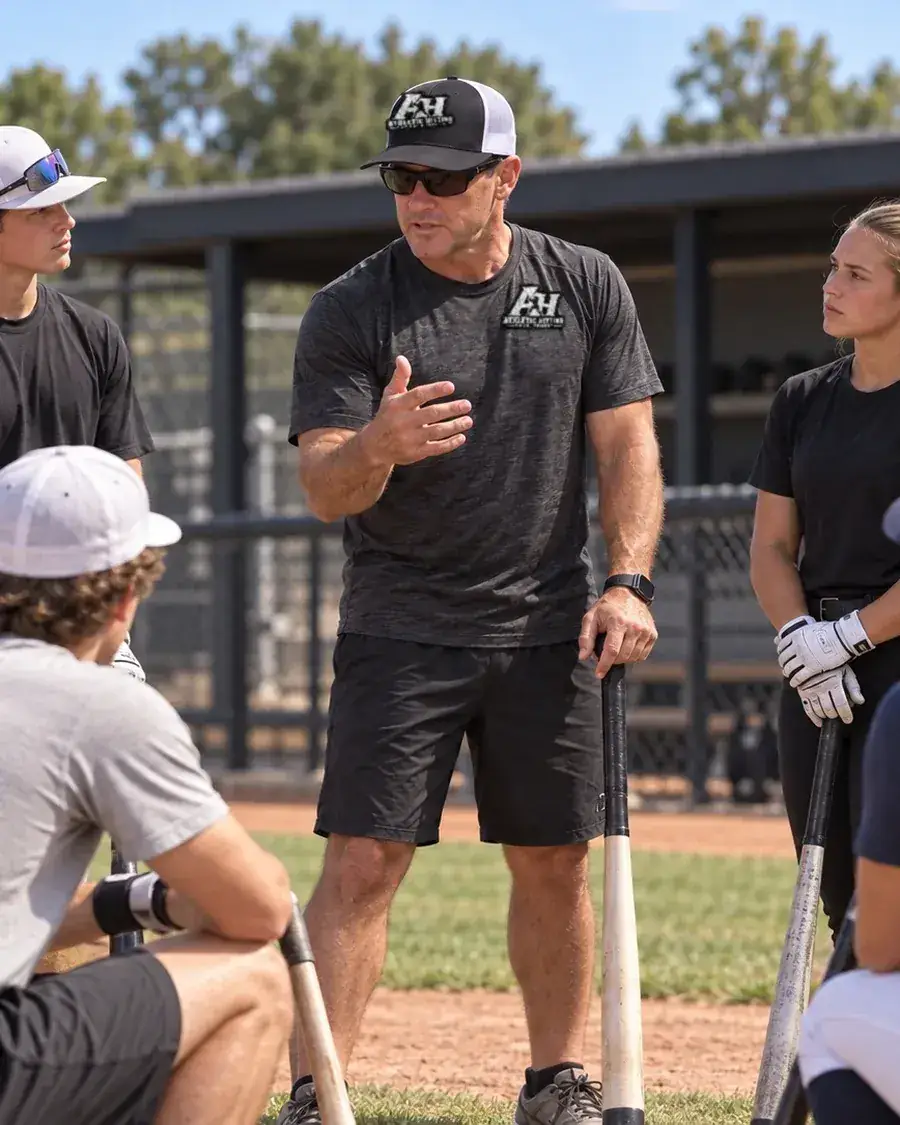
THELESSON.
- Start your gather earlier
- Hunt one pitch, one zone
- Train recognition daily
- Don't rebuild your swing
Complete Hitters Are Built…Earned.
Want to go deeper? Read What College Coaches Look For in a Hitter and Pitch Recognition Drills: 7 Drills That Actually Show Up in Games.
Quick answers
Is college pitching much harder than high school?
Yes. Velocity is higher across the whole staff, but the bigger change is command and off-speed in any count. College pitchers locate and attack a hitter's weakness.
Why am I struggling to hit in college?
Most freshmen struggle because their timing starts too late and they have never had to make fast swing decisions. It is usually a processor problem, not a swing problem.
How long does it take to adjust to college pitching?
It varies by hitter. Players who trained pitch recognition and timing against real velocity before arriving usually adjust much faster than those who only worked on their swing.
Should I change my swing for college?
Usually not. Start your load earlier, simplify your approach and train decisions daily before you start rebuilding mechanics.
Don’t collect drills. Build a complete hitter.
Complete Hitters Aren’t Born. They’re Built… and Earned.