By BK, Athletic Hitting Development
Complete Hitters Aren’t Born. They’re Built… and Earned.
Key takeaways
- A hitting lessons business is built on a system, not a pile of drills: assess, find the priority, plan, train, retest.
- Start with one or two offers you can deliver well, like private and semi-private lessons, then add small groups and remote video.
- Price from your local market and the value of a plan, not from guessing. Check local rules, waivers and insurance before your first lesson.
- Clients come from visible results: before-and-after video, retests and referrals. Certification makes that trust easier to earn.
To start a hitting lessons business, build your coaching system first, then pick one or two offers, price them from your local market, cover space, waivers and insurance, and win clients with results they can SEE on video. Parents don’t pay for drills. They pay for progress.
Build your coaching system first (assess, prioritize, plan, train, retest), start with private and semi-private lessons, price from your local market, cover space, waivers and insurance, and win clients with before-and-after video and referrals.
Train it: AHD Coach Certification → Free tool: AHD Coach Foundations Lesson 1 (free) →I’ve been giving private hitting instruction for more than 25 years, and I’ve run 1,600+ camps and clinics in 39 states. The coaches who build a real lessons business all have one thing in common. It isn’t a secret drill. There’s no secret sauce.
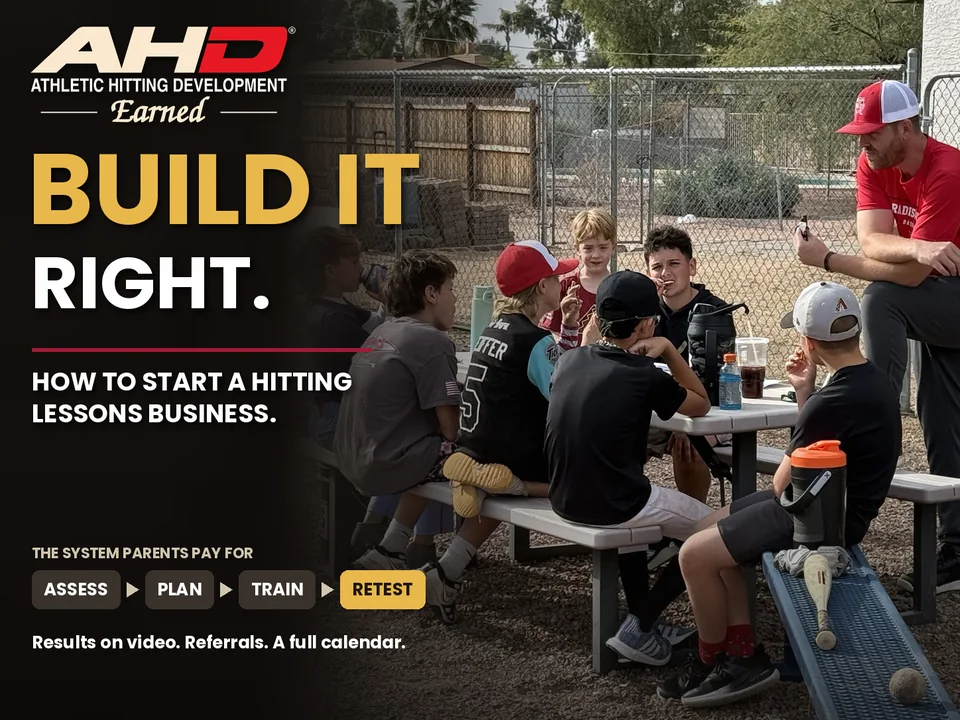
They have a SYSTEM. Every hitter gets assessed, gets a plan and gets retested. Parents can see it working, so they come back and they tell their friends. Let’s build yours.
1. Step 1: Build your coaching system before you look for clients
Most new coaches start with drills. That’s backwards. Don’t collect drills. Build a complete hitter. Your system is what you do with EVERY hitter who walks in, in the same order, every time.
- AssessFilm the hitter and evaluate all 4 pillars: the swing, strength and explosiveness, the Hitting Processor and the mental approach.
- Find the priorityPick the one or two things that matter most right now. Not ten. One or two.
- PlanWrite a short plan: what you’ll work on, the drills that serve it and what success looks like.
- TrainRun the lesson around the priority, with homework the hitter can do between lessons.
- RetestEvery few weeks, film the same angles and compare. Show the parent the change.
That last step is your business. A retest turns “I think he’s getting better” into “look at this.” I go deeper on structure in how to run a private hitting lesson.
YOUR LESSON SYSTEM
ASSESS.PLAN. RETEST.
- Film and assess all 4 pillars
- Pick the 1–2 priorities
- Plan, train, assign homework
- Retest on video, show the parent
PARENTS PAY FOR PROGRESS, NOT DRILLS
2. Step 2: What lessons should you offer?
Start small and do it well. You can always add offers later. Here are the usual options and what each one is good for:
| Offer | Best for | Watch out for |
|---|---|---|
| Private (1-on-1) | Fixing a hitter’s top priority fast | Your calendar fills, your income caps |
| Semi-private (2–3 hitters) | Similar ages and levels; lower cost per family | Hitters with very different needs |
| Small group / clinic | Teaching a skill to several hitters at once | Too many hitters, too few reps |
| Remote video review | Families who can’t get to you | You need a clear filming checklist |
| Team training | Coaches who want one hitting language | Plan the session so nobody stands in line |
My advice: start with private and semi-private lessons, and build a waitlist. Then add a small-group clinic for the skills that teach well in a group, like timing and pitch recognition.
3. Step 3: How should you price hitting lessons?
I’m not going to give you a magic number. Prices change a lot by city, facility and the coach’s experience. Look at what lessons cost in YOUR area. Many facilities post their rates publicly. Then decide where you fit.
- Price the plan, not the hour. A package of lessons with an assessment and a retest is worth more than a single cage session, and it keeps hitters coming back.
- Don’t race to the bottom. Cheapest isn’t a business plan. Clear results are.
- Know your costs. Cage or field rental, equipment, insurance and your travel time all come out of the price.
- Make semi-private a value option. Families get your system at a lower cost, and you coach more hitters per hour.
For a broader look at the earning side, read how much hitting coaches make.
4. Step 4: Space, waivers and insurance
This is the boring part, and it’s the part that protects you. I’m a hitting coach, not a lawyer, so treat this as a checklist of questions to ask, not legal advice.
- Where will you teach? A facility you rent from, a school or park field, or your own cage. Each has its own rules and permits, so ask before you start.
- Insurance. Talk to an insurance agent about liability coverage for coaching. Many facilities require it.
- Waivers and permissions. Have a parent sign a participation waiver for every minor, plus permission if you film. A local attorney can review your forms.
- Safety. Screens, helmets for live work, and stop the moment a hitter has pain.
- Your business setup. Check local rules for business licenses and taxes. An accountant can help.
5. Step 5: How do you get your first clients?
Your best marketing is a hitter who gets better. Make that easy to see and easy to share.
- Offer a free evaluationA short assessment with video shows families your system before they pay.
- Show before-and-after videoSame angles, same distance, a few weeks apart. With permission, nothing sells like it.
- Ask for referralsWhen a parent sees progress, ask who else might want help. Most clients come this way.
- Work with local teamsRun a free clinic or a preseason evaluation for a high school or travel team.
- Be findableA simple page with what you offer, where, and how to book. Keep it current.
For team work, my preseason hitting evaluation for teams is a good place to start.
6. Why certification helps you build trust faster
Parents are trusting you with their kid and their money. They want to know you have a method, not just a good playing career. A hitting coach certification answers that question before they ask it.
The right certification also gives you the system from Step 1: how to assess all 4 pillars, choose the priority, build the plan and prove the change on video. That’s exactly what the AHD Coach Certification teaches, ending in a Practical Video Exam where you coach a real hitter. If you’re not sure it’s for you, read is a hitting coach certification worth it?
Results build a lessons business. A system builds results.
Start with the free AHD Coach Foundations Lesson 1 and see how I teach coaches to build complete hitters. It’s a great day to hit!!
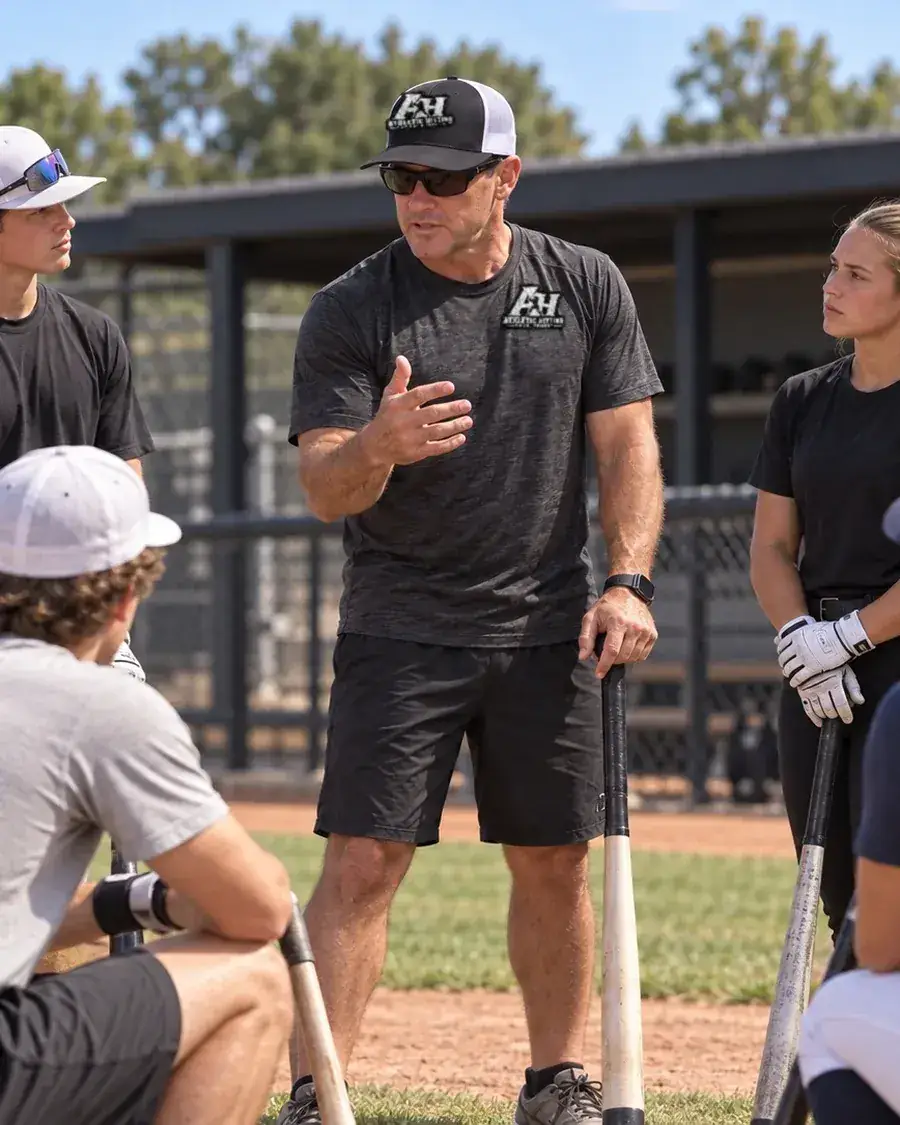
THELESSON.
- Build the system first
- Start with 1–2 offers
- Cover space, waivers, insurance
- Win clients with visible results
Complete Hitters Are Built…Earned.
Want to go deeper? Read How to Run a Private Hitting Lesson: A 60-Minute Hitting Lesson Plan for Instructors and How Much Do Hitting Coaches Make? Honest Math for Private Hitting Instructors.
Quick answers
Do I need a certification to give hitting lessons?
Usually no law requires one, but check your local rules and any facility you teach at. A certification helps parents trust you and gives you a proven system to assess, plan and retest hitters.
How much should I charge for hitting lessons?
It depends on your area, your experience and what you include. Look at what lessons cost locally, price packages that include an assessment and retest, and avoid competing only on being the cheapest.
Do I need insurance to coach hitting lessons?
Many facilities require liability insurance, and it protects you. Talk to an insurance agent about coverage for coaching, and have parents sign a participation waiver for every minor.
How do I get my first hitting lesson clients?
Offer a free evaluation, show before-and-after video with permission, ask happy families for referrals and work with local teams. Visible results bring most clients.
Don’t collect drills. Build a complete hitter.
Complete Hitters Aren’t Born. They’re Built… and Earned.