
By BK, Athletic Hitting Development
Complete Hitters Aren’t Born. They’re Built… and Earned.
Key takeaways
- Staying inside the ball means the knob leads and the barrel stays behind the hands until it whips through to the inside half of the ball.
- The opposite is casting: the barrel swings away from the body early, the path gets long and the hitter rolls over or gets jammed.
- You can go too far inside. Push the hands out with no turn and you lose pull-side power and can’t handle the inside pitch.
- Staying inside is built from the ground up: connected load, launch position, the bump, then letting the arrow go. It’s not just a hand cue.
Staying inside the ball means your hands work close to your body and the barrel stays behind them, then whips through to the inside half of the baseball. It’s one of the two core Mechanically Advantaged Angles every AHD hitter owns: above the ball and inside the ball.
Staying inside the ball means the knob leads, the barrel stays behind the hands, and the barrel hits the inside half of the ball. Build it in swing order (load, launch, bump, then the hands), and don’t push the hands so far inside that the hitter stops turning.
Train it: Swing Structure & Mechanics → Free tool: SwingChecker™ →Every coach in America has yelled “stay inside it!” at a hitter. Very few explain what it means, why it matters, or what happens when a kid takes it too far. So let’s fix that.
This works the same for baseball and fastpitch softball. Different ball, same barrel.
1. What does “stay inside the ball” actually mean?
Picture the baseball split in half from top to bottom. The half closest to you is the inside half. A hitter who stays inside the ball delivers the barrel to that inside half and drives through it.
To get there, three things happen in order:
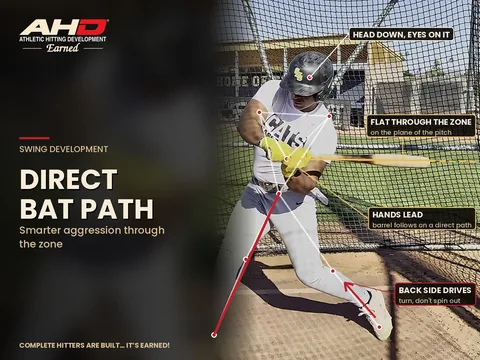
- The knob leads. At launch, the knob of the bat starts toward the ball, not the barrel.
- The barrel stays behind the hands. That’s bat lag. The barrel trails, then catches up late and fast.
- The hands stay close. The back elbow works in front of the body instead of flying away from it.
When those three show up, the barrel takes a short, direct route to the ball and hits the inside half. That’s why balls off a hitter who stays inside tend to come off hard to the middle of the field and the opposite field.
Knob first. Barrel last. Inside half of the ball.
2. Why does casting the bat kill a swing?
The opposite of staying inside is casting. Like a fisherman casting a line, the hitter lets the barrel swing out away from the body early in the swing. The hands get pushed away from the body and the barrel gets there first.
Casting costs a hitter three ways:
- Long pathThe barrel travels a big, round loop, so the hitter has to start sooner and has less time to decide.
- Outside of the ballA casting barrel arrives at the outside half of the ball, which is how you get weak rollovers to the pull side.
- Beat insideGood velocity on the inner third eats a casting swing up. The barrel simply can’t get there.
I see it every week. A kid hits a lot of hard rollovers to shortstop or second and everybody tells him to “keep his head down.” His head is fine. His barrel is outside the ball.
SWING PROBLEMS
INSIDE VS.CASTING.
- Knob leads to the ball
- Barrel stays behind the hands
- Hands work close to the body
- Hit the inside half of the ball
SHORT TO IT. LONG THROUGH IT.
3. Can a hitter stay too far inside the ball?
Yes, and it’s more common than people think. A hitter hears “stay inside” a thousand times, so he starts pushing the hands at the ball with no turn behind them.
That swing looks short, but it’s weak. Here’s what it does:
- No pull-side damage. Everything gets sliced or pushed the other way, even pitches he should pull.
- Can’t handle the inside pitch. Inside pitches need the barrel out front. A pusher gets jammed.
- Chicken wing at contact. The front elbow flies up because the body never turned.
- Lost bat speed. The barrel never gets to whip. It just rides along with the hands.
Staying inside is about where the barrel enters the ball, not about hitting everything the other way. A hitter who stays inside still turns hard, still lets the barrel whip, and still pulls the inside pitch. That’s what our inside pitch work is about.
Inside the ball is a barrel path. It is NOT an opposite-field swing.
4. How do you build a swing that stays inside?
Here’s the mistake: coaches try to fix casting at the hands. The hands are usually the LAST thing to go wrong. Casting almost always starts earlier in the swing, so we fix it in order.
- Directionally sound loadLoad back toward the catcher with the hands connected to the body. If the hands drift away from the body in the load, the swing is already in trouble.
- Launch positionArrive at launch above the ball with the back elbow loaded and the barrel set behind you, not wrapped or laid flat.
- The bumpThe hips start the forward move first. When the lower half leads, the barrel stays back and trails, which is where bat lag comes from.
- Let the arrow goKnob toward the ball, back elbow working in front of the body. The barrel stays behind the hands until it whips.
- Contact and extensionHit the inside half of the ball against an athletic front leg, then extend through it toward your target.
Notice the hands show up at step four. If steps one through three are right, staying inside is usually what happens on its own. If you want a hitter to understand the angles behind it, read Mechanically Advantaged Angles.
5. Which drills teach a hitter to stay inside the ball?
Pick ONE of these and own it for a week. Don’t collect drills. Build a complete hitter.
- Two-tee target. Put a second tee with a ball on it 20 to 30 feet out toward the pitcher. Hit the first ball into the second one. Casters hook it and miss.
- Net or fence drill. Stand with the knob of the bat touching your belly and the barrel just touching a net. Swing without hitting the net. If the barrel swings away from the body early, it’ll catch the net. Go slow first, then build speed.
- Inside-outside tee. Alternate a tee on the inner third (contact out front, pull it) with one on the outer third (contact deeper, drive it the other way). Same swing, different contact point. This keeps a hitter from becoming a pusher.
- Knob-to-ball dry swings. Stop at the moment the knob points at the ball. Is the barrel still behind the hands? Then finish the swing.
Film it from the side and from behind. Our filming guide shows exactly where to put the phone. And remember: your tee can lie to you. Prove it on front toss and live pitching before you call it fixed.

THELESSON.
- Fix it in swing order
- Inside is a path, not a push
- Still pull the inside pitch
- Prove it on live pitching
Complete Hitters Are Built…Earned.
6. Is staying inside really my hitter’s #1 problem?
Maybe. Maybe not. Lots of rollovers come from timing or chasing bad pitches, not from a casting barrel. A swing fix aimed at the wrong problem wastes weeks.
That’s why we start with SwingChecker™. It takes about three minutes, it’s free, and it ranks your hitter’s top priority across all 4 pillars: the swing, strength and explosiveness, the Hitting Processor and the mental approach. If casting comes up first, the Swing Structure & Mechanics course builds the fix in order. Start with Lesson 1 free.
An AHD hitter is aggressive and athletic. Staying inside the ball doesn’t make him passive. It gives his controlled violence a short, direct road to the ball.
It’s a great day to hit!!
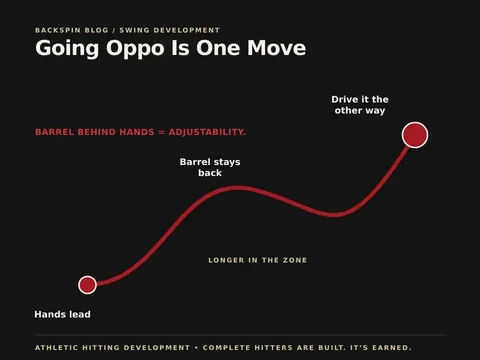
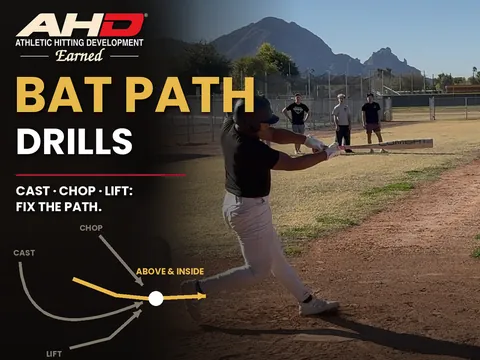
Want to go deeper? Read Going Oppo Is One Move and Bat Path Drills: 6 Drills That Fix Casting, Chopping and Uppercuts.
Quick answers
What does it mean to stay inside the ball in baseball?
It means the knob of the bat leads, the barrel stays behind the hands, and the barrel hits the half of the ball closest to the hitter. It gives the barrel a short, direct path and helps a hitter drive the ball to the middle of the field.
Why do I keep rolling over ground balls?
Often the barrel is casting and getting to the outside half of the ball. Rollovers can also come from timing or chasing pitches, so check the cause before you change the swing.
Is staying inside the ball the same as an inside-out swing?
Not exactly. Staying inside is how the barrel enters the ball on every pitch. An inside-out swing that pushes everything the other way usually means the hitter has taken it too far and stopped turning.
Does staying inside the ball apply to fastpitch softball?
Yes. The barrel path is the same in baseball and fastpitch. Softball hitters face less reaction time, so a short path to the inside of the ball matters just as much.
Don’t collect drills. Build a complete hitter.
Complete Hitters Aren’t Born. They’re Built… and Earned.