By BK, Athletic Hitting Development
Complete Hitters Aren’t Born. They’re Built… and Earned.
Key takeaways
- Ground balls almost always come from one of five causes: bat path, contact point, posture, chasing low pitches, or timing.
- “Swing down on the ball” and “just get under it” both make it worse. The goal is a path that matches the plane of the pitch.
- A late hitter rolls over. A lot of “mechanics problems” are really timing problems.
- Film from the side and from behind, find the ONE cause, and train that cause daily. Don’t collect drills. Build a complete hitter.
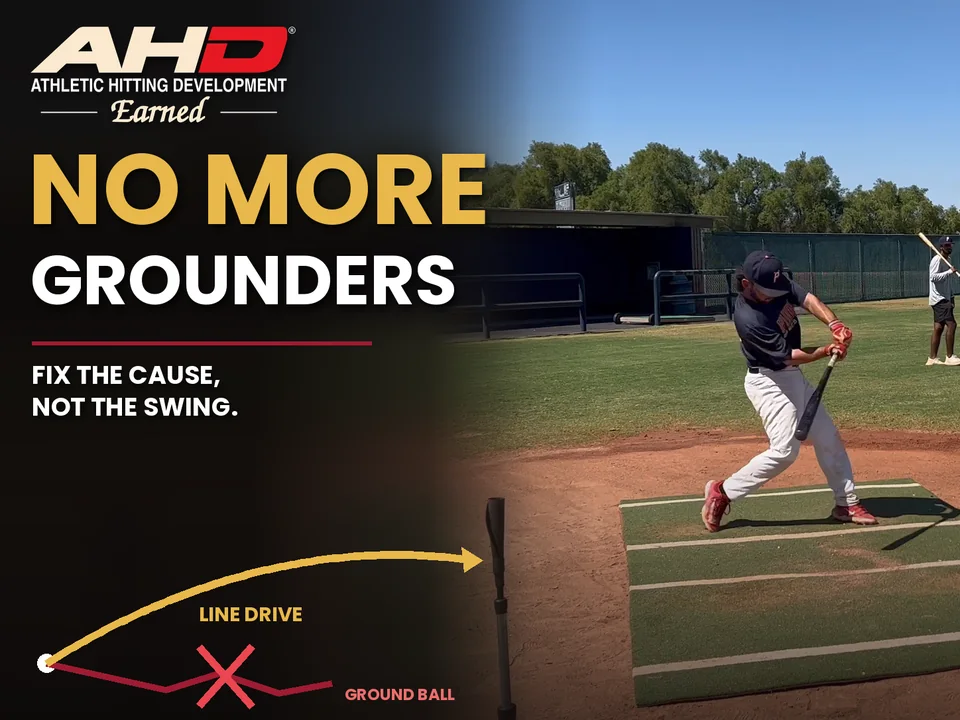
To stop hitting ground balls, find which of the five causes is creating them (a chopping or rolling bat path, a bad contact point, losing posture, chasing low pitches, or being late) and fix that one cause. Grounders are the symptom. The swing is telling you exactly where to look.
To stop hitting ground balls, find the cause first: a chopping or rolling bat path, a bad contact point, pulling up off the ball, chasing low pitches, or being late. Fix that one cause with matching drills, film from the side and behind, and retest weekly.
Train it: Swing Structure & Mechanics → Free tool: SwingChecker™ →I hear it every week: “Coach, he hits everything on the ground.” Parents try to fix it by yelling “get under it!” and hitters try to fix it by uppercutting everything. Now you’ve traded ground balls for pop-ups. Same problem, different direction.
Here’s how I diagnose it, what to film, and the drills I use. Fix the cause and the ball starts going where you want it: hard, and in the air through the middle of the field.
1. Why does my hitter keep hitting ground balls?
A ground ball means the barrel met the ball moving DOWN, or met the top half of it. That happens for one of five reasons. Most hitters have one main cause, and sometimes two.
- Bat path. The hitter chops down at the ball, or casts the barrel out early and then rolls the hands over to save it.
- Contact point. Contact is too far out front (the wrists have already rolled) or too deep (the barrel never gets on plane).
- Posture. The head and chest pull up and off the ball, so the barrel rides over the top of it.
- Chasing low pitches. Pitches below the knees, sinkers and drop balls get beat into the ground.
- Timing. A late hitter rushes the barrel and rolls over. Early hitters reach and top it.
WHY GROUND BALLS
5 CAUSES.1 AT A TIME.
- Chopping or rolling bat path
- Contact too far out or too deep
- Pulling up off the ball
- Chasing low pitches
- Being late
FIX THE CAUSE, NOT THE GROUNDER
Run the free SwingChecker™ first. It ranks your hitter’s top priority so you aren’t guessing.
2. Fix #1: the bat path (stop chopping, stop rolling over)
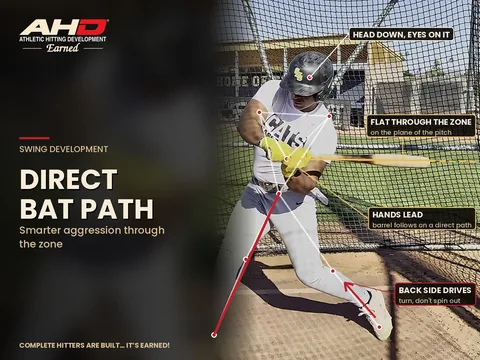
“Swing down on the ball” was taught for years, and it builds ground-ball hitters. The pitch comes in on a slight downward angle. The best path gets the barrel on that plane early and keeps it there through contact. That is the kind of position I call Mechanically Advantaged Angles (MAA): the body and bat in angles that make hard contact easy to repeat.
The other common path problem is casting. The hands push the barrel away from the body early, the barrel gets long, and the hitter rolls the wrists to catch up. The fix is a barrel approach that stays above and inside the ball, then works through it. If you want the deeper version, read Direct Bat Path: Position, Plan & Aggression.
Match the plane of the pitch. Don’t chop it, don’t scoop it.
3. Fix #2 and #3: contact point and posture
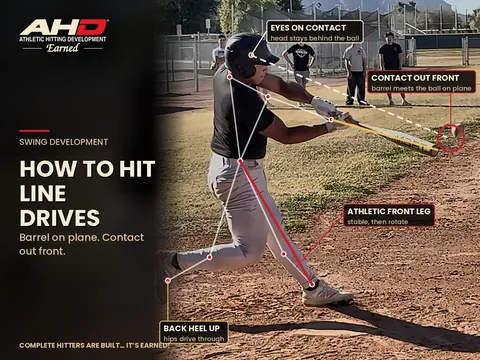
Watch where contact happens. If the top hand has already rolled over at contact, contact is too far out front. If the ball is getting jammed and the barrel is still below the hands, it’s too deep. Good hand placement at contact, palm up and palm down, with the barrel still working through, is what we want.
Then watch the head and chest. Hitters who pull up and off the ball lift their eyes and their barrel at the same time. Keep the posture you launched from, land on an athletic front leg and rotate around it instead of standing up out of it. If he’s also flying open, How to Stop Pulling Off the Ball covers that fix.
4. Fix #4 and #5: chasing low and being late
Plenty of “swing problems” are really decision and timing problems. A hitter who chases the pitch at his shoe tops will hit ground balls with a perfect swing. Hunt pitches you can drive, especially early in the count: belt high and up.
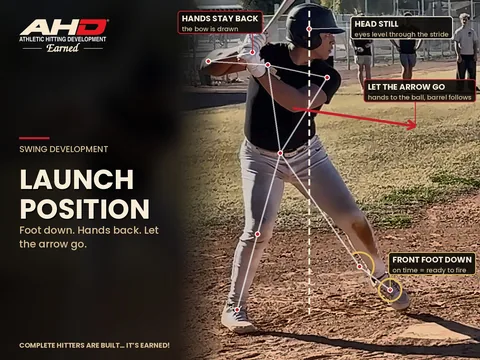
Late is the sneaky one. When a hitter is late, the body can’t sequence, so the hands take over and the barrel rolls. Start the gather and load earlier, get to launch position on time, and then let it go. That’s the Hitting Processor pillar: see it, time it, decide, attack it, trained DAILY. Launch Position Timing goes deeper.
Late hitters roll over. On-time hitters drive the ball.
5. Drills to stop hitting ground balls
Pick the drill that matches the cause. Two or three focused rounds a day beat fifty mindless swings.
- High tee, line-drive targetSet the tee belt high and hang a target at about head height in the cage. Hit line drives into it. Ground balls lose.
- Two-tee path drillPut a second tee a few inches behind and slightly below the ball. Miss the back tee and hit the front ball: it trains getting on plane without chopping.
- Front toss, hold the finishHard front toss, then freeze at extension. Check posture and that the barrel extended through the ball instead of rolling early.
- Low-pitch take gameFront toss with some pitches below the knees. Low ones are TAKES. Swing hard at everything you can drive. Score it.
- Timing roundsMix speeds in front toss. The rule: be ready early. Gather on time, get to launch, then attack.

THELESSON.
- Match the plane of the pitch
- Contact out front, not rolled
- Stay in your posture
- Hunt pitches you can drive
- Be on time
Complete Hitters Are Built…Earned.
6. What to film, and how to know it’s working
Film from the side and from behind, chest high, landscape, slow motion if your phone has it. Five tee swings and five front toss. Same angles every time so you can compare.
You’ll know it’s working when the ball stops dying on the infield and starts going hard through the middle and in the air. Track it simply: out of 10 good swings, how many are line drives? Retest every week. If nothing is measured, nothing is managed.
If you want the full system built in order, Swing Structure & Mechanics is 16 lessons with Lessons 1–3 free. Aggressive and athletic, controlled violence, and the ball in the air. It’s a great day to hit!!
Want to go deeper? Read How to Hit Line Drives (and Stop Popping Up or Rolling Over) and A Direct Bat Path Is Not Enough.
Quick answers
Why do I keep hitting ground balls?
Usually it is one of five causes: a chopping or rolling bat path, contact too far out or too deep, pulling up off the ball, chasing low pitches, or being late. Film from the side and behind to find which one.
Should I swing up to stop hitting ground balls?
Not on purpose. Trying to lift the ball usually trades grounders for pop-ups. Get the barrel on the plane of the pitch early and keep it there through contact.
Does being late cause ground balls?
Yes. A late hitter cannot sequence, so the hands take over and the barrel rolls over. Start the load earlier and get to launch position on time.
What is a good drill to stop rolling over?
A high tee with a line-drive target at about head height in the cage, plus front toss where you hold your finish at extension and check that the barrel worked through the ball.
Don’t collect drills. Build a complete hitter.
Complete Hitters Aren’t Born. They’re Built… and Earned.