1. Losing the athletic position
When posture, balance or center-of-mass control breaks down, timing and barrel accuracy usually become less consistent. The athlete needs a stable position from which force can be created and redirected.
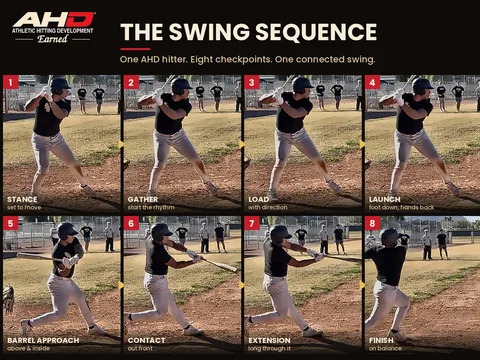
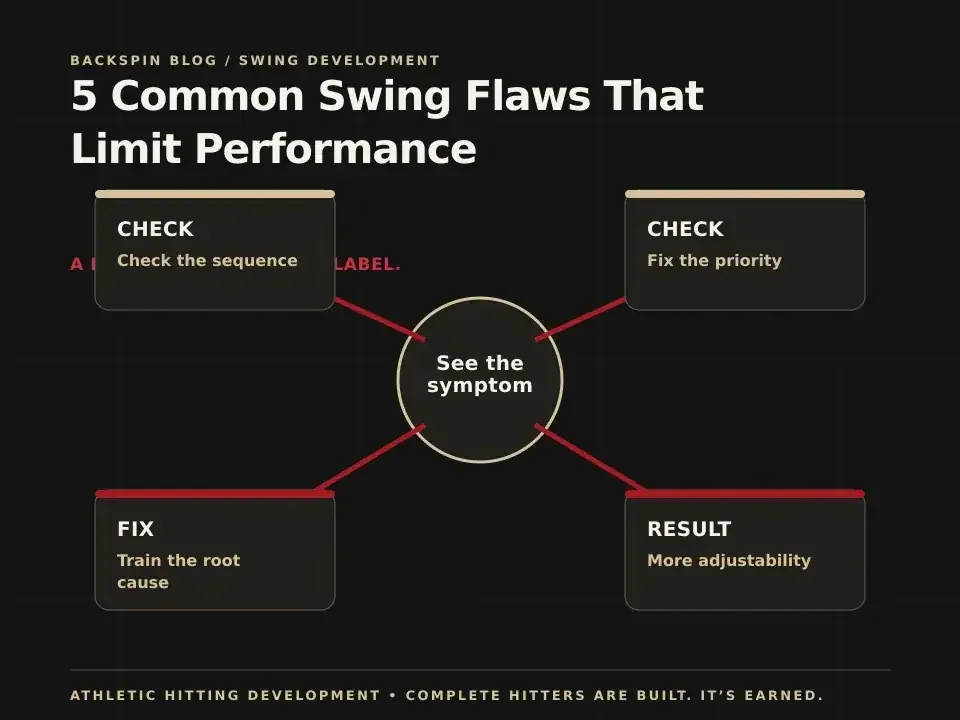
The five swing flaws that limit hitters most are losing the athletic position, a poor stride direction, casting, dumping the barrel and incomplete extension. Each one is usually a symptom, so the fix is to find the checkpoint where the swing first breaks down and train that cause, not the look.
Train it: Swing Structure & Mechanics Masterclass →2. Poor stride direction
The forward move should organize the body toward the pitcher. A stride that leaks excessively away from that line can change posture, timing and the route the barrel must travel.
3. Casting
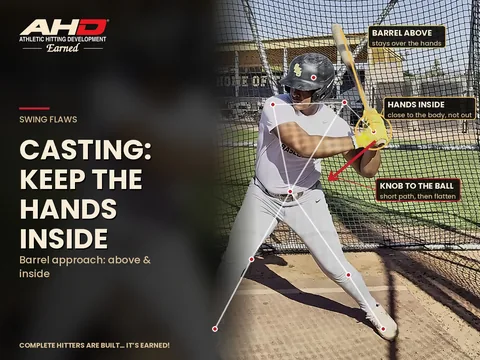
Casting sends the hands and barrel away from the body too early. It can lengthen the swing, reduce adjustability and make inside velocity harder to handle.
SWING FLAW NO. 3
STOPCASTING.
- Hands go out too early.
- The swing gets long.
- Less adjustability.
- Inside velocity gets harder.
FIX CAUSES, NOT JUST APPEARANCES.
4. Dumping the barrel
In AHD terminology, dumping means the barrel drops toward the ground too early. This can create an unnecessarily steep upward path and reduce the hitter’s margin for solid contact.
5. Incomplete extension
After contact, the barrel should continue through the hitting zone with controlled extension. Cutting the swing off early can limit the amount of space and time the barrel stays on a productive path.
Fix causes, not just appearances
A flaw is useful only if it helps identify the checkpoint and root cause that need attention. That is why assessment should come before drill selection.

THELESSON.
- Hold the athletic position.
- Stride toward the pitcher.
- Don't cast the hands.
- Don't dump the barrel.
- Finish the extension.
- Assess before drills.
Complete Hitters Are Built…Earned.
Quick answers
What is casting in a baseball swing?
Casting sends the hands and barrel away from the body too early. It can lengthen the swing, reduce adjustability and make inside velocity harder to handle. If a hitter keeps getting jammed or looks long to the ball, casting is one of the first things to check.
What does dumping the barrel mean in hitting?
In AHD terms, dumping means the barrel drops toward the ground too early. That can create an unnecessarily steep upward path and reduce the hitter’s margin for solid contact. The barrel needs to stay on a productive path long enough to give the hitter room for error.
How do you fix a swing flaw the right way?
Fix causes, not just appearances. A flaw is only useful if it helps identify the checkpoint and root cause that need attention. That is why assessment should come before drill selection. Find what is really driving the problem first, then pick the work that addresses it.
What is the most common swing flaw in youth baseball?
Losing the athletic position is the one we see most. When posture and balance break down early, timing and barrel accuracy suffer, and the hitter often starts casting or rolling over to compensate.
From the 2015 archive: 3 Universal Swing Faults and How to Fix Them.
No subscription. No login. Keep learning, then take one priority into training.