By BK, Athletic Hitting Development
Complete Hitters Are Built… It’s Earned!
Key takeaways
- A good baseball batting stance is athletic and relaxed: feet a little wider than the shoulders, knees soft, weight on the balls of the feet, hands near the back shoulder and both eyes on the pitcher.
- The stance has one job: let him load, see the ball and swing on time. If it looks great but he’s late, it isn’t a good stance.
- Square is the best starting point for most hitters; open and closed stances work only if the body gets back to a good position by the time the front foot lands.
- Know the rule: he must set up with both feet entirely inside the box, and hitting the ball with a foot entirely outside it is an out.
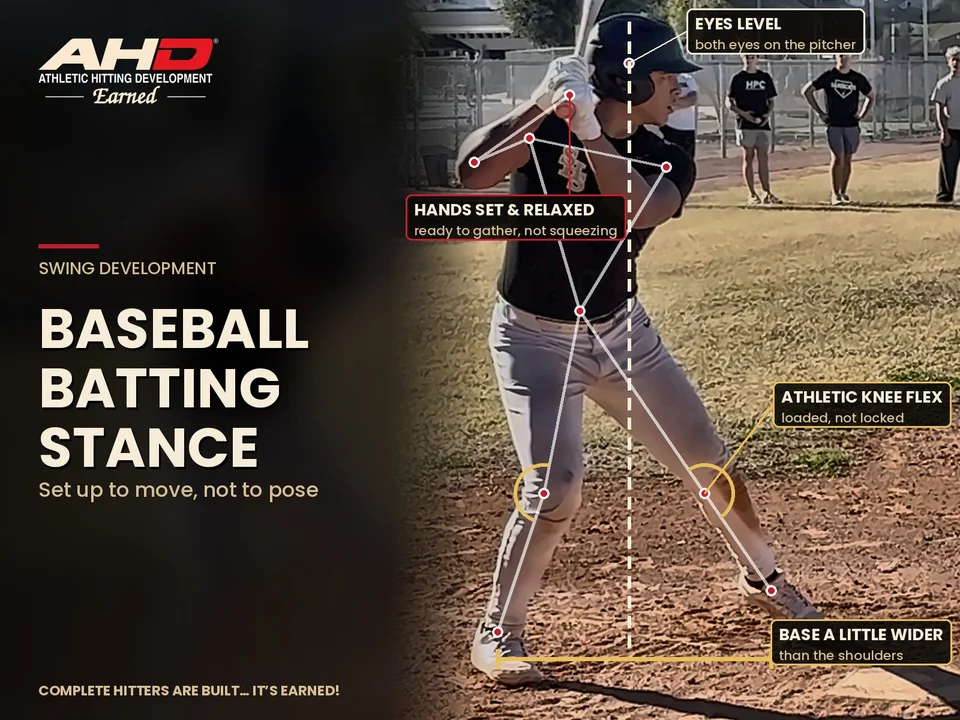
A good baseball batting stance is athletic and relaxed: feet a little wider than the shoulders, knees soft, weight on the balls of the feet, hands near the back shoulder and both eyes level on the pitcher. It doesn’t have to look pretty. It has to let him load, see the ball and swing on time.
A good baseball batting stance is athletic and relaxed: feet a little wider than the shoulders, knees soft, weight on the balls of the feet and hands near the back shoulder. Start square, and make sure it lets him load, see the ball and swing on time.
Train it: Swing Structure & Mechanics →In 52 years of playing, coaching and scouting, I’ve seen every stance there is. Wide, narrow, open, closed, bat flat, bat straight up, hands high, hands low. Some of the best hitters I’ve worked with had stances nobody would put in a textbook.
What they all had in common: they could MOVE from it. Here’s how to build a stance that does that, and what to check first when it doesn’t.
1. What is the best baseball batting stance?
The best baseball batting stance is the one that gets him to a strong, on-time launch position against the pitching he actually sees. There isn’t one perfect stance. There are principles every good stance follows.
- Balanced. A light push from any side shouldn’t tip him over.
- Relaxed. Tension in the hands, forearms or shoulders slows the bat down.
- Ready to move. He’s set up to load into the back side, not frozen in place.
- Eyes level, both on the pitcher. If he has to strain or tilt to see the release, the stance is costing him.
Good hitters don’t share one stance; they share the positions they get to after the load. AHD hitters build Mechanically Advantaged Angles (MAA), and the stance is simply the first step toward those angles. For how the stance fits into the full swing, see how to hit a baseball.
2. How wide should your feet be in a batting stance?
Start with the feet a little wider than the shoulders, then adjust. Too narrow usually means a big stride and a moving head. Too wide can lock the hips so he can’t load or turn.
Weight: on the balls of the feet, roughly even or slightly into the back leg. Not on the heels. Heels make him slow and pull him off the outside pitch.
Knees and posture: knees soft, the way an infielder stands before a pitch. A slight bend at the hips puts his chest over his feet. Too upright and he reaches; too bent and he stands up during the swing, which moves his eyes.
Hands: near the back shoulder, a few inches off the body, around shoulder height. Grip in the fingers, not jammed in the palms, and loose until the swing starts. Buried hands or hands pushed way out both make the swing longer.
Bat angle: most hitters do well with the bat at a moderate angle over the back shoulder, somewhere between flat and straight up. The exact angle matters less than this: after the load, the barrel needs a quick route to the plane of the pitch. A bat that wraps behind his head makes that harder.
If he can’t hold the bat still and relaxed, it may be too long or too heavy. Check it against our baseball bat size chart. As he grows and the pitching gets faster, the stance often gets a bit wider and quieter so the load can stay small. Re-check it every season.
BASEBALL STANCE
ATHLETIC.RELAXED.
- Feet a bit wider than shoulders
- Knees soft, weight off heels
- Hands near back shoulder
- Both eyes on the pitcher
IT HAS TO LET HIM MOVE
3. Should a batting stance be open, closed or square?
An open stance has the front foot pulled back away from the plate. A closed stance has the front foot closer to the plate than the back foot. Square means both feet on a line parallel to the plate.
| Stance | What it can help | What to watch for |
|---|---|---|
| Square | Simplest starting point; easy to repeat and cover the whole plate | Front shoulder can block the back eye if he turns in too far |
| Open | Both eyes see the pitcher easily; can help a hitter who’s late on the inside pitch | He must close back up during the load or he’ll pull off the outside pitch |
| Closed | Can help a hitter who flies open or pulls off the ball | Can tie him up inside and make him step across his body |
My advice for most young hitters: start square. Open or closed is a tool to solve a specific problem, not a style. What matters is where his feet, hips and shoulders are when the front foot lands, not where they started.
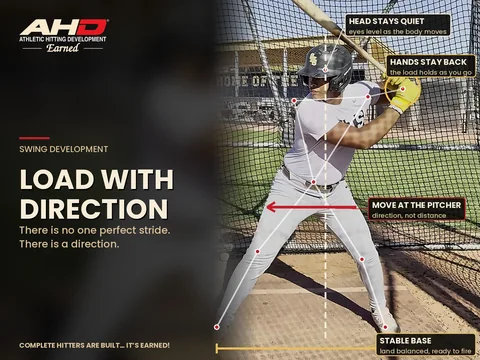
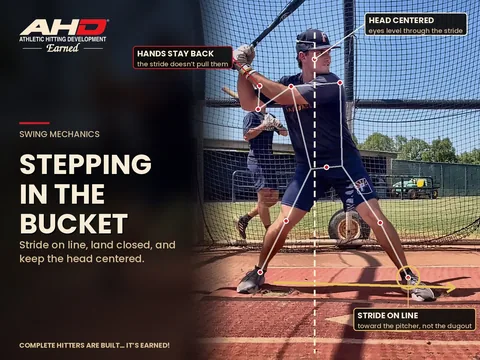
The stride is a separate question, and there’s no one perfect stride either. If his front foot keeps bailing toward third or first, read stepping in the bucket before you change the stance.
4. Where should you stand in the batter’s box?
Distance from the plate: close enough that the barrel covers the outside corner without reaching. A simple check: in his stance, he should be able to touch the far edge of the plate with the end of the bat. Too far away gives up the outside pitch; too close jams him inside.
Front to back: the middle of the box is a good default. Moving back buys a touch more time against a hard thrower, but only helps if he still starts on time; see how to hit a fastball. Moving up can help meet a breaking ball before it finishes its break. Make these planned moves, not a guess every at-bat.
Know the rule. Under the Official Baseball Rules, he must take his stance with both feet entirely within the batter’s box (5.04(b)(5)). If he hits the ball with one or both feet on the ground entirely outside the box, he’s out (6.03(a)(1)); a foot touching the line is still legal. Set up so a normal stride lands inside the lines.
5. What are the most common batting stance mistakes?
When a hitter is late or off balance, I check the stance first because it’s the easiest thing to fix. These are the ones I see most.
- Too stiff. Locked knees, white-knuckle grip, bat frozen. He can’t start smoothly.
- Weight on the heels. He falls away from the plate and pulls off outside pitches.
- Too much movement. Big waggles and bounces that start the load at a different time every pitch.
- Back eye hidden. If the front shoulder or chin blocks the back eye, he sees the ball late.
- Copying a big leaguer. A stance that works for a grown man may not fit a 12-year-old’s body or timing.
Simple stance. On-time load. Then hit.
Use this checklist every time he steps in, until it’s automatic:
- Set the feet.A little wider than the shoulders, inside the box lines, a planned distance from the plate.
- Soften the knees and find the balls of the feet.Athletic, not squatting; weight off the heels.
- Place the hands.Near the back shoulder, a few inches off the body, grip loose in the fingers.
- Level the eyes on the pitcher.Both eyes on the release area, head still.
- Breathe and stay loose.One slow breath, a little rhythm, ready to load when the pitcher breaks his hands.
Some hitters widen out and choke up a little with two strikes; that’s part of a plan covered in our baseball two-strike approach. Coaching a softball player too? See the softball batting stance version.
Film his stance from the side and from behind (our filming checklist shows how), then run the free SwingChecker to see his top priority across the 4 pillars. The Swing Structure & Mechanics course connects the stance to the load and swing path, and if you want me reviewing his video directly, that’s our online hitting instruction. For age-specific work, see hitting drills for 10-year-olds.

THELESSON.
- No one perfect stance
- Start square, adjust with a reason
- Barrel covers the outside corner
- Feet inside the lines
Complete Hitters Are Built…Earned.
Want to go deeper? Read There Is No Perfect Stride in Hitting and Stepping in the Bucket: Why It Happens and the Fix.
Quick answers
Should you bend your knees in a batting stance?
Yes, slightly. Soft knees keep him athletic and ready to load; locked knees make him stiff, and a deep squat drops his eyes and tires his legs.
How far should you stand from home plate?
Close enough that the barrel covers the outside corner without reaching. In his stance, he should be able to touch the far edge of the plate with the end of the bat.
Do batting stances matter?
They matter less than people think, as long as the stance is balanced, relaxed and lets him load on time. What matters most is the position he gets to when his front foot lands.
Where should your hands be in a batting stance?
Near the back shoulder, a few inches off the body, around shoulder height, with a loose grip in the fingers. That gives the hands a short, direct path to the ball.
Sources: Baseball Rules Academy: Batter’s Position in Batter’s Box (OBR 5.04(b)(5), 6.03(a)(1)) · MLB.com glossary: Batter’s Box
Don’t collect drills. Build a complete hitter.
Complete Hitters Are Built… It’s Earned!
This article is part of the AHD guide Baseball Swing Mechanics. Start there for the full picture and every related article.