Let the Arrow Go: Launch Position Timing
When the eyes say yes, is your hitter ready to fire? The hidden delay most hitters have, and how to train it out.
READ ARTICLE →
Originally published October 7, 2015 under Krush Athletics.
Backspin Blog — Free Instruction / The Early Days of AHD
This is historical coaching writing originally published under Krush Athletics. The wording reflects its original period. For current guidance, use AHD lessons and SwingChecker.
The first in a series of swing mechanics. We will go from head to toe and from start of swing until finish. Most batting instructors like to teach from the feet upward, and I do as well, but in this series of posts, we will bounce around the sequence.
THE BUMP
This is one of the more difficult topics to both explain and understand. I have literally spoken to many professional hitters and coaches about this and have received many blank stares. So if it doesn’t come easy, you are not alone!!
WHAT IS THE BUMP? (Warning!!! a lot of coach-speak in here) The middle part of the weight shift or, the linear sway (movement towards the pitcher) of the hips while keeping an athletic (bent) front leg and a square to the plate torso (hips have not opened yet) until the decision is made whether to swing or take the pitch. A very important component of the bump is that the back foot does not rotate but weight on foot rolls to inner portion of foot.
The Bump
Looking at photo to left; 1. The majority of weight has shifted from the back leg to the center/front. The center of mass has shifted to the middle/front of hitter 2. The bent front leg and whole foot on ground creates athletic front side position. (Big part of proper front side mechanics) 3. The hands are back and in launch position 4. The back foot is releasing but not rotating as the foot is rolling forward onto upper/inner foot. 5. The hips are slightly opened but the torso is square with plate.
SIMPLE TERMS
Getting in best athletic position to strike and object in front of you Keeping hands back creating a sling shot effect releasing weight forward by rolling up of inner foot
More simply stated: The bump is when the hitter starts forward by shifting their weight from back to front creating a bent(athletic) front leg.
Looking at a hockey shot, the lower half is very similar as the transfer is similar and the object striking just happens on different plane.
Similar traits in lower half in cricket
Pick any athletic movement where an athlete is striking something and the lower body mechanics are very similar.
The by-product of the bump is if the hitter is fooled by an off-speed pitch, the bent front leg combined with keeping the hands back, allows the hitter to “buy time” by waiting longer and keeping bat in zone for a long time out in front to create a better chance for solid contact.
Why is this so important? If the hitter “bumps”...
It eliminates early rotation The hands have a better chance to stay “inside” the pitch by driving elbow to belly button The hitter has a better chance for solid contact if fooled by pitch by keeping a flat swing Allows for adjusting to off-speed pitches Keeps head and eyes in good tracking position Helps keep bat inside the ball Prevents “casting” which, in turn, prevents the rolling of the bat head Helps Creates a strong, powerful contact position Helps Creates flat swing Eliminates squishing the bug or spinning
BATTING TIP: keep knees slightly bent throughout the swing which makes all the good movements happen more often and the bad movements happen less often.
The middle of the weight shift: the hips move toward the pitcher with a bent front leg and a torso still square to the plate, before the hitter decides to swing or take.
The bent front leg and hands staying back let the hitter wait longer and keep the bat in the zone, buying time if they’re fooled.
No subscription. No login. Keep learning, then take one priority into training.
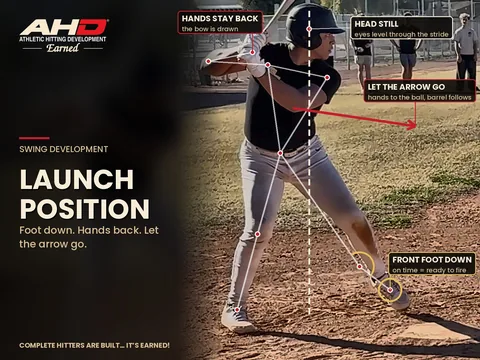
When the eyes say yes, is your hitter ready to fire? The hidden delay most hitters have, and how to train it out.
READ ARTICLE →
Sitting on the curveball is how hitters get beat by the fastball and the curveball. Here’s what to do instead.
READ ARTICLE →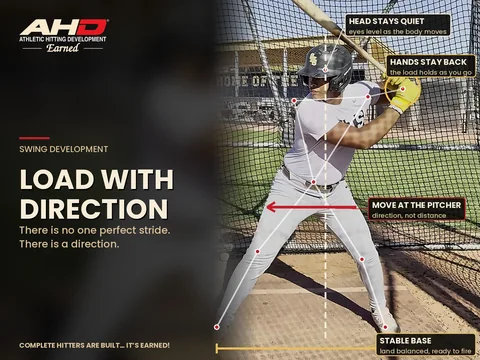
A 2026 study of 95 college hitters found no single ideal stride. Assess the whole move before you try to fix a stride.
READ ARTICLE →Guarantee & Refunds · Privacy · Terms · Safety · Delete My Data