By BK, Athletic Hitting Development
Complete Hitters Are Built… Not Given. Earned!
Baseball and softball are beautiful games.
Too many players today participate instead of play, and the game has lost energy, urgency, communication and team play. The fix starts with standards: be on time, no phones, treat the next pitch like it matters, bring energy and no poor me.
Train it: Hitting Coach Certification →They are also brutal games.
They can give you one of the greatest feelings you will ever experience in sports, then humble you five minutes later. You can be the hero in the third inning and strike out with the bases loaded in the seventh. You can make the play that wins the game today and boot the routine ground ball tomorrow.
That is part of why I love these games.
They demand skill. They demand patience. They demand toughness. They demand that you deal with failure over and over without allowing failure to change who you are.
But when I look around amateur baseball and softball today, my biggest concern isn’t always how well we’re playing.
It’s how we’re playing the game.
I think we’ve lost some of the things that make baseball and softball great: passion, energy, urgency, consequences, communication, team play and the feeling that the next pitch actually matters.
The game has gotten too quiet
Too slow.
Too comfortable.
Too individual.
Too much standing around waiting for somebody else to make something happen.
The uniforms are better. The facilities are better. The equipment is better. Technology is incredible. There are more instructors, tournaments, travel teams, showcases, rankings, social-media clips and data than at any point I can remember.
And yet sometimes I watch a game and think: Where is everybody?
Not physically. Mentally. Emotionally. Competitively.
Where is the dugout? Where is the shortstop taking charge? Where is the outfielder moving with urgency? Where is the player who just made an out immediately turning his attention toward helping the team win the next pitch?
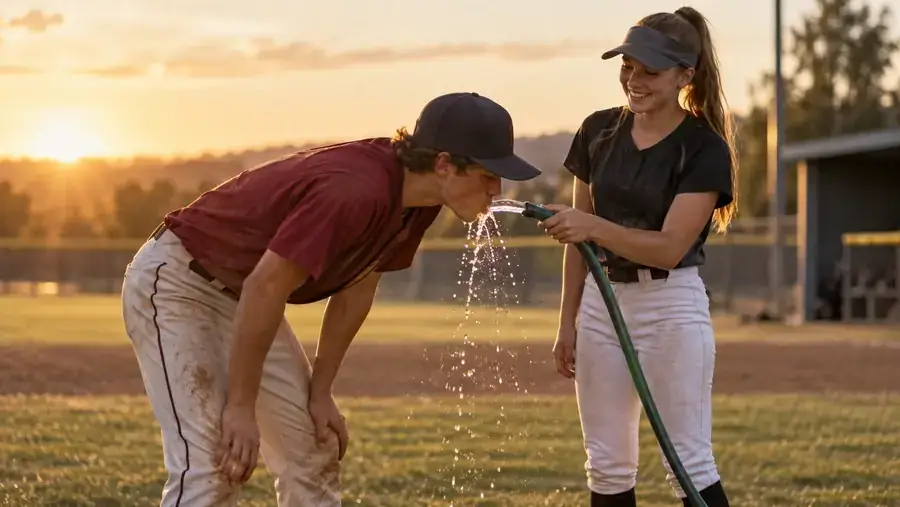
Where is the kid covered in dirt?
THE GAME HAS GOTTEN TOO QUIET
PLAY. DON'TPARTICIPATE.
- Too slow.
- Too comfortable.
- Too much standing around.
PLAYING MEANS BEING ENGAGED.
Somewhere along the way, playing became participating
Those are two very different things.
You can participate in a baseball or softball game without truly competing in it. You can stand at shortstop. You can take four at-bats. You can throw your inning. You can wear the uniform, play seven innings and go home.
But playing requires something more.
Playing means you are engaged in every pitch. Thinking ahead. Communicating. Backing up. Moving. Anticipating. Responding. Encouraging. Competing. Trying to affect the game even when the ball is not hit to you.
That is team baseball. That is team softball.
Neighborhood ball disappearing is a bigger problem than we admit
One of the things I miss most is kids simply playing.
Not training. Not attending an organized workout. Not playing another tournament game because adults scheduled it.
Playing.
Kids figuring out teams. Arguing whether somebody was safe. Changing the rules because there are only seven players. Using a tree as first base. Throwing a tennis ball against a wall. Playing home-run derby until somebody’s mom starts yelling that dinner is ready.
That environment taught things we now try to manufacture in structured practices: creativity, leadership, problem-solving, competition, conflict resolution, game awareness, toughness and maybe most importantly, love of the game.
For younger kids especially, the disappearance of neighborhood ball is a huge loss. When every baseball experience is scheduled, coached, paid for, organized and evaluated, we risk taking the actual play out of playing.
So what do we do?
I can complain about the system. Travel ball. Showcases. Phones. Schedules. Adults. Money. Technology. All of it.
But at some point complaining just makes me another part of the problem.
So this is my mini step toward making the amateur game great again: standards.
The AHD non-negotiables
For two hours, play like it matters more than anything in the world.
Then when it is over, shake hands, laugh, go eat, go fishing, hang out with your family and remember it is still just a game.
But while you are in it?
Be all the way in it.
A MINI STEP: STANDARDS
AHDSTANDARDS.
- Be on time.
- No phones.
- The next pitch matters.
- Bring energy.
ON TIME MEANS READY.
Energy is a skill
People talk about energy as if you are either born energetic or you are not.
I don’t buy that.
Competitive energy can be trained. You can train yourself to sprint onto the field. Communicate. Respond correctly after failure. Pick up a teammate. Get off the bench and become involved. Move with purpose. Demand more from yourself.
Eventually those actions become culture.
Culture is not a poster on the wall.
Culture is what everybody does when nobody needs to remind them.
You’re either a giver or a sapper
Energy Giver
Engaged. Communicates. Celebrates teammates. Responds to adversity. Competes. Their body language says: We’re good. Let’s go. Next pitch.
Energy Sapper
Bad at-bat? Head down. Error? Pouting. Coach says something they don’t like? Attitude. Something goes wrong? Everybody has to feel it.
You do not have to be the loudest person on the field to be a giver. A quiet player can give tremendous energy through preparation, effort, toughness and consistency.
Energy is not noise. Energy is contribution.

ENERGY IS A SKILL
GIVER ORSAPPER?
- Engaged. Communicates.
- Celebrates teammates.
- Responds to adversity.
YOU GIVE ENERGY OR TAKE IT.
“No poor me” may be the most important rule
Baseball and softball give you endless reasons to feel sorry for yourself.
The umpire missed one. The ball took a bad hop. You smoked one right at somebody. Coach didn’t start you. Your teammate made an error behind you. You struck out. Again.
Welcome to the game.
Nobody escapes it.
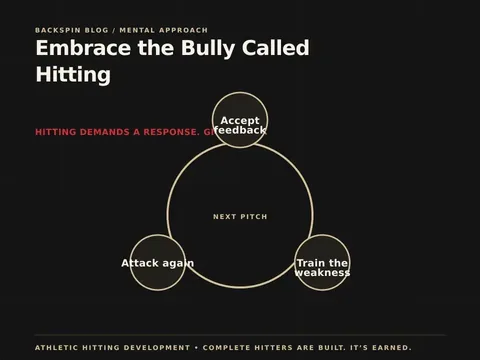
The best competitors do not pretend those things never bother them. They simply refuse to let disappointment steal the next pitch.
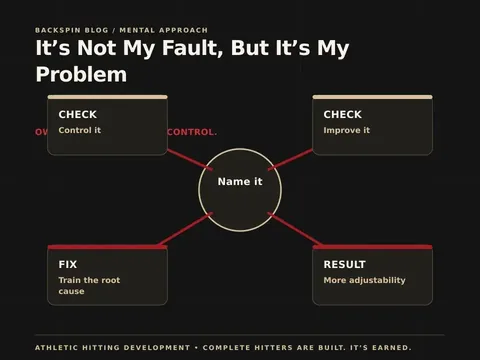
Something happened. Maybe it was not fair. Maybe it was not your fault.
But now?
It is your problem. Handle it.
That is the same ownership standard behind It’s Not My Fault, But It’s My Problem.
Team baseball still matters
This is not nine individual résumés sharing a field.
At least it should not be.
Move the runner. Back up the base. Hit the cutoff. Talk. Pick somebody up. Run hard. Know the situation. Celebrate the player who drove somebody in. Execute the bunt. Take the extra base. Prevent the extra base. Do the thing the team needs even when nobody is going to put it in your highlight video.
That is baseball. That is softball.
When a team starts playing that way, the game speeds up. The dugout wakes up. Players become connected. Pressure moves to the opponent. Everybody starts having more fun.
This fits everything we teach at AHD
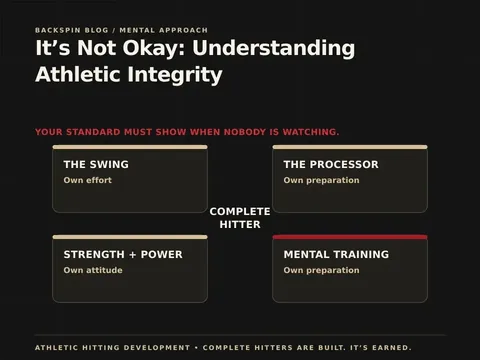
Athletic Hitting Development is built around developing the complete hitter: the swing, athletic development, the hitting processor and mental training.
But there is another word underneath all four:
Intent.
What good is learning the swing if you are casually going through the motions? What good is getting stronger if you do not compete? What good is improving your eyes and processor if you are mentally checked out between pitches? What good is talking about confidence and resilience if one strikeout ruins your afternoon?
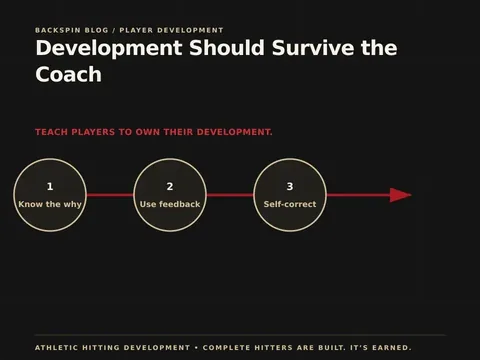
Development is not simply accumulating information.
Development is becoming the kind of athlete who can use it when the game gets hard.
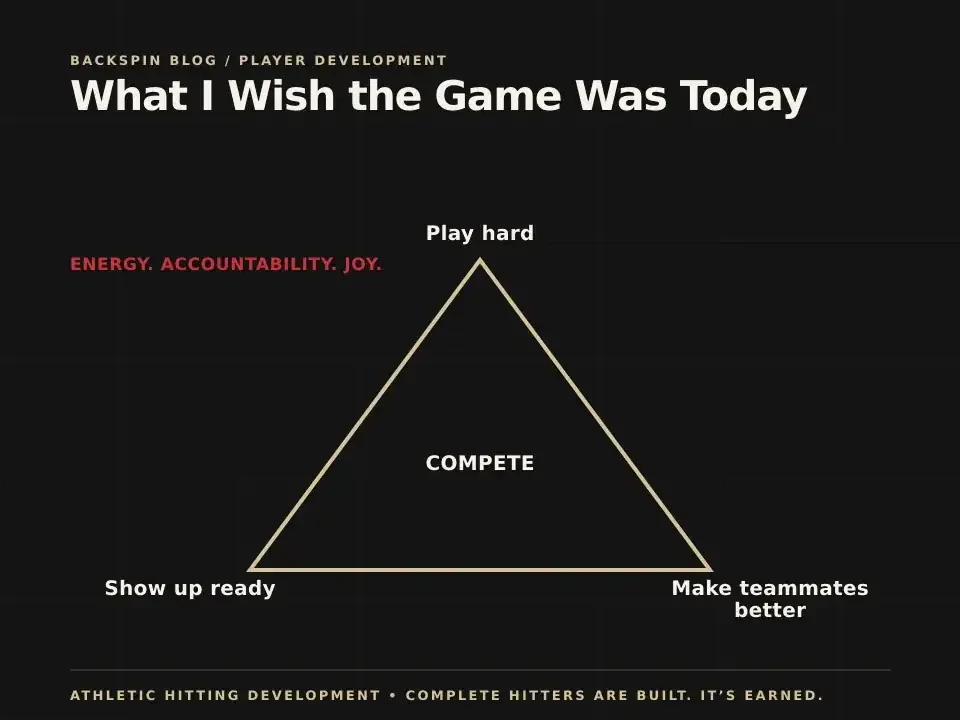
What I wish the game was
I want baseball and softball to feel alive again.
I want kids sprinting onto the field. Dugouts engaged. Teams talking. Dirty uniforms. Kids competing their tails off and then laughing together afterward.
I want coaches teaching the game instead of simply managing schedules. I want young players to understand that being part of a team actually means something.
I want neighborhood games. Whiffle ball. Kids inventing games.
I want passion. Consequences. Accountability. Joy.
And I want players to understand how unbelievably lucky they are to get another pitch.
Because eventually there really will be a last one.
You will not know it is the last ground ball. The last bus ride. The last practice. The last time you put the uniform on. The last time your teammates are all standing together.
It just ends.
So while you have it:
PLAY. Play hard. Play together. Play fast. Play with energy. Play with gratitude. Play like it matters.
For two hours, give the game everything you have.
That alone could change a lot for a lot of people.
Great players are built. Great teams are built. Great cultures are built.
And rebuilding the way we play is a pretty good place to start.
— Athletic Hitting Development

THELESSON.
- Sprint onto the field.
- No poor me.
- Play team baseball.
- Bring intent.
- Compete every pitch.
Complete Hitters Are Built…Earned.
Quick answers
What is wrong with youth baseball today?
The game has gotten too quiet, too slow and too individual. Equipment and facilities are better than ever, but too many players participate instead of play. Playing means being engaged in every pitch, communicating, backing up, moving and trying to affect the game even when the ball is not hit to you.
Why does neighborhood ball matter for kids?
Kids just playing taught creativity, leadership, problem solving, competition, game awareness, toughness and love of the game. When every baseball experience is scheduled, coached, paid for and evaluated, we risk taking the actual play out of playing, especially for younger kids.
What does no poor me mean in baseball?
Baseball and softball give you endless reasons to feel sorry for yourself. A missed call, a bad hop, a strikeout. The best competitors do not let disappointment steal the next pitch. Maybe it was not your fault, but now it is your problem. Reset and help the team win.
How can coaches build energy and culture on a youth baseball team?
Set standards and hold them every day. Competitive energy can be trained: sprint onto the field, communicate, pick up a teammate and respond correctly after failure. Culture is what everybody does when nobody needs to remind them.
This article is part of the AHD guide Youth Hitting Development. Start there for the full picture and every related article.