
By BK, Athletic Hitting Development
Complete Hitters Aren’t Born. They’re Built… and Earned.
Key takeaways
- Bat speed is how fast the bat moves at contact. Exit velocity is how fast the ball leaves the bat.
- Exit velocity depends on bat speed, pitch speed and how squarely the ball is hit. Bat speed sets the ceiling; contact decides how close you get.
- MLB’s squared-up rate measures exactly that gap: how much of the possible exit velocity a hitter actually got.
- Train both, in order: build speed you can control, then square it up on time against real pitching.
Bat speed is how fast the bat is moving at contact; exit velocity is how fast the ball comes off the bat right after contact. Bat speed sets how hard a hitter CAN hit it, and squaring the ball up on the sweet spot decides how much of that he actually gets, so exit velocity is the one that shows up in games.
Bat speed is how fast the bat moves at contact; exit velocity is how fast the ball leaves the bat. Bat speed sets the ceiling, and pitch speed plus squared-up contact on the sweet spot decide how much exit velocity a hitter actually gets.
Train it: Complete Hitter Masterclass → Free tool: Exit Velocity & Bat Speed Calculator →Parents get a sensor reading and a radar reading and want to know which one to care about. The honest answer: both, because they tell you different things.
Here’s the difference, how they connect, and what to do when they don’t line up.
1. What’s the difference between bat speed and exit velocity?
| Bat speed | Exit velocity | |
|---|---|---|
| What it measures | How fast the bat moves at contact | How fast the ball leaves the bat |
| Where it’s measured | MLB: the sweet spot, about 6 inches from the head of the bat | The ball, immediately after contact |
| What it tells you | What the swing can produce | What the swing actually produced |
| What drives it | Strength, speed, sequencing, bat | Bat speed, pitch speed, quality of contact |
MLB’s Statcast measures bat speed at the point about six inches from the head of the bat, and defines exit velocity as the speed of the ball as it comes off the bat, immediately after the batter makes contact.
Bat speed is the engine. Exit velocity is the receipt.
2. How does bat speed turn into exit velocity?
Three things set exit velocity: how fast the bat is moving, how fast the pitch is coming in, and how squarely the ball meets the sweet spot.
MLB built a stat around that last part. Its squared-up rate compares a hitter’s actual exit velocity to the highest exit velocity that was possible based on his swing speed and the pitch speed. MLB notes that maximum is only reachable when the ball hits the sweet spot, roughly 4 to 9 inches from the head of the bat, and it counts a swing that gets 80% or more of the possible exit velocity as squared up.
MLB’s own glossary example: a 75.6 mph swing against a 98.8 mph fastball had a maximum possible exit velocity of 113.4 mph. The hitter got 110, which is 97% squared up. Same idea for your hitter: the swing sets the ceiling, contact decides how close he gets.
That’s also why a ball off a tee or soft toss comes off slower than the same swing against a real fastball. The pitch brings speed of its own.
BAT SPEED VS EXIT VELO
ENGINE.RECEIPT.
- Bat speed: the bat at contact
- Exit velo: the ball off the bat
- Pitch speed adds to it
- Sweet spot decides the rest
SPEED SETS THE CEILING
3. Why is his bat speed high but his exit velocity low?
This is the most common gap I see. The swing is fast, but the ball doesn’t jump. Usually it’s one of these:
- Missing the sweet spot. Off the end, off the hands, or under it. Fast bat, bad contact.
- Late or early. Contact too deep or too far out front takes away squared-up contact. That’s timing, not strength.
- Fast in the wrong place. The barrel gets speed too early, or the path doesn’t match the pitch, so it isn’t fastest where the ball is.
- Testing on air. Dry swings run fast. Speed has to show up with a ball on the tee.
The reverse happens too: modest bat speed, good exit velocity. That hitter squares the ball up a lot. That’s a skill, and it’s worth building on, not tearing down.
"Get on the backside of one, baby!" Barrel behind the ball, driving through the back of it. That’s what closes the gap between the two numbers.
4. Which matters more, bat speed or exit velocity?
In games, exit velocity, because it’s what the defense has to handle. A hard-hit ball gives fielders less time to react.
In training, you need both, because they answer different questions. Bat speed tells you if the engine is big enough. Exit velocity tells you if the engine is connected to the ball. Squared-up contact against real pitching is where the two meet.
Here’s how I explain it to a hitter. Bat speed is how big your engine is. Exit velocity is how much of that engine you got to the ball. A hitter with a smaller engine who squares it up every time can out-hit a bigger engine that keeps missing the sweet spot. But the bigger engine has more room to grow, because once he learns to square it up, the ceiling is higher. That’s why we measure both and train the one that’s holding him back.
Good hitters don’t pick one. They build speed they can control and get to Mechanically Advantageous Angles (MAA) so that speed arrives at the ball, on time, on the sweet spot.
And neither number is the whole hitter. Read exit velo is a receipt, not a plan and is bat speed everything? for the rest of the picture.
5. How do you improve both bat speed and exit velocity?
- Measure both the same way every time.Same bat, warm-up and setup. See how to measure bat speed.
- Compare them, not just track them.Put both into the free exit velocity and bat speed calculator to see the gap.
- If speed is the limit, build the body.Strength, rotational power and intent. Start with bat speed drills that transfer.
- If contact is the limit, fix the barrel and the timing.Path, contact point and starting on time. See how to increase exit velocity.
- Test against real pitching.Front toss and live arms. The number that matters is the one in the game.
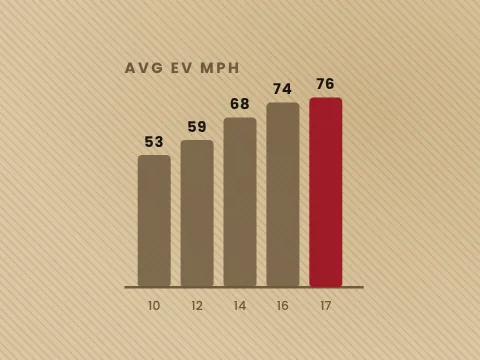
Check where he stands for his age with our bat speed by age and exit velocity by age charts. Then run the free SwingChecker to find his top priority, and build the whole hitter with the Complete Hitter Masterclass.

THELESSON.
- Measure both the same way
- Find the gap between them
- Train the limit first
- Prove it on live pitching
Complete Hitters Are Built…Earned.
Want to go deeper? Read Exit Velocity by Age: Baseball and Softball Benchmarks (2026 Chart) and Bat Speed by Age: Baseball and Softball Benchmarks (2026 Chart).
Quick answers
Does more bat speed mean more exit velocity?
It raises the ceiling. Exit velocity also depends on pitch speed and how squarely the ball hits the sweet spot, so more bat speed only helps if contact stays square.
What is squared-up rate?
It’s MLB’s measure of how much of the possible exit velocity a hitter got, based on his swing speed and the pitch speed. A swing that gets 80% or more of the maximum counts as squared up.
Why is exit velocity higher in games than off the tee?
A pitched ball brings its own speed into the collision, so the same swing produces a faster ball against live pitching than off a tee.
Should my kid train bat speed or exit velocity first?
Find the limit first. If his swing is slow, build speed and strength; if his swing is fast but the ball doesn’t jump, work on contact and timing.
Sources: MLB Glossary: Squared-up Rate (max exit velocity from swing and pitch speed; sweet spot 4–9 in; 80% threshold; example) · MLB Glossary: Exit Velocity (EV) · Baseball Savant: Statcast Bat Tracking leaderboard (bat speed measured six inches from the head of the bat)
Don’t collect drills. Build a complete hitter.
Complete Hitters Aren’t Born. They’re Built… and Earned.