Embrace the Bully Called Hitting
Hitting is simple, not easy. Take the feedback, build the four pillars, and go right back at it.
READ ARTICLE →
Originally published October 9, 2015 under Krush Athletics.
Backspin Blog — Free Instruction / The Early Days of AHD
This is historical coaching writing originally published under Krush Athletics. The wording reflects its original period. For current guidance, use AHD lessons and SwingChecker.

THE SLOT
WHAT: The positioning of the back arm as it moves from the launch point to contact point. The hitter wants to keep the elbow close to the body. We use the term “staying connected.” The hitter needs to keep the back elbow “connected” to the body. Contact is usually made here with both arms bent. This happens as the hitter rotates the torso towards contact.
FAULT: Hitters send their hands away from the body naturally (casting) which: Keep the front elbow below the front shoulder preventing "chicken winging"
· Creates a long swing · Sends barrel out over the outside or past the plate, which then causes a wrist roll to bring the barrel back over the plate to contact. · Creates weaker contact position
HOW TO FIX:
· Swing thought – drive back elbow close to body to belly button · Send hands/knob of bat to pitcher/ball · Keep the top hands palm up towards sky Swing thought - hit the inside of the ball.
BATTING DRILLS:
· Above & inside swing thought – aim for hitting the inside half of the ball during any drill. This will keep the hitter “connected” and in the slot. · Connection drill series drill
· Fence drills - Get a bats length away from a fence or net and square to it. Then take swings. If you cast or don’t stay connected, the bat will hit the fence or net.
Keeping the back elbow close to the body as it moves from launch to contact, so the swing stays short and the barrel doesn’t drift out over the plate.
The fence drill: stand a bat’s length from a fence or net, square to it, and swing. If the hitter casts, the bat hits the fence.
No subscription. No login. Keep learning, then take one priority into training.
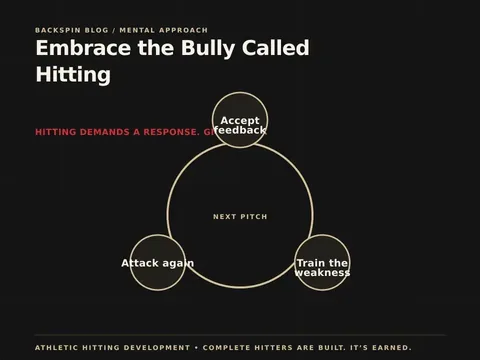
Hitting is simple, not easy. Take the feedback, build the four pillars, and go right back at it.
READ ARTICLE →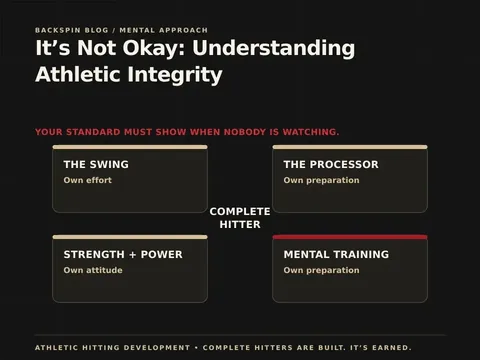
A lot of people gave a lot to get you here. One player’s integrity can hold a team together, or break the chain.
READ ARTICLE →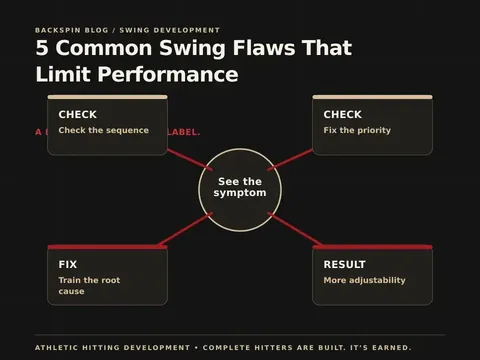
Learn what breaks down most often and how to start fixing it the right way.
READ ARTICLE →Guarantee & Refunds · Privacy · Terms · Safety · Delete My Data