
By BK, Athletic Hitting Development
Complete Hitters Aren’t Born. They’re Built… and Earned.
Key takeaways
- College softball coaches start with bat speed and how hard she hits it, because that tells them the swing can play at the next level.
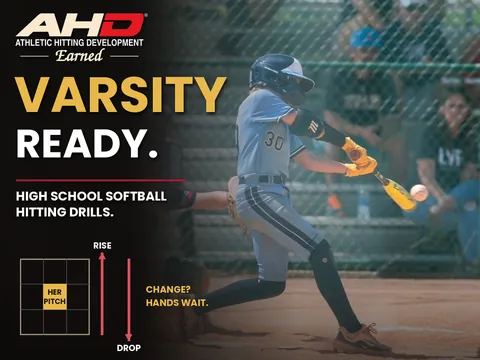
- Then they watch reads and decisions at 43 feet: does she lay off the rise above the zone and the drop below it?
- A clear identity (slapper, power hitter or a hitter who can do both) plus a real short game makes her easier to recruit.
- Makeup, versatility and clean video close the deal. Nobody can promise a roster spot, but she controls all three.
College softball coaches look for a hitter with real bat speed, the ability to read the rise and drop ball at 43 feet, a clear identity at the plate, a short game she can use, and makeup they can trust. The tools get her noticed. Her decisions and how she competes get her the serious look.
College softball coaches look for bat speed and hard contact, good decisions against the rise and drop ball at 43 feet, a clear hitter identity and short game, versatility and strong makeup. Tools get her noticed; decisions and competitiveness get her the serious look.
Train it: Complete Hitter Masterclass → Free tool: Free Hitter Combine →I coached high school and college baseball and high school softball in Arizona and Texas for 30 years, and I’ve worked with plenty of college softball hitters. I’ve evaluated a lot of hitters from behind the backstop and from the dugout. Here’s what I was looking for, and what I tell every softball family I work with.
One honest note first. No coach, camp or service can promise your daughter a scholarship. What she CAN do is become a hitter who’s worth evaluating, and make it easy for a coach to see it.
1. Do college softball coaches care about exit velocity and bat speed?
Yes. It’s usually the first filter, the same as baseball. Bat speed and exit velocity tell a coach whether her swing can handle better pitching.
Know how your number was measured (tee, front toss, or live) and report it the same way every time. A coach would rather see a smaller number she believes than a big one she doesn’t. If you want to see where she stands, read our exit velocity by age chart and how to build a softball bat speed profile.
Power that holds up comes from good positions, not just effort. Hitters with Mechanically Advantaged Angles (MAA), staying inside and above the ball, keep their power when the pitching gets faster. That’s what we build at AHD.
AT 43 FEET
TOOLSPLUS READS.
- Bat speed and hard contact
- Lays off the high rise
- Doesn't chase the drop
- A real two-strike plan
DECISIONS GET HER IN THE LINEUP
2. What do coaches watch in her at-bats?
At 43 feet, a hard-throwing college pitcher gives her about the same reaction time as a mid-90s baseball fastball. Roughly. So coaches watch the decisions as closely as the swing.
- The rise ball. Released low and carrying more backspin, it can climb through the zone. Does she chase it at her eyes? See how to hit a rise ball.
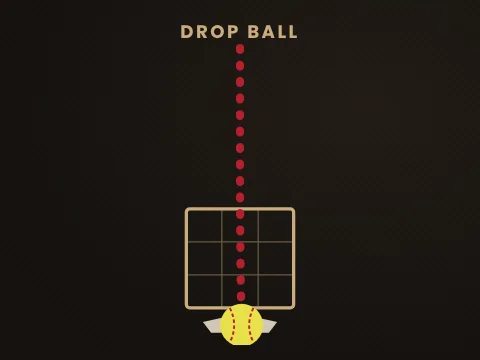
- The drop ball. Thrown down through the zone with topspin. Does she beat it into the ground or lay off the one that finishes in the dirt?
- The changeup. Is she early and out front, or can she stay back and still drive it?
- Two strikes. Does she battle, or give the at-bat away?
This is the Hitting Processor: see it, time it, decide, attack it. It’s the pillar most high school hitters never train, and it shows up in every game a coach comes to watch.
My line on this: "Swing at a bad pitch? No biggie. Take a good pitch to hit? Not happening." Coaches forgive an aggressive miss. What worries them is a hitter who watches her pitch go by.
3. Should she be a slapper or a power hitter for recruiting?
Whatever she is, coaches want to know it in the first minute of her video. A clear identity makes her easy to slot into a lineup.
| Hitter type | What coaches want to see |
|---|---|
| Power hitter | Bat speed, hard contact to all fields, smart takes on the rise |
| Slapper | Speed home to first, soft and hard slap, can hit away when the defense crashes |
| Hit-away contact | Line drives gap to gap, low strikeouts, a real two-strike plan |
| Any hitter | A bunt she can actually use in a game |
If you’re not sure which fits your daughter, read should my daughter slap or hit away. The short game matters in fastpitch at every level, so don’t let it be an afterthought.
4. Do attitude and versatility really matter?
How she acts after a strikeout says more than a home run.
Absolutely. I always watched what a hitter did between pitches and between innings. Does she sulk after a strikeout, or is she the first one up the dugout steps cheering for the next hitter? Coachability counts too. Give her a cue: does she try it, or argue?
Versatility helps. A hitter who can play more than one position, run, and handle the short game gives a coach more ways to get her on the field.
Coaches notice the family too. How she talks to her parents after the game, and how the parents act in the stands, are part of the picture. That’s not a reason to be nervous. It’s a reason to make the whole package easy to say yes to.
5. What should a softball hitting recruiting video include?
Short, clean and honest. Make it easy for a busy coach to see her swing and believe her numbers.
- Lead with her best live swingsGame or live at-bats against real pitching first, then cage work.
- Film from the side and from behindChest high, landscape, slow motion, whole body and bat through the finish.
- Show her identityPower, slap, short game, whichever she is, in the first minute.
- Add her numbers with how they were measuredExit velocity, bat speed and home-to-first, with the date.
Our online swing analysis page has the free filming checklist we use. Then start with the free SwingChecker to find her top priorities, and build all 4 pillars with the Complete Hitter Masterclass. For coaching with BK’s eyes on her swing, see online softball hitting lessons.
And when she’s doing it right in games, you’ll see it in one place first: "Hard, down the other way means we are on our way!" A hard ball to the opposite field means she’s on time and staying through it, and college coaches notice that.
THELESSON.
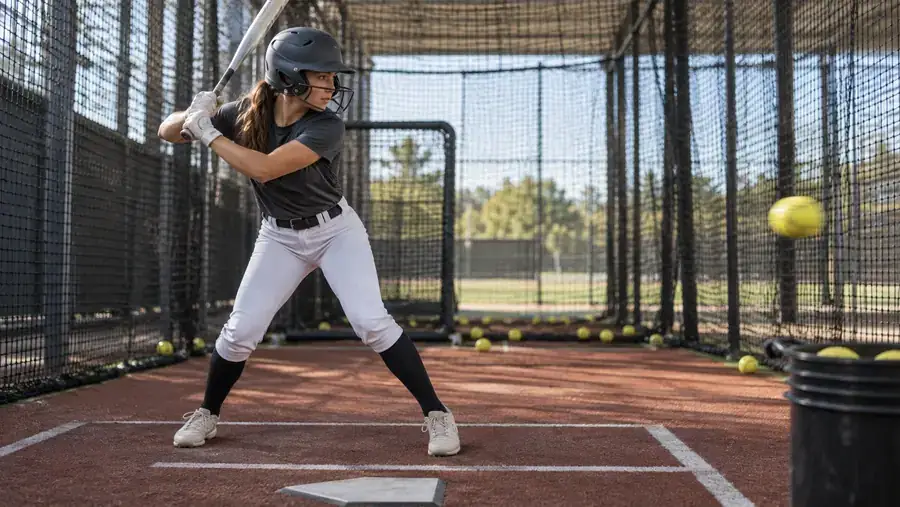
- Know her identity
- Measure the same way every time
- Film side and behind
- Compete after every at-bat
Complete Hitters Are Built…Earned.
Want to go deeper? Read How to Hit Fast Pitching in Softball (60+ MPH) and How to Hit a Drop Ball in Fastpitch Softball.
Quick answers
What do college softball coaches look for in a hitter?
Bat speed and hard contact first, then swing decisions against the rise, drop and changeup, a clear hitter identity, a usable short game, versatility and makeup.
Does exit velocity matter for college softball recruiting?
Yes, it is one of the first filters. Report how it was measured and keep it consistent so a coach can trust the number.
Is it better to be a slapper or a power hitter for college softball?
Neither is better for everyone. Coaches want a clear identity they can see quickly, and a hitter who can do more than one thing has an edge.
What should a softball hitting recruiting video show?
Her best live at-bats first, swings filmed from the side and behind, her hitter identity and her numbers with how they were measured.
Don’t collect drills. Build a complete hitter.
Complete Hitters Aren’t Born. They’re Built… and Earned.