By BK, Athletic Hitting Development
Complete Hitters Aren’t Born. They’re Built… and Earned.
Key takeaways
- Swings and misses aren’t random. Where he misses tells you why.
- Misses under the ball usually mean late or a barrel that drops. Misses over the ball usually mean early or fooled by off-speed. Chases mean the decision, not the swing.
- Count the misses for two or three games before you change anything. One pattern almost always shows up most.
- Fix that one cause. Telling him to “just make contact” usually makes him slower, not better.
A hitter swings and misses for one of four reasons: he’s late, he’s early or fooled, he’s chasing pitches he can’t hit, or his barrel is only in the zone for an instant. Where the misses happen tells you which one. Count them for a few games, find the pattern that shows up most and fix that cause instead of telling him to just make contact.
A hitter swings and misses because he’s late, early or fooled, chasing, or his barrel is on the pitch’s path too briefly. Chart where the misses happen for a few games, find the pattern that shows up most and fix that one cause.
Train it: Complete Hitter Masterclass → Free tool: Free Hitter Combine →Few things are harder to watch from the bleachers than strike three swinging, again. The natural reaction is “just put the ball in play.” That usually makes it worse. The hitter cuts his swing down, gets slower and still misses.
1. Read the misses first
Before you change anything, keep a simple chart for two or three games, or a couple of live batting practice sessions. For every swing and miss, write down two things: what pitch it was and where the bat missed.
| Where he misses | What it usually means |
|---|---|
| Under firm fastballs, especially up | Late, or the barrel drops below the ball |
| Over slower pitches and off-speed | Early, or fooled by the pitch |
| Pitches out of the zone, low and away | Chasing, a decision problem |
| Everywhere, on pitches in the zone | The barrel is on the pitch’s path too briefly |
| Fine in practice, misses in games | Timing against real pitching, or pressure |
One pattern almost always shows up most. That’s where you start.
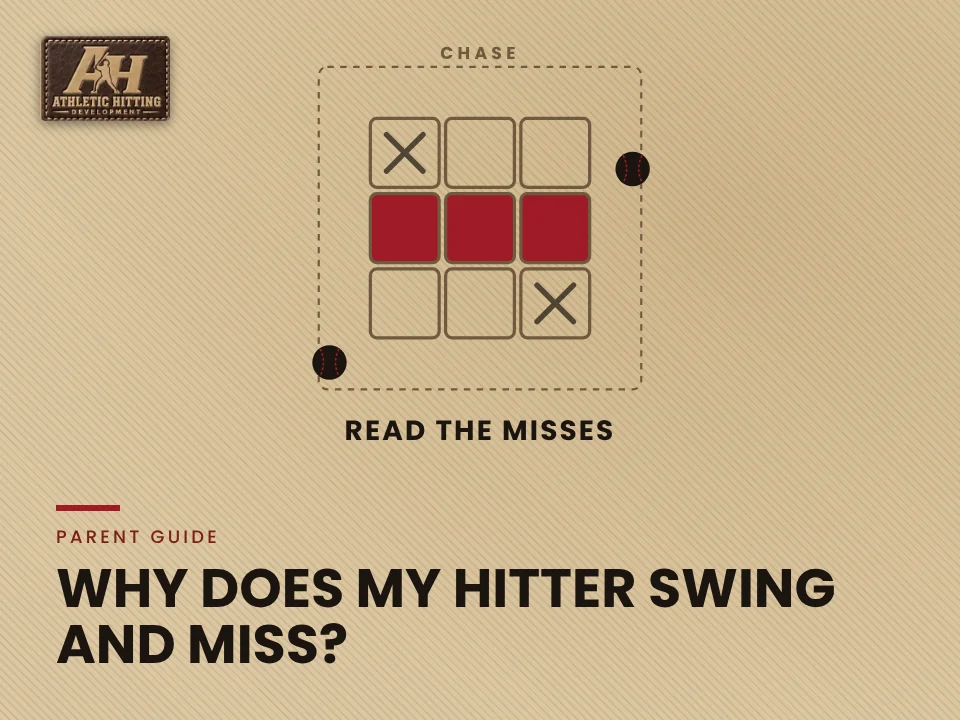
SWINGS AND MISSES
READTHE MISSES.
- Under the heater: late
- Over off-speed: early or fooled
- Out of the zone: chasing
- In the zone: barrel path
WHERE HE MISSES TELLS YOU WHY
2. Missing under the fastball: he’s late
The most common miss. A late hitter rushes, and a rushed barrel cuts under the ball. Being late doesn’t always mean slow. Usually it means the load started too late, so he never got to launch position before the pitch.
Fix the start before you blame the bat speed. Start the gather and load as the pitcher’s hand breaks, and be at launch before release. Read how to catch up to a fastball. If his hands sink as the pitch comes, read dropping the hands in the swing too.
“Pitchers are basically pizza delivery guys.” That’s one of BK’s sayings. He’s just delivering it. Your job is to be loaded and on time when it shows up.
3. Missing over off-speed: he’s early or fooled
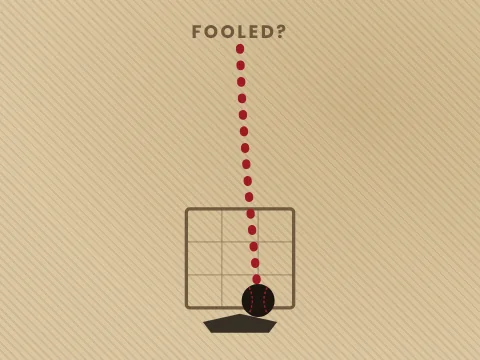
If the misses come on changeups and breaking balls, the swing may be fine. The eyes and the decision aren’t. He’s committing to fastball before he knows what’s coming, then reaching for a pitch that isn’t there yet.
This is the Hitting Processor pillar: see it, time it, decide, attack it. It’s trainable, and it should be trained every day, not once a season. Start with how to read a pitcher’s release and why your hitter gets fooled by off-speed. The free Pitch Recognition Trainer is a good daily rep.
4. Missing pitches out of the zone: he’s chasing
A great swing at a pitch in the dirt still misses. Chasing is a decision problem, and decisions are a skill you can train. See plate discipline is a skill and the free Chase Tool.
Don’t fix chasing by turning him passive. We want aggressive hitters who are aggressive on the right pitches. “Swing at a bad pitch? No biggie. Take a good pitch to hit? Not happening.” An occasional bad swing is the cost of being aggressive. Watching his pitch go by is the mistake that costs him.
5. Missing pitches in the zone: the barrel path
If he’s on time, picking good pitches and still missing, look at the barrel. A path that chops down or swoops up steep only meets the ball at one tiny spot. A small timing error and it’s a miss.
The fix is a barrel that gets on the plane of the pitch early and stays there. AHD hitters build Mechanically Advantaged Angles (MAA) so the body puts the barrel there without forcing it. Check for a collapsing back shoulder, head movement and bat path problems, then run the free SwingChecker™ to rank which one comes first.
- High-tee line drivesTee at the top of the zone. Only hard line drives count. 3 rounds of 8.
- Two-tee drillSecond tee 8 to 10 inches behind the first, same height. Miss the back tee, hit the front one. 3 rounds of 8.
- Mixed-speed front tossFirm and slower tosses mixed. He calls “firm” or “slow” as early as he can, then swings. 3 rounds of 8.

THELESSON.
- Chart the misses
- Find the one that shows up most
- Fix that cause
- Retest in games
Complete Hitters Are Built…Earned.
Want to go deeper? Read How to Catch Up to a Fastball: Why You’re Late and How to Fix It and Swing Decisions Are a Skill.
Quick answers
Why does my son swing and miss so much?
Usually because he’s late, early or fooled by off-speed, chasing pitches out of the zone, or his barrel is only on the pitch’s path for an instant. Where he misses tells you which one.
Should I tell my kid to just make contact?
Usually not. Hitters told to just make contact cut their swing down and get slower, which can make them later. Find the cause of the misses and fix that instead.
How can my hitter make more contact?
Get the load started early so he’s on time, train pitch recognition so he’s not fooled, swing at strikes he can drive, and build a barrel path that stays on the plane of the pitch.
Why does my hitter make contact in practice but miss in games?
Practice pitches are usually slower and more predictable. Game pitching exposes timing and pitch recognition, and pressure adds tension. Train with mixed speeds and live arms, not just tee and soft toss.
Don’t collect drills. Build a complete hitter.
Complete Hitters Aren’t Born. They’re Built… and Earned.