By BK, Athletic Hitting Development
Complete Hitters Are Built… It’s Earned!
Key takeaways
- To hit a slider, read the tight spin early, sit on the fastball, hunt the slider that stays up in the zone and lay off the one that finishes off the plate or in the dirt.
- Slider vs curveball: the slider is thrown harder with less total break, so it looks like a fastball longer and moves late and tight.
- A well-thrown slider often shows a small red dot from the seams spinning, which many hitters use as the tell.
- The back-foot slider and the slider away are chase pitches; hitters win by hitting the hanger and taking the rest.
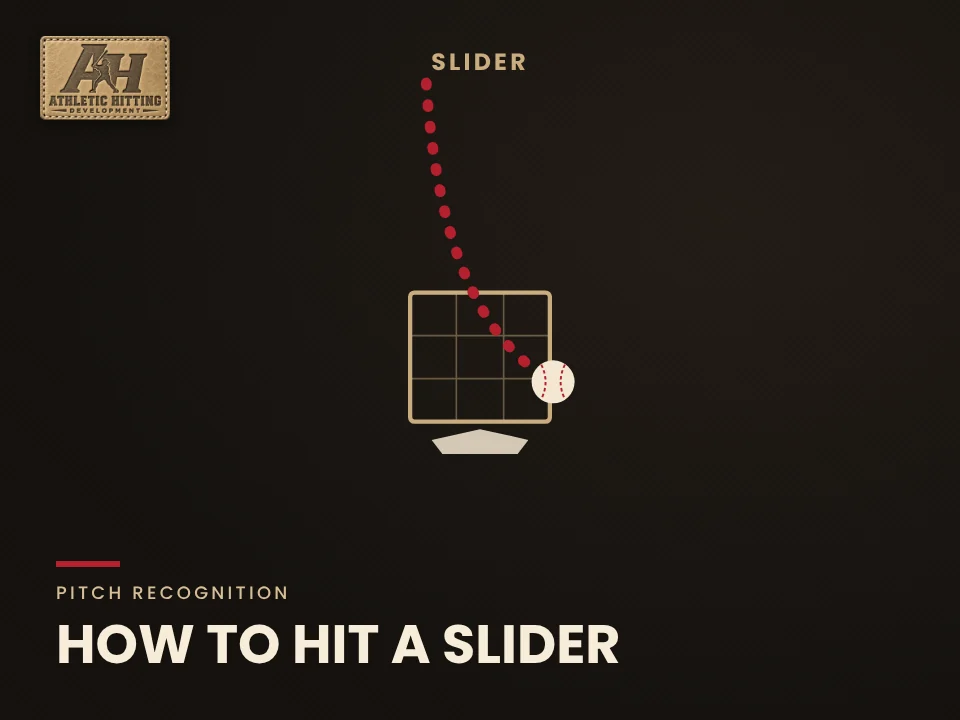
To hit a slider, a hitter reads its tight spin early, stays on the fastball and adjusts, drives the slider that stays up in the zone, and lays off the one that breaks off the plate or into his back foot. The slider is a late, short break, so the decision has to be made early and the barrel has to stay in the zone.
To hit a slider, read its tight spin and red dot early, sit on the fastball and adjust, and drive the slider that stays in the zone to the middle of the field. Lay off the slider that starts low or on the edge, because it finishes in the dirt or off the plate.
Train it: Off-Speed / Spin →When I scout hitters, I watch how they handle the slider. It tells me more about pitch recognition than almost any other pitch, because it looks like a fastball for most of its flight.
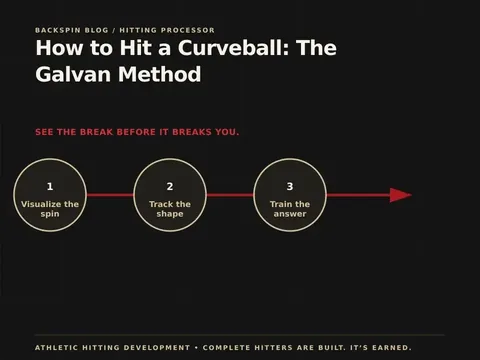
Here’s how it moves, what it looks like out of the hand, how to cover the plate against it and how to train it. If your hitter is struggling with the bigger, slower breaking ball, start with How to Hit a Curveball: The Galvan Method.
1. How does a slider move compared to a curveball?
A slider breaks sharply and at a greater speed than most other breaking pitches. MLB describes it as somewhere between a cutter and a curveball: thrown faster than a curveball, with less total movement.
| Slider | Curveball | |
|---|---|---|
| Speed | Harder; often about 8–10% slower than the fastball | Slower; often about 13–20% slower than the fastball |
| Total break | Shorter and tighter | Bigger; more movement than almost any pitch |
| When it breaks | Looks like a fastball longer, then moves late | Shape shows earlier, often a visible hump |
| Direction | Usually sideways and down together, away from the pitcher’s arm side | Many break mostly down; some sweep sideways |
That’s what makes it tough. The curveball gives a hitter more time to see it’s a curveball. The slider gives him a fastball look, then a short, late dart off the barrel. A slider that doesn’t break much is called a hanger, and that’s the one he wants to punish.
The slider is a fastball that lies late.
2. How do you recognize a slider out of the pitcher’s hand?
A slider’s spin is different from a fastball’s and a curveball’s. Part of its spin is ‘bullet’ spin, spinning around the line the ball is traveling on, like a football thrown in a spiral. Because of that, the seams can blur into a small red dot on the front of the ball. Pitching coaches describe that dot as the sign of a well-thrown slider, and many hitters look for it.
- The dot. A small red spot on the ball instead of the full seam rotation of a fastball.
- Tight spin, not a hump. No big pop up out of the hand like a curveball; it stays on a fastball-like line longer.
- A little less speed. Not a big drop like a changeup, just a ball that isn’t quite the heater.
- Where it starts. A slider aimed at the middle or the hitter’s hip will finish on the corner or off it.
Not every hitter sees the dot, and not every slider shows it clearly. That’s fine. The bigger skill is a quiet head, eyes in the release window early and enough reps against spin to recognize the pattern. That’s the Hitting Processor at work: see it, time it, decide, attack it. You can train it off the field too; see Occlusion Training for Hitters.
3. How should a hitter cover the plate against a slider?
Sit fastball and adjust to the slider, the same as with a changeup. But plate coverage matters more with a slider, because it moves side to side.
- Know which way it breaks.A slider from a same-side pitcher breaks away; from an opposite-side pitcher it breaks toward the hitter’s back foot.
- Look for it starting middle.The slider worth swinging at starts middle and ends on the plate, so he looks for it there.
- Let it travel.Contact deeper than a pulled fastball keeps the barrel in the zone through the break.
- Drive it to the middle of the field.A slider away goes to center or the other way; trying to pull it means a rolled-over ground ball.
- Hit the hanger.A slider that spins but doesn’t break is a slower fastball in the zone, so he drives it.
Hitters who can let a slider travel and still get the barrel there usually have strong angles in the swing. AHD hitters build Mechanically Advantaged Angles (MAA), which keep the barrel on plane longer, so a slightly late read still finds the ball. For timing the heater first, see How to Hit a Fastball.
SLIDER KEYS
SEE THE DOT.LET IT TRAVEL.
- Tight spin, late break
- Sit fastball, adjust
- Look for it starting middle
- Drive it to center or oppo
HIT THE HANGER
4. How do you stop chasing sliders in the dirt and at your back foot?
The slider is the chase pitch for a reason. Two kinds get hitters out most:
- The slider away. Starts as a strike on the outer edge, finishes off the plate. He reaches, rolls it over or swings through it.
- The back-foot slider. From an opposite-side pitcher, it starts looking like a strike and dives at the hitter’s back foot. He swings over the top of it.
The fix is a decision, not a swing change. If the slider starts at the bottom of the zone, it’s going to finish below it. If it starts on the outer edge, it’s going to finish off the plate. He learns those starting windows, and he takes them, especially early in the count.
With two strikes, the slider in the dirt is one of the most common put-away pitches I see. That plan is in our two strike approach. And if chasing is a habit on every pitch, not just sliders, read Plate Discipline Is a Skill.
5. What drills help a hitter hit a slider?
Don’t collect drills. Train the read, the coverage and the take.
- Spin-read rounds. Breaking-ball machine or a pitcher who can throw one; he calls ‘slider’ or ‘fastball’ out loud before contact. 10 reads, then 10 swings.
- Start-window takes. Feed sliders that start low or off the edge. A swing at one ends the round. This builds the take.
- Middle-away tee. Tee on the outer third, a few inches deep. He drives the ball to center and the opposite field. 15 reps.
- Wiffle spin. Wiffle balls thrown with slider spin in the yard; cheap, safe, lots of reps. See Wiffle Ball: Learn to Hit Spin.
Film from behind the hitter to see where the barrel goes on sliders away. Not sure off-speed is his biggest need? Run the free SwingChecker to rank his top priority across the 4 pillars. The Off-Speed course trains the slider, curveball and changeup in order, and pairs well with How to Hit a Changeup. If you want Coach to break down his at-bats against breaking balls, that’s part of our online hitting instruction.

THELESSON.
- It lies late
- Know its start windows
- Take the back-foot chase
- Train spin every week
Complete Hitters Are Built…Earned.
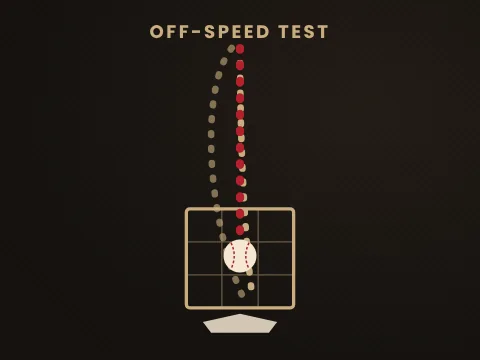
Want to go deeper? Read How to Hit a Curveball: The Galvan Method and The Off-Speed Test.
Quick answers
What is the difference between a slider and a curveball?
A slider is thrown harder with less total movement and breaks later and tighter. A curveball is slower with a bigger break that shows earlier.
What does a slider look like to a hitter?
It looks like a fastball for most of its flight, often with a small red dot from the spinning seams, then breaks late. A curveball usually shows a hump out of the hand.
Why can’t I hit sliders?
Most hitters chase sliders that start as strikes and finish off the plate or in the dirt. Learn where good sliders start, sit fastball and adjust, and drive the ones that stay up.
Should you sit on a slider?
Usually a hitter sits fastball and adjusts to the slider. If a pitcher throws it a lot in certain counts, a hitter ahead in the count can hunt a slider up in the zone.
Sources: MLB.com Glossary: Slider · MLB.com Glossary: Curveball · Dan Blewett: How to Throw a Slider (red dot, speed vs fastball, break)
Don’t collect drills. Build a complete hitter.
Complete Hitters Are Built… It’s Earned!
This article is part of the AHD guide Pitch Recognition & Timing. Start there for the full picture and every related article.